

If you want to understand an organisation’s performance ceiling, look at its trust architecture. Not its strategy, not its talent, not its technology or its resources or its competitive positioning, though all of these matter. Look at the quality of the trust relationships within and between the people and teams whose cooperation is required to produce the outcomes the organisation is trying to produce. The ceiling that trust architecture sets is absolute in the specific sense that no other organisational capability can substitute for it. The strategy that is not executed because the people responsible for different components of its execution do not trust each other to follow through will not produce the outcomes it was designed to produce. The talent that is not fully deployed because the environment does not feel safe enough for genuine risk-taking will produce adequate work rather than exceptional work. The technology that is not adopted because people do not trust the intentions behind its introduction will produce adoption metrics without the performance outcomes those metrics are supposed to proxy.
Trust is not soft. It is the hardest structural feature of organisational performance available, precisely because it cannot be manufactured, commanded, or purchased. It can only be built, incrementally and through specific behaviours sustained over time, and it is far easier to destroy than to create.
Paul Zak’s research on the neuroscience and organisational economics of trust provides some of the most striking empirical support available for this framing. His large-scale research found that employees in high-trust organisations reported seventy-four percent less chronic stress, one hundred six percent more energy at work, fifty percent higher productivity, seventy-six percent more engagement, twenty-nine percent more satisfaction with their lives, and forty percent less burnout than employees in low-trust organisations. These are not marginal differences. They describe organisations that are fundamentally different in the quality of human experience and performance they produce, and the variable that most directly explains those differences is trust.
The specific components of organisational trust and what builds each
Trust in organisational contexts is not a single undifferentiated quality. It is a composite of several distinct components that are built through different specific behaviours and that are damaged by different specific failures.
The first component is credibility: the belief that the person or institution making a commitment or claim is genuinely competent to deliver on it and genuine in their intention to do so. Credibility is built through the consistent alignment of stated capability and demonstrated performance, and through the honest acknowledgment of the limits of one’s competence when those limits are relevant to the situation. It is damaged by any gap between claimed and actual capability, and particularly by the specific pattern of confident claims followed by inadequate delivery that is among the most rapid trust destroyers available.
The second component is reliability: the belief that commitments made will be kept, that promises are genuine rather than social gestures, and that the behaviour of the trusted party is predictable enough to be planned around. Reliability is built through the consistent honouring of small commitments as reliably as large ones, and through the proactive communication of changes that will affect the ability to meet commitments rather than the retroactive explanation of why they were not met. It is damaged by inconsistency between behaviour in high-stakes and low-stakes contexts, by the pattern of making commitments that suit the moment without adequate regard for their deliverability, and by the specific betrayal of expectation that occurs when a commitment is broken without acknowledgment or accountability.
The third component is benevolence: the belief that the trusted party genuinely has the trusting party’s interests in mind, and not only their own. This is the component that is most directly related to the experience of inclusion and belonging, because it addresses the fundamental question of whether the organisation is on the employee’s side rather than merely using their labour. Benevolence is built through the specific demonstration that one is willing to incur costs on behalf of the other party, to prioritise their interests in specific moments when doing so is genuinely costly. It is damaged most catastrophically by the specific discovery that the trusted party was pursuing their own interests at the expense of the trusting party in ways that were concealed rather than acknowledged.
The fourth component is integrity: the alignment between espoused values and actual behaviour, the consistency between what is said and what is done, the quality of character that means one can be trusted even in the absence of surveillance or formal accountability. Integrity is built through sustained consistency between stated principles and actual conduct, and particularly through the demonstration of principled behaviour in the specific moments when the cost of that behaviour is genuinely high. It is damaged by any observable gap between the values the person or institution professes and the choices they make when professing them becomes genuinely costly.
How distrust is produced and why it is so durable
The asymmetry between trust building and trust destruction is one of the most important and most underappreciated features of trust in organisational contexts. Trust is built slowly, through the accumulation of many consistent small deposits over extended time. It is destroyed quickly, through a single significant betrayal or a pattern of small but consistent violations that eventually cross the threshold at which distrust is established as the default position.
This asymmetry has specific practical implications. It means that trust is much more difficult to restore than to build in the first place, because the restoration of trust requires producing consistent behaviour over an extended period in a context where the prior violation has established a heightened vigilance that interprets ambiguous behaviour unfavourably. The organisation that has established a pattern of behaviour that damages trust cannot restore it through a single trust-building initiative, however well-designed. It requires the consistent, sustained demonstration of different behaviour over a period of time that is long enough to establish the new pattern as reliable rather than as a temporary performance motivated by the awareness of the trust deficit.
Distrust is also more cognitively sticky than trust. The research on how people update their assessments in the face of new information consistently finds asymmetric updating: evidence consistent with the current assessment is weighted more heavily than evidence that contradicts it. Once distrust has been established, behaviours that would have built trust in a neutral context are interpreted through the distrust frame and either discounted as strategic performance or held to a higher standard of evidence than the same behaviours received when trust was intact. The organisation that has lost the trust of its employees faces a genuine credibility trap: its trust-building behaviours are interpreted as cynical, its commitments are discounted as unreliable, and its expressions of care for its employees are read as motivated by self-interest rather than genuine concern.
Trust and DEIB: the specific connection
The relationship between organisational trust and the specific dimensions of diversity, equity, inclusion, and belonging is direct and consequential in both directions. Trust is both a precondition for genuine DEIB progress and an outcome of it.
It is a precondition because the specific work of inclusion, the honest examination of what the organisation is actually doing versus what it says it is doing, the surfacing of patterns of inequity that are embedded in ostensibly neutral systems, the genuine engagement with the perspectives and experiences of people from underrepresented groups, all require a quality of trust that is substantially more demanding than the baseline trust required for routine organisational functioning. Telling an organisation honestly that its systems are producing inequitable outcomes, when the people who design and benefit from those systems are also the people with the most organisational power, requires a level of trust in the organisation’s genuine openness to that information that many employees, reasonably, do not have.
Trust is also an outcome of genuine DEIB progress because the specific experience of being treated equitably, of having one’s contribution genuinely valued, of belonging in a meaningful sense, is one of the most direct available sources of benevolence trust. The employee who experiences their organisation as genuinely invested in their flourishing, as distinct from the organisation that talks about flourishing while managing its employees primarily as productive resources, develops the specific quality of trust that produces the discretionary effort, the genuine engagement, and the long-term commitment that distinguishes high-trust organisations from their competitors.
Building trust in organisations where it has been damaged
The restoration of organisational trust, particularly in contexts where it has been damaged by a specific and highly visible incident, requires several specific things that organisations frequently resist doing because they are costly in the short term even when they are necessary for the long-term restoration of the trust that was lost.
The first is the honest acknowledgment of what happened and what it cost. Trust cannot be restored through the management of the narrative about why it was lost. It can only be restored through genuine honesty about the breach and genuine accountability for its consequences. The organisation that frames a trust-damaging incident as a misunderstanding or as the product of external factors is signalling, to the people who experienced the breach, that the conditions that produced it remain intact.
The second is the specific change, visible and verifiable, that demonstrates that the conditions which produced the breach have genuinely changed rather than been managed. Words without structural change do not restore trust. The structural change that demonstrates genuine accountability for the breach is the most powerful available signal that the organisation is serious about the trust it is trying to rebuild.
The third, most difficult, and most important is the sustained patience to allow the rebuilding to happen on the timeline that the people whose trust was broken require, rather than on the timeline that the organisation’s need for the trust to be restored demands. Trust restoration is not a project with a launch date and a target completion. It is a patient, sustained demonstration of different behaviour over a period long enough to produce new evidence for the assessment of reliability and benevolence. The organisation that expects that evidence to produce trust restoration on its preferred timeline is misunderstanding both the mechanism and the ownership of the process.
Trust is the infrastructure of organisational performance. When it is intact, everything runs more efficiently, more honestly, and with more of the genuine human investment that produces the highest quality of work. When it is damaged, everything takes more effort, more energy, and more management, and still does not produce what genuine trust would have produced with less.
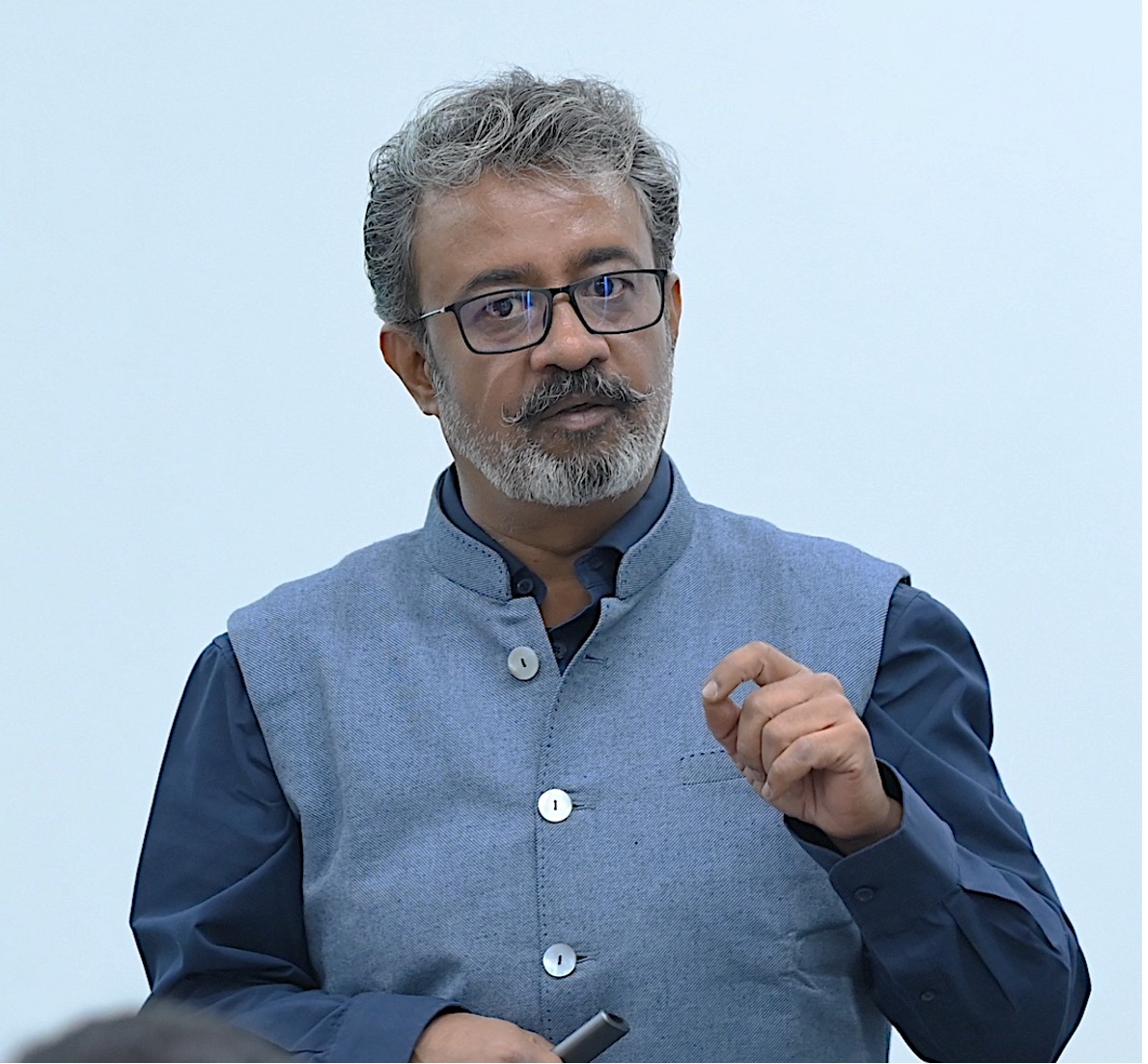
About the Author
Founder Director, ProventusHR · MGSCC Master Coach · NDA Alumnus
Founder of ProventusHR and principal architect of ExperienceLearning and REEL|Life. 25+ years across leadership advisory, executive coaching, and experiential design across 14 industries. 9x Brandon Hall HCM Excellence Award winner (2022 to 2025).
Full Profile ›