

The dominant model of talent strategy in most large organisations is acquisitional: the organisation identifies the capabilities it needs, recruits the people who have those capabilities, and manages the retention of those people through competitive compensation and career development programmes. This model is not without merit. For certain kinds of capability, particularly at entry level and for technical specialisations where the external market is the most efficient source of supply, an acquisitional strategy is appropriate and effective.
The problem is the application of the acquisitional model to the full range of talent strategy challenges that complex organisations face, including those for which acquisition is either insufficient or actively counterproductive. The senior leadership capability that produces the specific culture and the specific quality of judgment that distinguishes an organisation’s performance from its competitors cannot be acquired from the external market. It has to be built, over years, through the specific combination of developmental experience, coaching, feedback, and organisational context that turns capable people into the specific kind of leaders this organisation needs. The collective intelligence that produces complex organisational capabilities, the ability to integrate diverse expertise across functions and geographies to produce genuine innovation or genuine customer intimacy, cannot be acquired as a collection of individual capabilities. It has to be developed as an organisational capability through the deliberate design of the systems and processes through which people with diverse expertise work together.
Talent architecture, as distinct from talent acquisition, is the design of the organisational conditions through which the capabilities required for current and future strategy are built, deployed, and sustained within the organisation, rather than primarily purchased from the external market. It requires a different analytical framework, a different time horizon, and a different kind of investment than the acquisitional model, and it produces a fundamentally different kind of competitive advantage: one that is organisation-specific and therefore genuinely difficult for competitors to replicate.
The three components of talent architecture
Talent architecture has three components that are distinct but interdependent, and that together determine whether the organisation has the human capital conditions needed to execute its current strategy and adapt to the next one.
The first component is capability design: the explicit identification of the specific capabilities that the organisation needs to build at each level and in each critical role family, based on an honest analysis of what the strategy requires. This is different from the generic competency frameworks that most large organisations have developed, which describe desirable leadership qualities at an abstraction level that is too high to inform specific development investment. It is the specific capability architecture that allows the organisation to say: at this level, in this function, the development of these specific capabilities matters most for the execution of this strategy, and the current gap between the required capability level and the existing capability level is this.
The second component is experience architecture: the deliberate design of the career experiences that build the specific capabilities identified in the capability design. The research on leadership development consistently finds that the most powerful driver of leadership capability development is challenging experience held in the right developmental context: assignments that stretch the leader beyond their current capability, that place them in genuinely novel situations, and that are supported by the coaching, feedback, and reflection that allow the experience to be genuinely developmental rather than simply demanding. Most large organisations have career path frameworks that describe the experiences associated with different levels of advancement, but relatively few have the deliberate architecture that ensures the specific experiences most important for building the specific capabilities the strategy requires are actually available and actually assigned to the people who most need them.
The third component is the talent investment framework: the explicit allocation of developmental investment across the talent population in ways that are strategically prioritised rather than simply egalitarian or compensation-driven. The talent investment framework answers the question: given our strategic priorities and our current talent gaps, where should we be concentrating our most intensive developmental investment, and how do we ensure that investment is producing the capability improvement the strategy requires? This requires both the analytical clarity to identify where the most significant talent gaps are relative to strategic requirements, and the governance clarity to ensure that developmental investment is allocated to address those gaps rather than being distributed according to hierarchical level or past performance track record.
The time horizon problem in talent architecture
The most significant obstacle to talent architecture thinking in most large organisations is the time horizon problem: the capabilities that the organisation most needs to build for future strategic success typically require three to five years of sustained developmental investment to develop, while the planning and investment cycles of most organisations are oriented primarily toward twelve to eighteen month horizons. The result is systematic underinvestment in the long-cycle capability development that produces the most durable competitive advantage, and systematic overinvestment in the short-cycle acquisition that is more immediately visible and more readily justified within short planning horizons.
Addressing the time horizon problem requires both a longer-term talent planning framework that extends strategic talent analysis beyond the conventional annual cycle, and the governance commitment to sustain developmental investment through the planning cycles that most immediately justify it in financial terms. The CHRO who can build the case for sustained investment in long-cycle capability development by connecting it to specific strategic objectives over a five-year horizon, and who can sustain that case through the quarterly and annual cycles that create pressure toward shorter-horizon investment, is doing the most important strategic talent work available.
What succession planning gets right and what it misses
Succession planning is the most established form of talent architecture in most large organisations, and it provides a useful starting point for the broader talent architecture conversation. Its strengths are the identification of critical roles, the assessment of current pipeline depth for those roles, and the creation of the specific development plans that accelerate the readiness of identified successors. These are genuine and important contributions to talent strategy.
Its limitations are the ones that talent architecture thinking is designed to address. Succession planning is typically focused on the pipeline for specified critical roles rather than on the broader capability architecture that determines organisational effectiveness across the full talent population. It tends to be focused on the identification and development of individual successors rather than on the design of the organisational conditions that build capability development broadly. And it tends to be oriented toward the continuity of current leadership practices rather than toward the development of the fundamentally different capabilities that the organisation’s next strategic phase may require.
The governance of talent architecture decisions
The talent architecture investments that produce the most significant and most durable competitive advantage are also the investments most difficult to make and sustain within the governance structures of most large organisations. They require sustained commitment over multiple years and investment that produces returns difficult to attribute causally in the short term. Building the governance infrastructure that sustains talent architecture investment requires both the CHRO capability to make the strategic case at board and CEO level, and the specific governance mechanisms that protect the investment from short-term pressures. The most effective mechanism in organisations that have successfully sustained long-cycle talent investment is the explicit board-level commitment to the talent architecture strategy, expressed through specific performance metrics that hold the CEO and CHRO accountable for the progress of the investment over a multi-year horizon. This transforms the talent architecture investment from an HR programme vulnerable to resource competition into a strategic governance commitment that requires the same quality of board-level attention that other significant long-cycle investments receive.
The organisations that have most successfully built genuine talent architecture, as distinct from the succession planning and talent management processes that most organisations already have, describe a common prerequisite: a CEO who genuinely believes that building the organisation’s internal talent capability is a primary strategic investment rather than an HR operational function. This CEO belief is not merely rhetorical. It expresses itself in specific governance commitments: the time the CEO personally invests in talent development conversations, the weight the CEO gives to talent architecture considerations in strategic decisions, and the accountability the CEO creates for talent architecture outcomes in the performance management of the senior leadership team. Without this CEO commitment, talent architecture initiatives, however well-designed, tend to be implemented as HR programmes rather than as strategic investments, which means they are funded and prioritised accordingly.
Talent strategy that is primarily about finding and keeping the right people is not architecture. Architecture is the design of the conditions in which the right capabilities are built, deployed, and sustained from within the organisation. The distinction determines the time horizon of the investment, the nature of the competitive advantage it produces, and the degree to which the capability built is genuinely organisation-specific and therefore genuinely difficult to replicate.
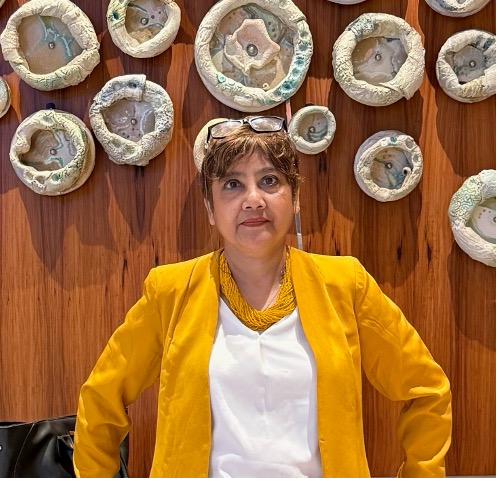
About the Author
Sathi Aich-Dharap
CHRO Advisory Practice Lead, ProventusHR · PGCHRM, XLRI Jamshedpur · Advisory Board, Masters' Union Delhi
Sathi Aich-Dharap leads the CHRO Advisory practice at ProventusHR. Two decades of senior HR leadership across Consumer Goods, BFSI, and Global Services. Certified LEAF Facilitator and Predictive Index Analyst.
Full Profile ›