

The word “conflict” carries enough negative valence in organisational contexts that it is worth starting with a definitional clarification. The conflict that is genuinely damaging in organisations is personal, escalating, and motivated by the desire to defeat the other party rather than to arrive at the best available answer. This kind of conflict is destructive and well worth preventing. It is also, in my experience, relatively rare as a primary organisational problem, even in organisations that describe themselves as having significant conflict issues. The more common and more consequential problem is the opposite: the systematic suppression of the intellectual friction and honest disagreement that would, if allowed to develop properly, substantially improve the quality of collective decision-making.
The organisations that describe themselves as having conflict problems are frequently organisations that have suppressed enough genuine disagreement that the disagreement that does emerge is distorted: it arrives as personal attack, passive aggression, or the political manoeuvring that produces the same outcome as direct challenge without the social risk of doing it visibly. This is the pathological form of suppressed conflict, and it is both more damaging and harder to address than the well-managed productive conflict that it has displaced.
The organisational asset that is being lost in this suppression is the diversity of perspective, the genuine challenge to assumptions, and the honest confrontation with inconvenient evidence that produce the highest-quality decisions available to any collective. The organisations that have learned to treat intellectual disagreement not as a dysfunction to be managed but as a capability to be cultivated are, across the research, consistently better at making strategic decisions, faster at catching and correcting errors, and more effective at innovation than those that optimise for harmony.
What the research on dissent and group performance actually shows
The research on the relationship between dissent and group decision quality is extensive and consistent. Irving Janis’s foundational work on groupthink, examining the decision-making failures that preceded disasters including the Bay of Pigs invasion and the Challenger launch decision, found a consistent pattern: high-cohesion groups with strong implicit norms against expressing doubt or disagreement consistently produced worse decisions than groups with lower cohesion but more explicit tolerance for honest challenge. The mechanism is straightforward: groups that punish dissent lose access to the information, perspective, and critical analysis that dissent carries, and their decisions are consequently based on a narrower and less accurate information base than the one available to them if dissent had been welcomed.
Katharina Glac’s research on constructive dissent in organisational settings develops this finding in useful practical directions. She distinguishes between constructive dissent, which challenges positions on substantive grounds and is oriented toward improving the collective outcome, and destructive dissent, which is primarily oppositional or personal in character. Organisations that cannot cultivate the former tend to get the latter or none at all, because the suppression of constructive dissent does not eliminate the disagreement. It simply removes the productive channel for its expression.
Charlan Nemeth’s research on the cognitive effects of minority dissent is particularly important for understanding why disagreement improves decision quality even when the dissenter is wrong. Her findings show that exposure to a minority view, even one that is ultimately incorrect, produces more creative, more divergent, and more thorough thinking in the majority group than unanimous agreement does. The mechanism is that the presence of a dissenting view forces the majority to engage more deeply with the basis of their own position, to consider perspectives they had not previously attended to, and to examine their assumptions in ways that unanimous agreement does not require. The disagreement improves the thinking regardless of whether it improves the conclusion, because it forces the kind of deliberate cognitive engagement that leads to better conclusions.
The cultural architecture of productive conflict
Productive conflict does not emerge spontaneously in most organisations, and it cannot be produced simply by announcing that disagreement is welcome. It requires specific cultural and structural conditions that create the context in which honest intellectual challenge is genuinely safe and genuinely valued.
The most important of these conditions is the visible modelling of genuine openness to challenge by the most senior people in the organisation. Nothing communicates the safety of dissent more powerfully or more convincingly than the observation of the most senior person in the room engaging with a challenge to their position with genuine curiosity rather than with defensive authority. And nothing communicates the unsafety of dissent more efficiently than the observation of the same person dismissing, managing, or subtly punishing that challenge. The former produces a culture in which people gradually learn that challenging is safe and productive. The latter produces a culture in which people learn, accurately, that the invitation to challenge is conditional on the challenge being welcome, which means it is not a genuine invitation at all.
The second condition is the explicit naming of what productive dissent looks like in this specific context. Many people have learned to express disagreement through indirect means, through questions that are really objections in disguise, through managed body language that signals doubt without articulating it, through the post-meeting conversation that says what could not be said in the room, because the direct expression of disagreement has been associated, through experience, with unacceptable social costs. Creating a genuine culture of productive conflict requires making explicit what the norms of honest challenge are in this specific team or organisation: what language is appropriate, what the expected response to challenge is, how challenges should be received and processed, and what the consequences are of using the indirect channels rather than the direct ones.
The third condition is the separation of person from position, which requires both cultural norms and facilitation skill to maintain consistently. The most common failure mode of productive conflict is the slide from intellectual disagreement to personal criticism, which activates the defensive responses that close down honest dialogue rather than opening it. Maintaining the distinction between challenging an idea and attacking its proponent is a specific skill that requires practice and specific conversational techniques, including the deliberate naming of what is being appreciated in the position being challenged before articulating the specific grounds for disagreement, and the explicit attribution of the disagreement to a substantive concern rather than to a personal evaluation of the person who holds the position.
Psychological safety and the conditions for conflict to be productive
Amy Edmondson’s research on psychological safety provides the most precise and most practically useful account of the conditions under which honest intellectual challenge becomes reliably available in teams. Psychological safety, she defines as the belief that the team is safe for interpersonal risk-taking: that expressing a dissenting view, asking a naive question, or admitting an error will not result in humiliation, rejection, or punishment.
The relationship between psychological safety and productive conflict is direct and specific. High psychological safety does not mean low conflict. It means low interpersonal risk, which is the condition that makes genuine intellectual conflict, disagreement about ideas, approaches, and decisions, both safe and productive. The distinction between interpersonal risk and intellectual conflict is the one that most discussions of psychological safety and conflict fail to make, which leads to the mistaken conclusion that creating a safe environment means avoiding challenge. The opposite is closer to the truth: creating a safe environment is what makes genuine challenge possible, because it removes the interpersonal threat that suppresses it when safety is absent.
Edmondson’s research also documents the specific behaviours through which leaders either build or undermine psychological safety in their teams, which provides a specific and actionable account of what the leader who wants to cultivate productive conflict needs to do. Acknowledging their own uncertainty and limitations. Inviting input before sharing their own position. Responding to challenge with curiosity rather than defence. Protecting people who raise concerns from informal retaliation. Explicitly framing difficult collective questions as learning problems rather than performance problems. Each of these behaviours is a specific investment in the psychological safety that makes genuine intellectual conflict productive rather than suppressed or destructive.
The facilitation skills that sustain productive conflict in high-stakes settings
In the highest-stakes settings, the ones where the decisions are most consequential and the social pressure to maintain harmony is correspondingly highest, productive conflict is most difficult to sustain without skilled facilitation. This is the context in which the gravitational pull toward premature consensus is strongest, where the senior voices that need to be challenged are most powerful, and where the people who see the problems most clearly have the most to lose from naming them.
The facilitation approaches that most reliably sustain productive conflict in these settings share several features. They create structural roles for the expression of dissent: devil’s advocacy assigned explicitly to someone who might not otherwise play it, pre-mortem exercises that ask the group to assume the decision failed and to work backward to identify why, red team exercises that designate a group to actively challenge the prevailing position. These structural approaches work not because they eliminate the social dynamics that suppress dissent but because they provide social permission for dissent that the normal dynamics of the group do not organically produce.
The most important facilitation skill, however, is not structural. It is the ability to receive a dissenting view in a way that models for the entire group what genuine openness to challenge looks like: acknowledging what is specific and valuable about the challenge before engaging with its limitations, treating the challenge as a contribution to the collective thinking rather than as an attack on the current direction, and demonstrating through the subsequent quality of the deliberation that the challenge has been genuinely heard and considered rather than managed toward a predetermined conclusion.
The most expensive silence in any organisation is the silence of the person who saw the problem before it became a crisis and chose not to say so. Building the conditions in which that person speaks is not a nicety. It is among the highest-value investments in organisational effectiveness available.
About the Author
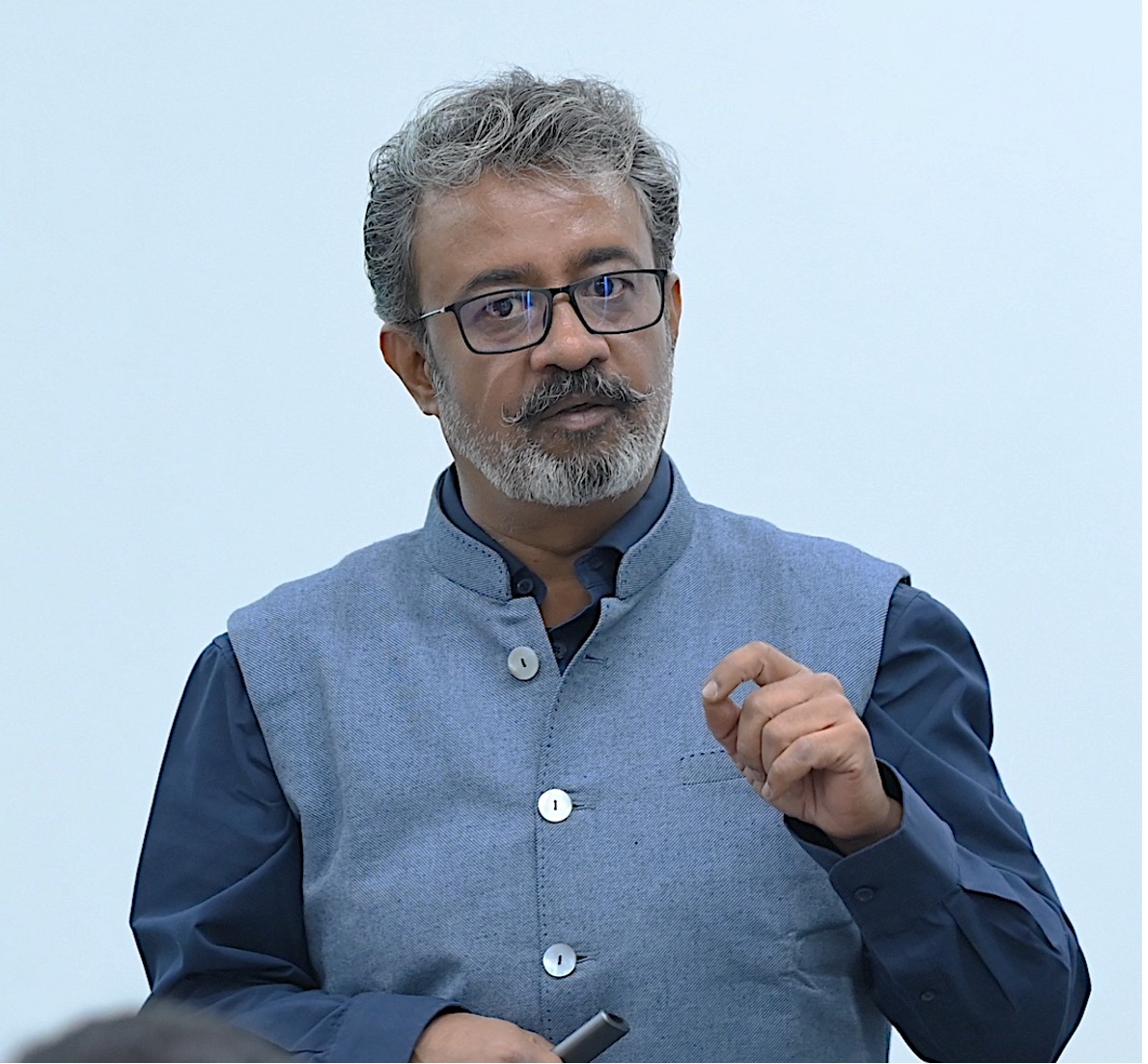
Founder Director, ProventusHR · MGSCC Master Coach · NDA Alumnus
Founder of ProventusHR and principal architect of ExperienceLearning and REEL|Life. 25+ years across leadership advisory, executive coaching, and experiential design across 14 industries. 9x Brandon Hall HCM Excellence Award winner (2022 to 2025).
Full Profile ›