

The return on investment conversation in learning and development is simultaneously one of the most important conversations available and one of the most consistently conducted in ways that produce more heat than light. The importance is genuine: organisations invest substantial resources in L&D, the evidence that those investments produce the outcomes they are designed to produce is often thin, and the question of whether the investment is justified is a legitimate governance and management question that deserves rigorous attention. The heat-to-light problem is equally genuine: the ROI conversation is frequently dominated by measurement frameworks that are either too simplistic to capture the genuine value of development investment or too demanding in their data requirements to be practically usable.
The Kirkpatrick model, which remains the dominant framework for L&D evaluation despite being over sixty years old, provides a useful structure for thinking about what can and should be measured in development evaluation. Its four levels, reaction, learning, behaviour, and results, describe the logical progression from participant experience to business outcome that genuine L&D investment should produce. The problem is not the framework’s logic. It is the practice of most organisations, which evaluate their L&D investment primarily at Levels 1 and 2, where the measurement is easy and where the evidence generated has the weakest relationship to the business outcomes the investment was designed to produce.
Why Level 1 and 2 evaluation is insufficient
Level 1 evaluation, participant satisfaction surveys administered immediately after a programme, measures how participants felt about the learning experience. It captures whether they found the content relevant, the facilitation effective, and the overall experience positive. This is not worthless information. The participant experience is one determinant of learning quality and subsequent transfer. It is also significantly influenced by factors that are not related to the development value of the programme: the social quality of the cohort, the physical environment, the quality of the catering, the degree to which the programme validated existing beliefs rather than challenging them. A programme that produces high satisfaction scores by providing a comfortable, validating experience for participants may produce no genuine behaviour change at all. A programme that produces lower satisfaction scores by genuinely challenging participants’ assumptions and working practices may produce exactly the behaviour change that the business needs.
Level 2 evaluation, assessment of learning at the conclusion of the programme, measures whether participants have acquired the knowledge and understanding that the programme was designed to convey. This is more directly relevant to development outcomes than Level 1 but is still measuring a precondition for the outcome rather than the outcome itself. Knowledge acquisition does not predict behaviour change with sufficient reliability to serve as a proxy measure for development effectiveness. The leader who can articulate a sophisticated framework for inclusive leadership at the end of a programme may return to their team and produce no observable change in the inclusiveness of their leadership, for reasons that the knowledge acquisition alone cannot address.
What genuine ROI measurement requires
Genuine ROI measurement for L&D investment requires evaluation at Levels 3 and 4: the assessment of whether the behaviours that the programme was designed to develop have actually changed in observable and sustained ways in the working context, and the assessment of whether those behaviour changes have produced the business outcomes the investment was designed to deliver. Both of these are considerably harder to measure than Level 1 and 2 outcomes, and both are considerably more informative about whether the investment has produced value.
Level 3 evaluation requires a measurement approach that is fundamentally different from the post-programme satisfaction survey. It requires the identification, before the programme, of the specific behaviours that the programme is designed to develop and the specific stakeholders who are in a position to observe whether those behaviours have changed. It requires the collection of baseline data about those behaviours before the programme and follow-up data at appropriate intervals after the programme. And it requires the analytical capability to distinguish genuine behaviour change from the short-term post-programme enthusiasm that may produce temporary behaviour modification without lasting change.
Level 4 evaluation requires the connection of behaviour change data to business performance data in ways that most L&D functions have not yet achieved, because it requires the integration of HR data with business performance data and the statistical sophistication to assess the contribution of specific behaviour changes to specific business outcomes in the presence of the many other variables that also affect those outcomes. This is demanding work, but it is the work that produces the specific evidence that justifies continued investment in development programmes, and the specific evidence that allows organisations to improve their investment by identifying which programme elements are producing the most significant behaviour change and business impact.
Rethinking what the investment is actually for
Beyond the measurement methodology debate, the more fundamental question about L&D ROI is the question of what the investment is actually designed to produce. Most L&D investment is justified in terms of capability development: the organisation invests in developing specific skills and knowledge in its people because those skills and knowledge will improve the organisation’s performance. This is a legitimate and important justification. It is also incomplete.
The most compelling justification for sustained investment in people development is not the direct business return on specific programmes. It is the contribution to the organisational learning capability that sustained investment in development, across time and across levels, produces as a cumulative effect. The organisation that consistently invests in the development of its people is building something more important than the specific capabilities that any individual programme produces: it is building the habit of learning, the cultural norm that development is valued and expected, and the organisational learning infrastructure that allows the organisation to adapt to a changing environment more effectively than organisations that invest in development only when specific skill gaps have been identified.
This longer-term, more diffuse return on L&D investment is both genuinely important and genuinely difficult to measure with the precision that the ROI conversation typically demands. The organisations that are most honest about this acknowledge that a portion of their L&D investment is justified on the basis of the organisational learning capability it builds, and that this justification does not require the same kind of direct causal evidence that links a specific programme to a specific business outcome. The organisations that insist on applying the same ROI framework to all L&D investment, regardless of whether the investment is designed to produce specific and measurable behaviour change or to build longer-term organisational capability, end up either underinvesting in the capability-building that produces the most durable competitive advantage, or misrepresenting the evidence for the direct business impact of investments whose value is real but more diffuse than the measurement framework can capture.
The evidence standard the board should apply
The board oversight of L&D investment is one of the areas where most large organisations have the weakest governance capability, in significant part because the board has not developed the evaluative literacy needed to assess the quality of the evidence that L&D ROI claims are based on. The board that accepts Level 1 and Level 2 evidence as adequate justification for sustained L&D investment is not exercising effective governance. Building the board’s L&D governance capability requires the CHRO to invest in the board’s understanding of what good L&D evidence looks like, and to hold the L&D function to the standards of evidence that the board discussion should demand. The organisations that have built this governance capability describe the improvement in L&D investment quality that genuinely rigorous board oversight produces as significant and cumulative, resulting from the sustained pressure to connect learning investment to business evidence that genuine oversight creates.
The L&D functions that have most successfully made the transition from activity reporting to genuine outcome measurement describe a common challenge: the senior HR leader who sponsors the measurement improvement must be willing to hold the L&D function to standards that will reveal the inadequacy of some existing programmes. This requires a specific combination of intellectual honesty and organisational courage that is not universal. The CHRO who commissions rigorous outcome measurement and acts on what it reveals, including the willingness to stop investing in programmes that the evidence does not support, is building both the measurement capability and the organisational credibility that genuine L&D governance requires. The one who commissions the measurement and then manages its findings to protect existing programme investments is producing the appearance of rigor without the substance.
The ROI conversation in L&D is most useful when it is honest about what each investment is designed to produce, how that outcome should be measured, and what the appropriate standard of evidence is for the claim that the investment delivered the value it was designed to deliver. Different investments warrant different measurement standards. The single ROI framework applied uniformly to all L&D investment produces neither the accountability nor the learning that genuine evaluation is designed to provide.
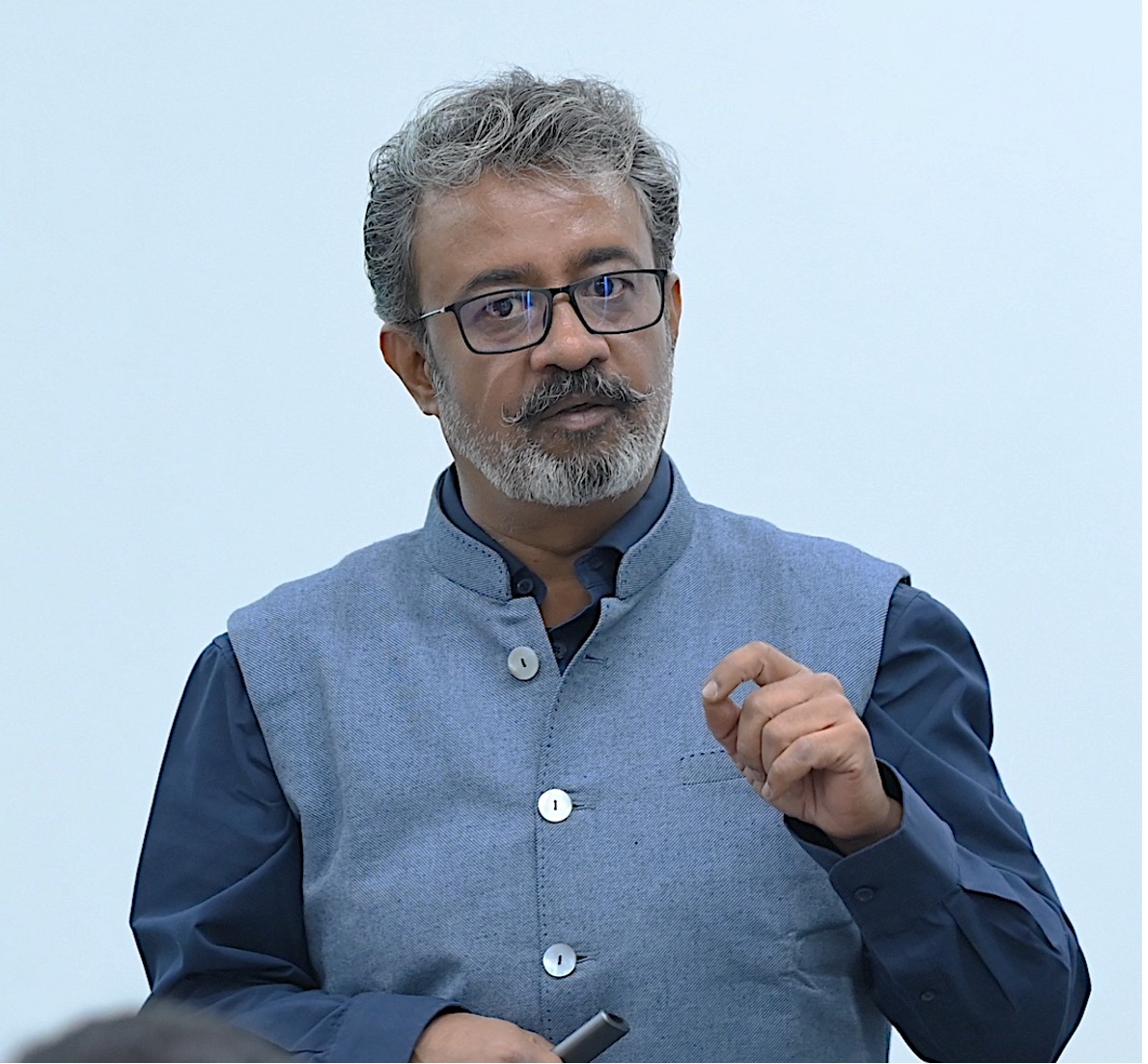
About the Author
Founder Director, ProventusHR · MGSCC Master Coach · NDA Alumnus
Founder of ProventusHR and principal architect of ExperienceLearning and REEL|Life. 25+ years across leadership advisory, executive coaching, and experiential design across 14 industries. 9x Brandon Hall HCM Excellence Award winner (2022 to 2025).
Full Profile ›