

The phrase “leaders shape culture” has been repeated so often in organisational development contexts that it has become a kind of wallpaper: present everywhere, rarely examined, providing the background against which other more specific conversations happen. It is true, but its truth is so broadly acknowledged that it rarely prompts the more useful and more demanding question: what does it specifically mean to shape culture, and what would a leader need to do differently if they took seriously their responsibility as the primary architect of the environment in which their people work?
The architecture metaphor is more precise than it might initially appear. Architects do not simply decree what a building will be. They make specific design choices, constrained by the materials and context available to them, that create the conditions in which certain kinds of experience are possible and others are not. The design choices are not neutral. They embed assumptions about how people will move through the space, what kinds of interaction will happen there, what will be visible and what will be hidden, what kinds of activities the space is optimised for and what kinds it makes more difficult. These assumptions are rarely fully conscious even in the most thoughtful architect. They are shaped by training, by the norms of the professional context, by the specific brief they have been given, and by the blind spots that any designer carries into any design process.
Leaders operate similarly. The cultural environment they create is shaped by specific choices, some of which are conscious and deliberate and many of which are the product of how they have been socialised into leadership, what they have been rewarded for, what they take for granted about how organisations work, and what they simply do not notice because it is invisible to them from inside their own experience. The leader who wants to function as a genuine culture architect needs to develop the capacity to see their own design choices and their effects, which is exactly the kind of capacity that is hardest to develop precisely because it requires seeing what is currently invisible.
The seven design choices that most determine cultural inclusiveness
The culture of any team or organisation is constituted, in significant part, by the design choices the leader makes, consciously or not, across a small number of dimensions that have disproportionate effect on the quality of the environment they produce. These are the dimensions where the leader’s choices most directly shape whether the environment is one in which people from all backgrounds can contribute fully and belong genuinely.
The first is information architecture: how does information flow in this team, and who has access to what? Cultural environments in which information is selectively shared, in which some people have access to context and others do not, in which the informal briefing before the meeting and the informal debrief after it are available to some and not others, are structurally exclusive regardless of the leader’s stated intentions about inclusion. Every design choice about how information is shared, what is communicated to whom, and what the formal and informal channels of information flow are, is a design choice that shapes the inclusiveness of the environment.
The second is contribution architecture: how does this team capture and credit its collective intelligence? Who gets to contribute, in what formats, with what recognition? The meeting culture, the decision-making process, the norm around who speaks and how their speaking is received, are all contribution architecture choices that either enable or constrain the full participation of people with different communication styles, different cultural backgrounds, and different relationships to the dominant norms of the professional environment.
The third is accountability architecture: who is held to what standards, with what consistency, and with what consequences for shortfall? Inclusive environments hold everyone to the same standards and invest differentially in support to help everyone meet them. Exclusive environments apply standards inconsistently in ways that follow demographic patterns, holding some people to higher bars than others or applying consequences with different severity depending on the social standing of the person involved.
The fourth is recognition architecture: what gets celebrated, by whom, in what contexts, and with what specificity? Recognition systems that celebrate the most visible and most senior contributions systematically undervalue the contributions that are less visible but equally important. Recognition that is specific and attributable produces different cultural effects than recognition that is generic and diffuse. The leader who celebrates a team win without naming the specific contributions of specific people is making a different design choice than the one who takes the time to make the attribution specific and visible.
The fifth is conflict architecture: how does disagreement get expressed, heard, and resolved in this team? Inclusive environments have explicit norms about how disagreement is welcomed, how challenge is offered and received, and how conflicts that arise, including conflicts about inclusion itself, are addressed rather than avoided or suppressed. The absence of a conflict architecture is itself a design choice, and the default it produces is almost always the suppression of honest disagreement and the dominance of the most confident voices.
The sixth is development architecture: how are development opportunities identified, assigned, and supported? As discussed elsewhere, the research on how leaders allocate development investment consistently reveals demographic patterns that are not justified by performance differences. The inclusive culture architect makes their development allocation deliberate, transparent, and explicitly oriented toward closing the gaps that unmanaged allocation would produce.
The seventh is belonging architecture: what are the specific practices, rituals, and norms that signal genuine membership in this team? Belonging is produced by specific experiences that communicate that the person matters to the collective and that their specific contribution is genuinely valued. These experiences do not happen by accident. They are the product of design choices about how the team marks transitions, celebrates membership, acknowledges difficulty, and creates the occasions for the informal relationship-building that produces genuine connection rather than the professional proximity that is sometimes mistaken for it.
The specific challenge of invisible design
The most significant obstacle to the leader functioning as a genuine culture architect is the invisibility of their own design choices. Most of the cultural patterns that leaders produce are not the product of conscious design. They are the product of how the leader was trained to lead, what they observed from the leaders who shaped them, and the accumulated small choices that they make daily without attending to their cumulative cultural effect.
This is why the most important developmental practice for leaders who want to function as genuine culture architects is the practice of making the invisible visible: developing the capacity to see, with some regularity and some honesty, the cultural environment their choices are actually producing rather than the one their intentions are directed toward. This practice requires sources of honest feedback that most leaders do not routinely have access to, because the people most capable of providing it, those whose experience of the culture is most different from the leader’s own, are also the people with the most at stake in managing their relationship with the leader carefully.
Creating these feedback sources is itself a design choice, and it is one of the most important ones available to the leader who takes their culture architecture responsibility seriously. The leader who regularly asks the specific question “what is it like to work in this team if you are not like me?” and who creates the conditions in which that question can be answered honestly, is doing something that most leaders do not do and that produces substantially better information about the culture they are actually building than any amount of anonymous survey data.
The intersectionality that architecture must account for
Kimberlé Crenshaw’s concept of intersectionality, developed in legal scholarship and subsequently applied to organisational contexts, describes the specific way in which multiple dimensions of identity interact to produce experiences that are not simply additive. The experience of a Black woman in a predominantly white male organisation is not the sum of the experience of being Black and the experience of being a woman. It is a qualitatively different experience, shaped by the specific intersection of race and gender in ways that neither dimension alone captures.
For the leader functioning as a culture architect, intersectionality has specific practical implications. Cultural environments that address gender equity without attending to race, or that address race without attending to disability, class, sexual orientation, or the many other dimensions along which people’s experience of the organisation varies, will produce environments that are more inclusive along the attended dimensions and may remain or become less inclusive along the unattended ones. Genuine culture architecture requires attention to multiple dimensions simultaneously, which requires both the intellectual framework to understand intersectionality and the specific knowledge of the people in the team needed to apply it in ways that are responsive to actual rather than assumed experience.
The leader who does not see themselves as a culture architect is still making culture architecture choices. The difference is between designing consciously and designing by default. The first is harder. It is also the only one that allows the leader to be genuinely responsible for what they are building.
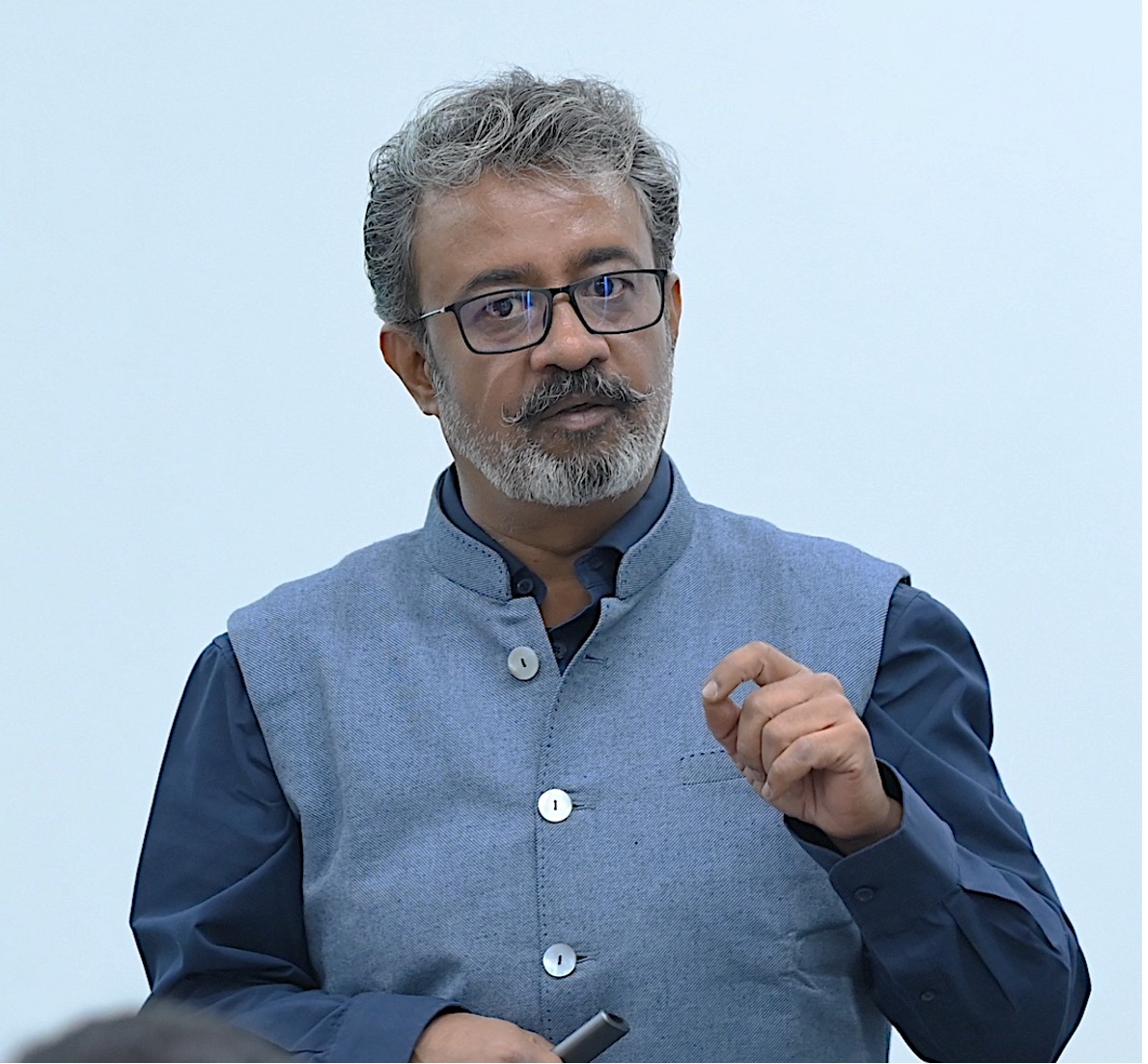
About the Author
Founder Director, ProventusHR · MGSCC Master Coach · NDA Alumnus
Founder of ProventusHR and principal architect of ExperienceLearning and REEL|Life. 25+ years across leadership advisory, executive coaching, and experiential design across 14 industries. 9x Brandon Hall HCM Excellence Award winner (2022 to 2025).
Full Profile ›