

There are now tens of thousands of leaders who have attended inclusive leadership training, who can articulate unconscious bias, who understand the business case for diversity, and who genuinely believe themselves to be inclusive leaders. There are also, in the same organisations, a substantial number of employees from underrepresented groups who do not experience their workplace as genuinely inclusive, whose talent is not being fully deployed, whose development is not being adequately invested in, and who are considering, with varying degrees of seriousness, whether to continue investing their energy in environments that do not seem to genuinely want what they bring.
The gap between the number of leaders who have been through inclusive leadership training and the number of organisations that have produced genuinely inclusive environments is the clearest available signal that awareness training, however well-designed and however genuinely received, is not sufficient to produce inclusive leadership behaviour. This is not a counsel of despair about the value of awareness. Awareness is a necessary condition for inclusive leadership. It is not sufficient. And most organisations have invested as if it were sufficient, which is why the gap persists.
The most useful question to ask about inclusive leadership, therefore, is not “what do inclusive leaders know?” It is “what do inclusive leaders do, specifically, consistently, and in the moments that count?” The answer to that question is both more specific and more demanding than most inclusive leadership frameworks acknowledge.
The three failures of awareness-focused approaches
Awareness-focused inclusive leadership development fails in three specific and related ways that are worth understanding precisely, because understanding the failure mode is the most direct path to designing the replacement.
The first failure is the knowledge-behaviour gap that is endemic to awareness training across domains. Knowing that unconscious bias exists and knowing, in the abstract, that it affects one’s own decisions, does not automatically change the decisions. The research on unconscious bias training is, by now, quite clear on this: standalone awareness training does not reliably reduce biased decision outcomes, and in some cases produces a temporary overcorrection followed by a return to the prior baseline or worse. The reason is structural rather than motivational: awareness of a cognitive process does not automatically alter that process. Altering it requires specific behavioural tools, applied consistently in specific decision contexts, over sufficient repetition that the new decision process displaces the prior one.
The second failure is the individualisation of a structural problem. Inclusive leadership training primarily addresses the individual leader’s attitudes and cognitive patterns. This is appropriate as a starting point. It becomes a failure mode when it is the ending point: when the training leaves participants with the understanding that inclusion is a matter of individual attitude and individual bias reduction, rather than a matter of organisational systems, incentive structures, and cultural norms that operate at a level above any individual’s attitudes. The leader who has been through unconscious bias training and who then returns to an organisation where the promotion criteria, the meeting culture, the sponsorship networks, and the performance management processes are all built around implicit assumptions about who constitutes the default employee, is not in a position to produce inclusive outcomes through attitude change alone. The system needs to change, and attitude-focused training does not address the system.
The third failure is the absence of accountability. Most inclusive leadership training produces intentions and commitments that are not subsequently monitored, not connected to performance evaluation, and not reinforced by the accountability structures of the organisation. Without accountability, intentions remain intentions. The leader who genuinely intends to be more inclusive but who is not held accountable for inclusive outcomes in any of the formal mechanisms that shape their professional behaviour has no incentive to navigate the discomfort that genuine inclusion sometimes requires, and considerable implicit encouragement to revert to the default behaviours that the organisation’s actual incentive structures reward.
The specific behaviours that distinguish genuinely inclusive leaders
The research on what genuinely inclusive leaders actually do, as distinct from what they know or believe, is now sufficiently developed to provide a specific and usable account of the behaviours that matter. I draw here from both the formal research and from observation across many leadership programmes and organisational contexts.
The first and most fundamental behaviour is active solicitation of perspectives that differ from their own. The inclusive leader does not wait for diverse perspectives to emerge. They create the specific conditions in which perspectives that are less likely to emerge spontaneously, because the social dynamics of the room work against them, are actively invited, protected, and genuinely considered. This means noticing when the people speaking in a meeting are a non-representative subset of the people present, and doing something specific about it rather than accepting the skew as the natural product of differential confidence or expertise. It means asking the person who has not spoken what their perspective is, and then actually listening to the answer rather than immediately moving on. It means distinguishing between the perspective that is offered most confidently and the perspective that is most useful for the decision being made, and explicitly resisting the conflation of confidence with quality that most unmanaged meeting cultures produce.
The second behaviour is the consistent and specific acknowledgment of contributions that might otherwise be absorbed without attribution. Research on how ideas are credited in group settings consistently finds that the same idea is more likely to be remembered and credited when it comes from a person with high social status in the group. Ideas offered by people with lower social status are more frequently absorbed into the group’s collective thinking without attribution to their originator. Inclusive leaders interrupt this pattern by explicitly naming where an idea came from when it is being built on by others, by redirecting credit to its source when it has been displaced, and by creating the norm in their teams that intellectual contributions are tracked and attributed honestly rather than flowing toward the highest-status person in the room.
The third behaviour is the deliberate and equitable distribution of stretch assignments and developmental opportunities. As discussed elsewhere, the research on how leaders allocate high-visibility work is consistent in finding demographic patterns that are not explained by performance differences. Inclusive leaders manage this by making their allocation decisions explicit and by examining them for the patterns they may not intend but may be systematically producing. The question “who have I given the last three stretch assignments to?” is a more useful and more honest inclusion practice than any amount of bias awareness.
The fourth behaviour is what might be called inclusive meeting design: the deliberate creation of meeting processes that produce equal access to contribution rather than the default dynamics that most unmanaged meetings produce. This includes designing pre-work processes that allow people who think better before they speak to contribute fully, rather than defaulting to the instant verbal response that disadvantages reflective thinkers. It includes managing the social dynamics of the room actively rather than allowing the default pattern of dominant voices to constitute the meeting’s output. It includes following up after meetings with people who were present but silent to understand whether their silence reflects agreement, uncertainty about how to contribute, or a more concerning sense that their contribution is not genuinely welcome.
The accountability structures that make inclusive behaviour sustainable
Inclusive leadership behaviour that is not reinforced by accountability structures is not sustainable at the organisational level. Individual leaders who are genuinely committed to inclusion will sustain inclusive behaviours regardless of whether the organisation holds them accountable for it. The majority of leaders, including those who genuinely intend to be inclusive, will not sustain behaviours that are not connected to the formal rewards and consequences of the organisation over time and under pressure.
The accountability structures that have been found to be most effective are those that connect inclusion outcomes, measured specifically and regularly, to the performance management and development processes that leaders already care about. This means measuring inclusion experience at the team level, with sufficient specificity to distinguish between teams where genuine inclusion is being produced and teams where it is not. It means including those measures in the performance review conversations that determine compensation, development investment, and promotion decisions. And it means treating leaders whose teams consistently produce negative inclusion outcomes with the same developmental seriousness that leaders who produce consistently poor business outcomes receive.
This level of accountability is uncommon in most organisations and uncomfortable for many of them. It is uncomfortable because it requires acknowledging that inclusive leadership is a performance requirement rather than a values aspiration, and that the distinction between the two matters for how the organisation manages and develops its leaders. The organisations that have made this shift report, with considerable consistency, that it produces more genuine change in inclusive leadership behaviour than any awareness programme they have run.
Inclusive leadership is not a belief system. It is a practice. The question is not whether you believe in inclusion but whether the people around you experience your specific daily behaviours as creating an environment in which they can contribute fully. Those are different questions, and only one of them produces genuine change.
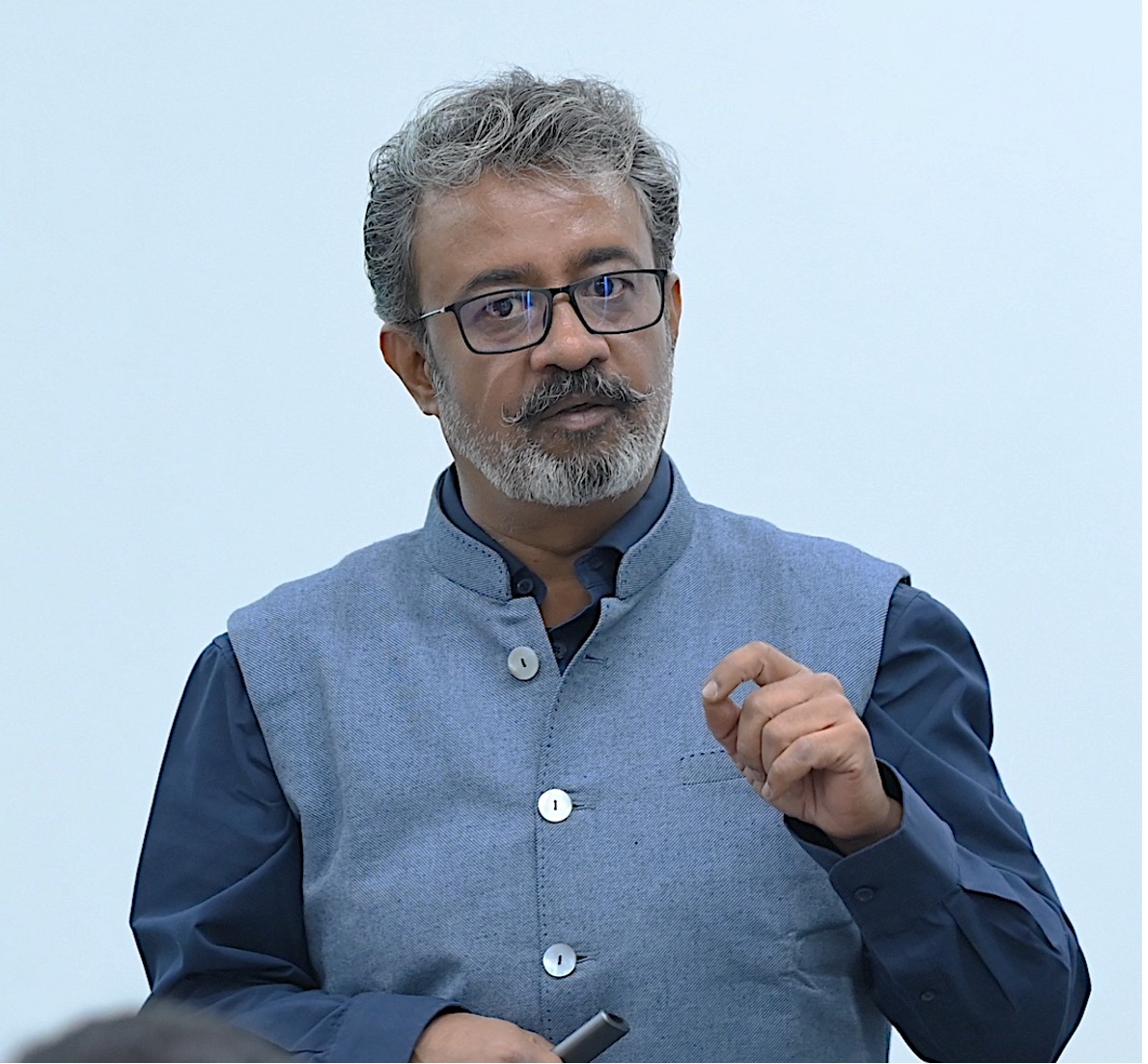
About the Author
Founder Director, ProventusHR · MGSCC Master Coach · NDA Alumnus
Founder of ProventusHR and principal architect of ExperienceLearning and REEL|Life. 25+ years across leadership advisory, executive coaching, and experiential design across 14 industries. 9x Brandon Hall HCM Excellence Award winner (2022 to 2025).
Full Profile ›