

There is a specific quality of organisational life that physical proximity produces and that digital communication cannot replicate: the ambient social texture of working in the same space as people. The overheard conversation that provides context about what is really happening in another part of the organisation. The spontaneous interaction at the coffee station that builds the informal relationship that makes a later difficult conversation possible. The nonverbal signals in a meeting that tell you what is not being said as clearly as what is. The accidental encounter in a corridor that produces the connection that a scheduled video call cannot. These are not trivial features of organisational life. They are, cumulatively, the relational infrastructure that produces the specific kind of belonging that most people mean when they describe themselves as genuinely part of their workplace.
The shift to hybrid working, which has settled into something like a permanent feature of most knowledge-work organisations rather than the temporary crisis response it was initially framed as, has distributed this relational infrastructure unevenly. For some people in some roles, the hybrid model has produced a better working life: more autonomy, less commuting, more time with family, better conditions for the specific kinds of deep work that require extended uninterrupted concentration. For others, it has produced a more isolated working life: less access to the social texture of the workplace, more experience of meetings as transactions rather than relationships, and a growing difficulty in building the kinds of connections that make the experience of belonging genuinely available.
The belonging dimension of hybrid work is the one that most hybrid work policies have addressed least well, partly because it is the hardest to address through policy and partly because the organisations developing those policies have frequently been led by people for whom the hybrid model has been relatively positive, and who therefore have had insufficient direct experience of its costs for those for whom it has been less so.
What physical presence was doing that we did not notice until it was gone
The sociological research on workplace relationships prior to the pandemic consistently found that proximity was among the strongest predictors of relationship formation and relationship quality in organisational contexts. The MIT research on physical proximity and collaboration by Thomas Allen, extending across several decades, found that communication frequency drops off exponentially with physical distance even within the same building: colleagues separated by fifty feet communicate significantly less frequently than colleagues separated by five feet, and the communication that does occur is qualitatively different in ways that affect the kinds of work it can support.
What physical proximity was doing, in the background of all the explicit work relationships, was creating the conditions for the repeated, low-stakes social interactions that accumulate into what sociologists call weak ties: the broad network of familiar, relatively superficial but contextually useful relationships that constitute much of the social fabric of organisational life. These weak ties are not the intense relationships of the inner circle. They are the connections that allow you to ask a favour from someone in another department, to get an informal read on a stakeholder before a difficult conversation, to know who to call when you need something that does not fit the formal request processes. They are the connective tissue of organisational functioning, and they are substantially produced by physical proximity without anyone consciously building them.
The hybrid model has significantly disrupted weak tie formation for people who are in the office less frequently. The strong ties, the relationships with close colleagues and immediate team members, have generally survived the transition reasonably well because they are actively maintained by intentional communication rather than passively accumulated through proximity. The weak ties have not, because the mechanism that produced them, proximity, has been reduced or removed, and the intentional alternatives to that mechanism are both more effortful and less naturally embedded in the flow of work.
For people who are newer to an organisation, the disruption is more acute. The informal learning about how the organisation actually works, the cultural knowledge that is transmitted primarily through observation and informal conversation rather than through formal onboarding, is substantially less available in hybrid contexts. The new employee who joins an organisation that is working mostly remotely has a qualitatively different and more difficult onboarding experience than one who can be embedded in the social and cultural texture of the office in their first months.
How belonging specifically breaks down in hybrid contexts
The belonging disruption in hybrid organisations is not uniform. It tends to concentrate in specific groups and specific contexts that are predictable enough to be worth naming.
The most consistently disadvantaged group is people who are newer to the organisation, for the reasons described above. The second is people who are underrepresented in the senior leadership and therefore more dependent on the informal networks of their peer group for the sense of organisational belonging that they cannot access through formal identification with the leadership. The third is people whose domestic circumstances make frequent office attendance significantly more costly than it is for the average employee: people with young children, people with caregiving responsibilities, people whose commutes are long or expensive. These groups are not uniformly the same people, but they overlap in ways that create cumulative disadvantage that compounds with each other and with the other dimensions of disadvantage that the research on equity and belonging consistently identifies.
The specific belonging failures in hybrid contexts also cluster around particular moments in the working relationship. Onboarding, as noted, is a high-risk moment. So is transition from one team or role to another, when the accumulated relational capital of the prior context cannot be transferred and needs to be rebuilt in the new one. So is return from extended leave, when the informal networks that had been built prior to the leave have been partially disrupted by time and the social dynamics of the team have evolved in ways that are not fully legible without the ambient social texture that physical presence would provide.
What leaders need to do differently in hybrid contexts
The shift from a proximate to a hybrid working model has changed the leadership calculus in specific and significant ways. In proximate contexts, many of the social and relational conditions that produce belonging were produced passively, as a byproduct of physical co-presence. In hybrid contexts, they need to be produced actively and intentionally, which requires both a different understanding of what leadership attention and effort is for and a different allocation of the leadership time and energy that was previously occupied by the facilitation of in-person work.
The most important shift is the explicit prioritisation of connection over efficiency in the design of shared time. The scarce resource in hybrid working is not time, which technology has in some respects increased through the elimination of travel. It is the specific kind of shared time that produces connection rather than simply completing transactions. The leader who designs all shared time around task completion and uses the efficiency of video calls to eliminate the social texture that in-person time used to contain by default, is progressively destroying the relational foundation on which the team’s functioning depends, at a rate that will not be visible until the foundation has degraded sufficiently to affect performance in obvious ways.
The design of in-person time, when it is available, deserves explicit attention as a belonging investment rather than simply as a operational convenience. The in-person days that are used primarily for heads-down individual work that could be done as effectively at home are not using the scarce resource of physical co-presence well. The in-person days that are used for the work that specifically benefits from presence, collaborative problem-solving, relationship-building, the informal social interactions that accumulate into genuine connection, are investing the resource in the way that produces the highest return for the belonging dimension of team functioning.
The specific leadership behaviours that produce belonging in remote and hybrid contexts are more intentional, more visible, and more effortful versions of the behaviours that produced belonging passively in proximate contexts. The explicit check-in that asks genuinely about the person’s experience, not only about their task progress. The recognition that names specifically what about the contribution was valuable and why it mattered, rather than the generic positive response that is the default of most digital communication. The proactive connection between team members who would have formed relationships through physical proximity but who have not yet had the opportunity to build the informal basis for genuine collaboration. These behaviours are not complicated. They require sustained intention and the explicit allocation of leadership time to the relational infrastructure of the team rather than to its task management alone.
Belonging in hybrid workplaces does not build itself. The physical environment used to do a great deal of the building passively, through the accidental connections and ambient social texture of shared space. In its absence, the leader must build deliberately what proximity once built by default.
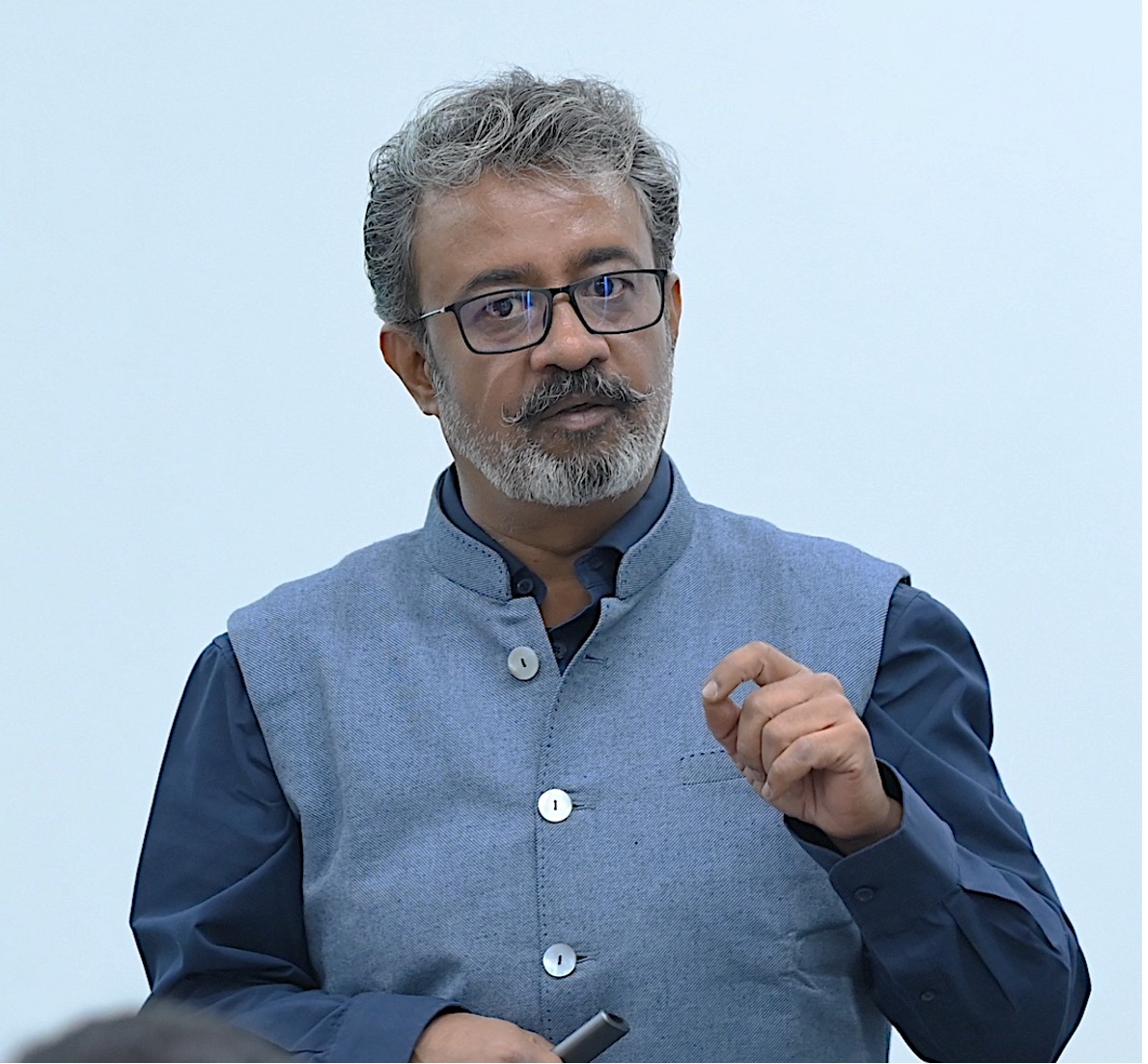
About the Author
Founder Director, ProventusHR · MGSCC Master Coach · NDA Alumnus
Founder of ProventusHR and principal architect of ExperienceLearning and REEL|Life. 25+ years across leadership advisory, executive coaching, and experiential design across 14 industries. 9x Brandon Hall HCM Excellence Award winner (2022 to 2025).
Full Profile ›