

The equity-versus-equality distinction has been visualised so frequently, as the image of people of different heights standing on boxes of the same size to see over a fence, that it has become almost invisible through familiarity. The image is pedagogically useful and conceptually accurate: it shows, with admirable directness, that treating everyone identically does not produce equivalent outcomes when the starting conditions are not equivalent. Providing the same resource to people with different needs produces different results. The image makes this point clearly. What it does not show, and what is considerably harder and considerably more important to communicate, is what acting on that insight actually requires of the leaders responsible for delivering it.
Understanding the distinction intellectually is now relatively widespread among leaders who have engaged with diversity and inclusion content. The operational translation of that understanding into daily leadership practice remains substantially rare. The gap between the idea and the practice is where most equity work fails, and it fails not because leaders are insincere about the principle but because the principle, when it is taken seriously rather than endorsed rhetorically, makes specific and uncomfortable demands on how authority, resources, and opportunity are distributed within the leader’s sphere of influence.
This essay is about those demands, specifically, practically, and with appropriate attention to why they are more difficult to meet than the simplicity of the principle suggests.
The first demand: seeing actual difference rather than managing perceived difference
The most fundamental demand that genuine equity makes on leaders is the demand to actually see the different starting conditions, different constraints, different contexts, and different barriers that the people in their team bring with them to work. Not to assume these differences, not to apply demographic stereotypes about what particular individuals must be experiencing, but to actually develop the understanding of each person’s actual situation that genuine equity requires.
This is harder than it sounds because organisations are built around the fiction of the generic employee, the person without specific identity characteristics whose professional role is the primary relevant fact about them. Performance management systems, development processes, promotion criteria, and workload distribution mechanisms are almost always designed with this generic employee in mind, which means they produce systematically biased outcomes for people whose actual situations deviate from the generic assumption in ways that the system does not account for.
The woman who is equally qualified and equally productive as her male colleague but who is also carrying the primary weight of childcare responsibilities does not have the same access to the high-visibility after-hours work that is disproportionately rewarded in promotion decisions. The outcome is not equal even if the formal system applies the same criteria to both. The person from a first-generation professional background who did not inherit the social capital, the networking habits, the ease with senior sponsors that defines access to informal development opportunities in most large organisations, does not have equal access to the development that the formal system purports to make available to everyone. The difference is invisible from within the formal system because the formal system was not designed to see it.
Seeing it requires the kind of specific, curious, and sustained attention to each person’s actual situation that is both demanding and, in most organisational cultures, not rewarded. The manager who invests time in genuinely understanding the specific constraints and context of each person they lead is doing something that the formal performance management system usually does not measure and often actively discourages by rewarding throughput over relationship quality. Equity requires this investment anyway, because without it the leader is distributing resources and opportunity according to a model of their team that does not reflect the actual differences that equity is designed to address.
The second demand: differentiating what equity requires from what consistency requires
One of the most common and most consequential resistances to equity in practice is the conflation of equity with inconsistency. The manager who provides different support, different flexibility, different developmental investment to different people on the basis of their different starting conditions is, in this framing, being unfair to the people who are receiving less. The fairness norm that is being invoked is equality: everyone should be treated the same. The equity norm that is being resisted is that everyone should receive what they actually need, which will not be the same when their actual needs differ.
The practical challenge is that the distinction is legitimate in both directions. Treating people differently purely on the basis of identity characteristics that are irrelevant to the specific situation is both unfair and counterproductive. There are also genuine consistency requirements in organisations: the norms about what constitutes acceptable performance, what behaviours violate the organisation’s values, and what the basic expectations of professional conduct are, need to apply consistently or they lose their function and their fairness. Equity does not mean that these requirements vary by identity.
What equity means, in the specific context of leadership practice, is that the support, investment, access, and accommodation that enable people to meet consistent standards are distributed in proportion to what each person needs to meet them, rather than in proportion to what the person has already demonstrated without support. This distinction is practically important because it locates the site of differentiation correctly: not in the standards or the expectations, but in the support and opportunity that enable people to meet them.
Making this distinction clearly and consistently, to the team and to stakeholders outside the team, is one of the specific communication challenges of equity practice. The manager who can say “I have the same expectations of everyone on this team, and I invest differently in different people because their starting conditions and development needs are different” is doing something that most managers have not been equipped or encouraged to do. It requires the clarity to articulate the distinction, the confidence to maintain it under challenge, and the genuine knowledge of each person’s situation to make the differentiation credible rather than arbitrary.
The third demand: addressing systemic barriers rather than only individual ones
Genuine equity practice eventually confronts the leader with barriers that are not within their individual power to change but that are systematically disadvantaging people in their team. The performance management system that evaluates output without accounting for the differential access to opportunity that produces it. The promotion process that weighs informal sponsorship relationships more heavily than formal performance evidence, in contexts where informal sponsorship networks are not equally accessible to all. The meeting culture that rewards a specific kind of visible, rapid contribution over other equally valuable forms of input that the culture’s norms render less visible.
These systemic barriers are the domain of equity in the fuller, structural sense. Individual leaders cannot unilaterally change them. But individual leaders can name them, bring them to the attention of the people with the authority to change them, protect the people in their teams from their worst effects to the extent that is possible within their own sphere of authority, and advocate for the systemic changes that genuine equity requires. This advocacy is itself a form of equity practice, and it is one that most leaders who endorse equity in principle do not practise in ways that create the organisational pressure needed to produce systemic change.
The reason the advocacy is rare is that it requires the leader to position themselves as a critic of the systems in which they operate, which carries reputational and political costs in most organisations. The leader who says, in a talent review meeting, “our promotion process is systematically disadvantaging people from non-traditional backgrounds because it weights informal sponsorship that those people have unequal access to” is saying something true, evidence-based, and professionally risky. The professional risk is real. The systemic benefit of normalising honest critique of inequitable systems is also real, and it accumulates in proportion to the number of leaders who are willing to take the risk.
The specific leadership behaviours equity requires in daily practice
The daily practice of equity is constituted by small, consistent, specific choices that individually seem minor and that cumulatively produce either an equitable or an inequitable environment for the people in the leader’s sphere of influence.
Sponsorship allocation is one of the most consequential of these choices. Who the leader actively advocates for in talent conversations, whose name they raise in rooms where opportunities are being discussed, whose work they make visible to people who have the power to affect that person’s career, is a daily act of resource allocation that determines whose careers are accelerated and whose stagnate. Research on sponsorship consistently finds that the informal networks through which sponsorship flows are homogeneous in ways that reinforce existing patterns of advantage, which means equity in sponsorship requires deliberate disruption of the default patterns rather than simply operating within them.
Assignment of high-visibility work is a related and equally consequential choice. The research on how leaders allocate stretch assignments consistently finds patterns that follow demographic lines in ways that are not explained by performance differences: the high-visibility, high-development work that accelerates careers tends to flow to the people who most closely resemble the leader in background and social style, while the lower-visibility operational work that does not accelerate careers flows disproportionately to people who differ from that template. Leaders who are not actively monitoring and correcting this pattern in their own assignment decisions are, regardless of their intentions, systematically producing inequitable development outcomes.
Equity is not giving everyone the same thing. It is giving everyone what they actually need. That distinction sounds simple and is demanding in practice, because it requires seeing each person as they actually are rather than as the generic employee the system was designed for.
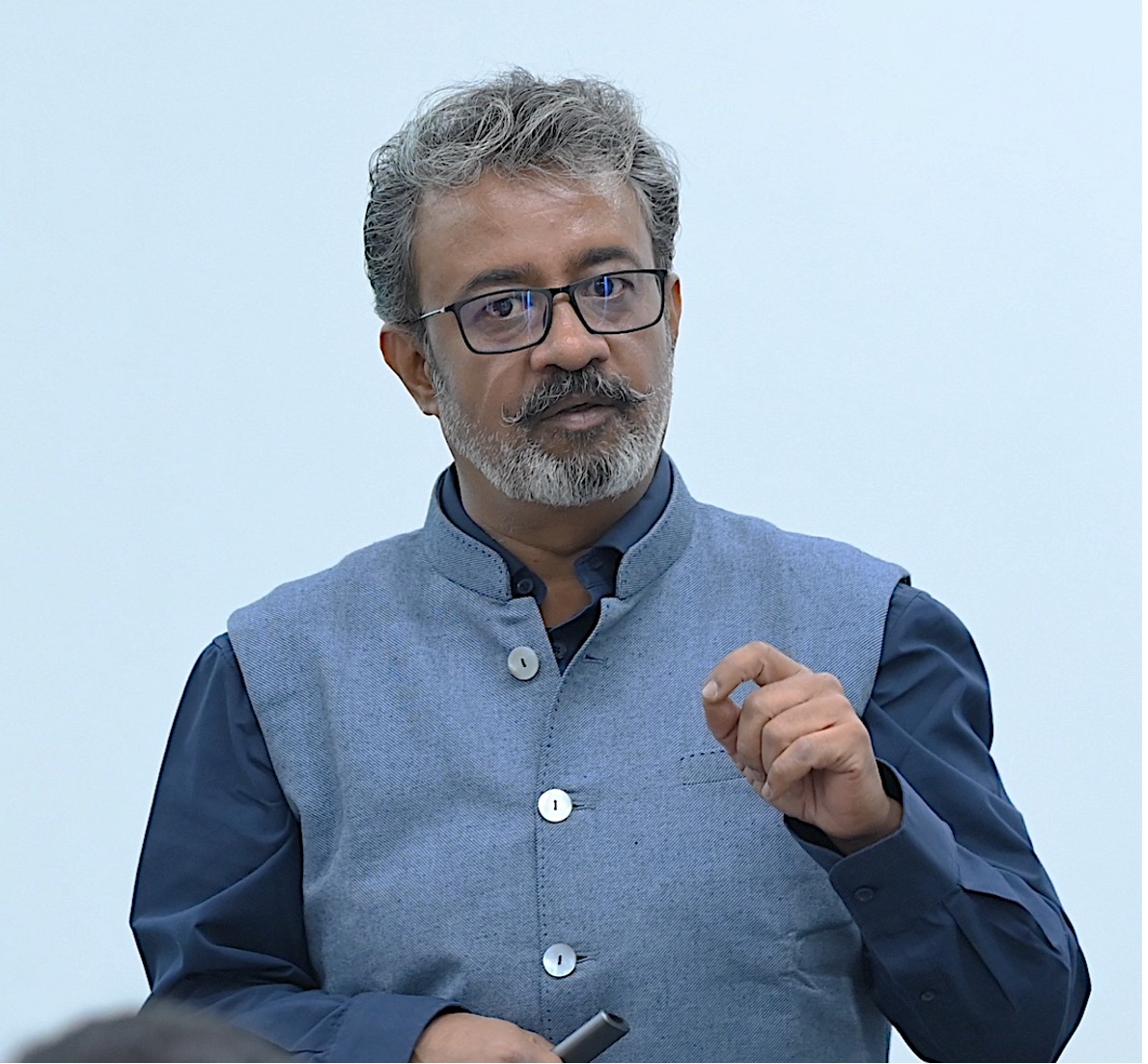
About the Author
Founder Director, ProventusHR · MGSCC Master Coach · NDA Alumnus
Founder of ProventusHR and principal architect of ExperienceLearning and REEL|Life. 25+ years across leadership advisory, executive coaching, and experiential design across 14 industries. 9x Brandon Hall HCM Excellence Award winner (2022 to 2025).
Full Profile ›