

The standard employee value proposition is a list. Competitive compensation, good benefits, career development opportunities, a positive work environment, a purpose-driven organisation. This list, or some variation of it, appears in the talent strategy documents and employer brand communications of a very large proportion of large organisations. It also fails, with considerable regularity, to retain the specific people whose retention most determines the quality and the continuity of the organisation’s performance. Understanding why it fails, and what a more effective EVP design looks like, requires moving beyond the list to the specific psychological and relational dynamics that actually determine whether talented people choose to stay.
The first problem with the standard list is that it describes what organisations offer rather than what specific individuals are looking for. Individual motivation is more varied, more specific, and more context-dependent than any standard list can capture. The assumptions embedded in the standard EVP, that compensation is primary, that career development means hierarchical progression, that positive work environment means pleasant colleagues and adequate physical conditions, that purpose means the organisation’s social impact mission, are all partially true for some people in some circumstances and significantly wrong for many people in many circumstances.
The second problem is that the standard EVP is evaluated primarily as a recruitment tool rather than as a retention framework. The elements that are most effective at attracting candidates are not necessarily the same elements that most determine whether those candidates stay and contribute at their full potential once they have joined. The organisation that designs its EVP primarily around attraction, and then does not attend to whether the promised experience is actually being delivered, is systematically creating the expectations that produce the disappointment that produces the early departures that it is trying to prevent.
What the research on retention actually identifies as determinative
The research on voluntary turnover in knowledge-intensive organisations is both extensive and relatively consistent in its conclusions. The factors that most powerfully predict whether a high-performing employee will choose to stay are not primarily the elements of the standard EVP. They are relational and developmental in character, and they operate primarily at the level of the immediate manager relationship and the specific team context rather than at the organisational level.
Marcus Buckingham and Curt Coffman’s research for the Gallup organisation, synthesising data from millions of employees across multiple industries and countries, identified the quality of the immediate manager relationship as the primary determinant of engagement and retention, outweighing compensation, benefits, and organisational reputation in predictive power. The specific dimensions of the manager relationship that most powerfully predicted retention were: whether the employee felt their manager knew them as a person rather than only as a role, whether they believed their manager cared about their development, whether they felt their contribution was seen and specifically recognised, and whether they trusted their manager to be honest with them about both their performance and their prospects.
None of these dimensions appears prominently in the standard EVP list, and none of them is primarily the product of organisational-level decisions. They are the product of specific daily behaviours of specific managers, which means that the most effective retention lever available to most organisations is the quality of their first-line and middle management practice rather than the design of their organisational benefits architecture.
The three segments that require different EVPs
One of the most consequential errors in EVP design is the treatment of the employee population as a single segment with uniform preferences and priorities. The diversity of individual motivation within any large organisation is sufficient that a single EVP, however thoughtfully designed, will be genuinely compelling to some people and significantly misaligned with the actual priorities of others. Effective EVP design requires at minimum the identification of the specific segments of the employee population that most need to be retained, and the design of specific EVP elements that are genuinely compelling to each of those segments.
The segmentation that is most useful for EVP design is not demographic. It is motivational: the identification of what specifically drives each segment’s decision to stay or leave, at the level of the specific relational, developmental, and cultural conditions that matter to them rather than at the level of the compensation and benefits categories that are easiest to measure. This motivational segmentation requires the kind of honest, regular dialogue with employees about their actual experience and their actual priorities that most organisations do not systematically conduct, and it requires the willingness to act on what that dialogue reveals rather than simply reporting its findings.
Three segments warrant particular attention in most large organisations because they represent the population whose retention has the most significant impact on organisational performance and because their retention drivers are consistently distinct from those of the broader population. High-potentials and early-career talent: people who have significant external options and whose primary retention drivers are typically developmental, relational, and purpose-related rather than primarily financial. Senior subject matter experts: people who have deep expertise in specific domains that are difficult to replace and whose primary retention drivers are typically professional recognition, intellectual challenge, and the quality of the environment in which they can apply their expertise without the bureaucratic constraints that large organisations frequently impose on their most capable specialists. Senior leaders: people whose retention directly determines the quality of the organisation’s leadership capability and whose primary retention drivers are typically a combination of challenge, autonomy, relationships with peers and the CEO, and a sense that their contribution is producing something meaningful.
The specific EVP elements that the research identifies as most effective
The EVP elements that the research most consistently identifies as differentially effective in retaining high-value employees are worth specifying, because they diverge significantly from the standard list in ways that have direct implications for where organisations invest their retention resources.
The quality of the work itself, specifically whether the work is intellectually challenging, meaningful, and allows genuine expression of the employee’s most important capabilities, consistently outweighs compensation as a retention driver for high-value employees whose compensation is already adequate. This finding is both consistent in the research and consistently underweighted in EVP design, which devotes significant investment to compensation benchmarking and relatively little to the design of work architecture that makes the work itself genuinely engaging.
The quality of learning and development, specifically whether the organisation provides genuine development opportunities that expand the employee’s capabilities and their market value rather than simply developing their capability to perform the current role more efficiently, is a consistently powerful retention driver for early-career and high-potential employees. The organisation that develops its people in ways that increase their external options as well as their internal value is making a bet that employees will stay because the internal opportunity is more compelling than the external alternatives, rather than because they feel trapped by limited external options. This is a more generous and ultimately more effective bet than the alternative.
The quality of leadership, specifically whether the employee’s immediate leader is someone they genuinely respect and from whom they are genuinely learning, is among the most powerful retention drivers available and among the hardest to systematically deliver because it depends on the specific quality of specific people in specific roles. The EVP element of “great leaders” is one of the most commonly stated and most frequently undelivered promises in employer branding, and the gap between the promise and the reality is one of the most consequential sources of early-career departure in knowledge-intensive organisations.
The connection between EVP authenticity and retention quality
One of the most consequential mistakes in EVP design is the gap between the EVP as communicated externally and the EVP as experienced internally. The specific cost of this gap is not primarily reputational. It is the systematic mismatch between expectations and experience that produces the early attrition of exactly the people whose expectations were most carefully cultivated by the EVP communication. The authentic EVP, genuinely compelling rather than merely attractive, is built from honest acknowledgment of both what the organisation genuinely offers and what it genuinely requires. The organisation that can say precisely what working here actually feels like, both its specific demands and its specific rewards, is telling a story that some candidates will find less appealing and that will genuinely attract and retain the candidates for whom that story is genuinely compelling. Authenticity in EVP design is not primarily an ethical choice. It is the most effective available retention strategy for the specific people whose retention most determines the quality of the organisation.
The employee value proposition that retains the people who matter most is not primarily about what the organisation offers. It is about the specific quality of the daily experience of working here: the work, the people, the development, and the sense of genuine contribution. These are harder to design than benefits packages and more consequential than almost anything else the organisation can invest in.
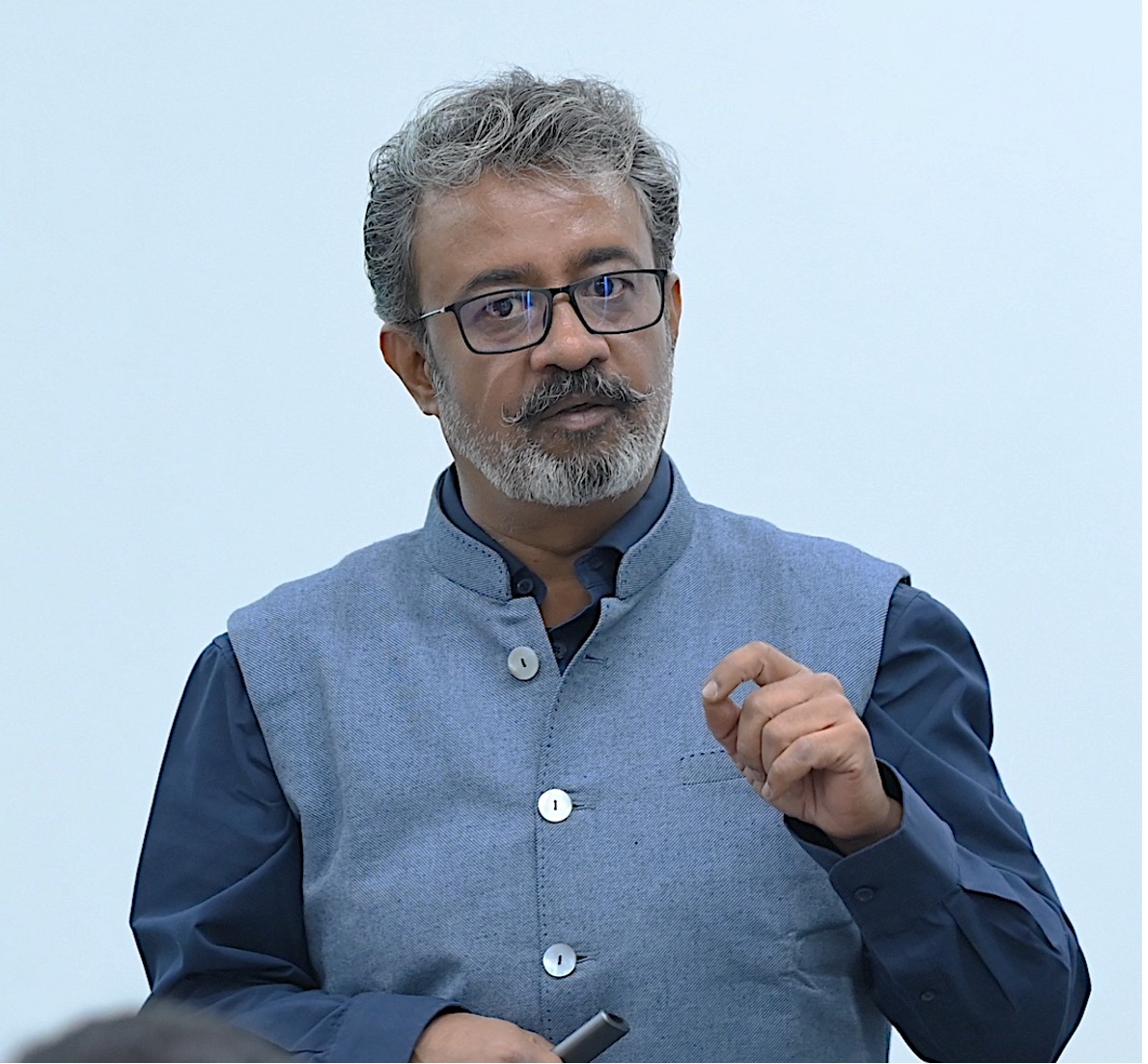
About the Author
Founder Director, ProventusHR · MGSCC Master Coach · NDA Alumnus
Founder of ProventusHR and principal architect of ExperienceLearning and REEL|Life. 25+ years across leadership advisory, executive coaching, and experiential design across 14 industries. 9x Brandon Hall HCM Excellence Award winner (2022 to 2025).
Full Profile ›