

How ProventusHR’s CHRO Advisory practice helped a healthcare GCC use DMAIC discipline to turn employee voice into a sustainable culture architecture
In 2026, culture remains one of the most invoked, yet most under-engineered, ideas in organizational life. Boards talk about it. CHROs measure it. Leaders invoke it during town halls. Employees experience it every day. Yet, in many organizations, culture still lives in the gap between what is declared and what is repeatedly experienced.
This gap matters because culture is not an ornamental layer over strategy. It is the social operating system through which strategy is interpreted, decisions are made, power is exercised, collaboration is enabled, and performance is sustained. Edgar Schein, one of the most influential scholars of organizational culture, famously argued that the only thing of real importance leaders do is create and manage culture, and if they do not manage it, it manages them.
That insight is particularly relevant for Global Capability Centres, especially in high-growth sectors such as healthcare, pharma, technology, analytics, and shared services. These organizations often scale faster than their cultural systems can mature. They build capability, expand functions, hire talent, and deliver business outcomes, but the employee experience can become uneven. Different teams begin to carry different norms. Managers become the primary interpreters of culture. Employees identify strongly with their immediate unit, but less clearly with the enterprise.
This was the challenge facing a rapidly growing healthcare GCC. The business was performing well. The talent base was strong. Functional teams were committed and capable. Yet leadership sensed a deeper fragmentation in the employee experience. People were proud of their teams, but they struggled to articulate what connected them to the broader organization. The problem was not absence of culture. The problem was inconsistency of culture.
The ProventusHR CHRO Advisory Lens
ProventusHR approached this not as a training mandate, not as an engagement campaign, and not as a values refresh. It was treated as a CHRO Advisory challenge, requiring diagnosis, design, governance, and institutionalization.
The advisory premise was simple: culture cannot be delegated to communication. It must be embedded into the operating rhythm of the enterprise.
The CHRO Advisory team worked across four layers:
- Culture Diagnosis: understanding the actual lived employee experience.
- Culture Architecture: translating aspiration into pillars, values, behaviours, and rituals.
- Culture Governance: creating ownership structures beyond HR.
- Culture Sustainability: embedding recognition, listening, leadership stewardship, and ambassador capability.
This enabled the engagement to move beyond the usual vocabulary of culture into a more disciplined question: what must the organization design, reinforce, and govern so that the desired culture becomes consistently experienced at scale?
The Central Insight: Culture Is Not Built by Communication, It Is Built by Systemic Reinforcement
Most culture efforts fail because they begin with expression rather than diagnosis. They produce new values, refreshed vocabulary, leadership messages, campaign assets, posters, events, and symbolic rituals. These may create momentary visibility, but they rarely change lived experience.
The deeper question is not, “What should we say our culture is?”
The more consequential question is, “What behaviours, systems, moments, and leadership practices must consistently reinforce the culture we want people to experience?”
This distinction shaped the entire engagement. Instead of treating culture as a branding or communication initiative, ProventusHR applied the Six Sigma DMAIC methodology: Define, Measure, Analyze, Improve, and Control. This gave the process discipline, sequencing, evidence, and sustainability.
In consulting terms, DMAIC helped shift the conversation from cultural aspiration to cultural architecture.
Define: Clarifying the Real Business Problem
The first phase focused on problem definition. Culture transformation efforts often lose force because they move too quickly into solutioning. A workshop is designed. A campaign is launched. A value statement is rewritten. Yet the organization may not have adequately defined the business problem culture is expected to solve.
ProventusHR began by engaging leadership stakeholders to understand the strategic context. What was the organization trying to become? What growth ambitions were emerging? What employee experience was required to support that growth? What was already working? Where was cultural friction being felt?
Several patterns became visible. The organization had strong functional identity, but limited enterprise identity. Employees felt connected to their teams, but less consistently connected to a shared organizational narrative. Values existed, but were not always translated into observable behaviours. Culture was present, but it was not equally understood, experienced, or reinforced across the enterprise.
Three diagnostic questions framed the engagement:
- What is the current culture that employees actually experience?
- What culture does the organization need for its next stage of growth?
- How can that culture be embedded and sustained at scale?
This was a critical move. It prevented the work from becoming a generic culture program. It anchored the intervention in business growth, employee experience, and organizational scalability.
How ProventusHR achieved this:
The CHRO Advisory team translated a broad cultural concern into a clear problem charter. Instead of beginning with pre-designed interventions, ProventusHR helped leadership define the business case for culture, the employee experience challenge, and the desired future state. This ensured that the work had strategic relevance, not merely programmatic visibility.
Measure: Listening Before Designing
The second phase focused on the Voice of Employee.
Culture cannot be responsibly redesigned through leadership intuition alone. Leaders may define intent, but employees reveal experience. The diagnostic therefore included employee feedback sessions, focus groups, leadership interviews, engagement data review, informal listening forums, and cross-functional conversations.
This produced a richer, more grounded view of the organization’s cultural reality.
Three themes stood out.
First, recognition was inconsistent. Employees appreciated the organization’s growth and opportunities, but felt that appreciation for behaviours such as collaboration, innovation, discretionary effort, and cross-functional support was not always visible.
Second, the organization lacked a common culture thread. Employees experienced culture differently depending on their manager, team, location, and function. This variability created unevenness in belonging, recognition, and behavioural expectations.
Third, employees wanted stronger connection. They wanted to feel part of something larger than their immediate team. They wanted clearer alignment between values, leadership behaviours, and everyday experience.
This phase reinforced an important principle: employee voice is not merely an input into culture work. It is the legitimacy base of culture work.
How ProventusHR achieved this:
ProventusHR designed the Voice of Employee process to go beyond satisfaction indicators. The intent was to capture patterns of lived experience: how employees experienced recognition, belonging, leadership behaviour, collaboration, and organizational identity. By combining structured listening with qualitative interpretation, the advisory team converted employee sentiment into actionable cultural evidence.
Analyze: From Symptoms to Root Causes
The Analyze phase separated symptoms from underlying causes.
The issue was not that the organization lacked talent, commitment, or goodwill. It had all three. The issue was that culture was not yet operating as an integrated system. Several root causes emerged.
There was no shared behavioural framework. Values existed conceptually, but employees could not always connect them to daily decisions, meeting behaviours, managerial choices, or collaboration norms.
Reinforcement mechanisms were fragmented. Recognition, onboarding, performance conversations, leadership communication, employee engagement, and internal mobility were operating as separate practices rather than as connected culture carriers.
Culture ownership was too centralized. Employees often perceived culture as something owned by HR or senior leadership. This limited distributed ownership.
There were too few formal culture carriers. The organization lacked an intentional network of employees and managers who could model, interpret, and reinforce culture at the grassroots level.
This led to the central consulting diagnosis:
The organization did not have a culture problem. It had a culture consistency problem.
That distinction changed the solution. The goal was not to invent a new culture. It was to clarify, codify, amplify, and institutionalize the best of the culture already present, while reducing variability in how it was experienced.
How ProventusHR achieved this:
ProventusHR’s CHRO Advisory lens helped distinguish between culture symptoms and system gaps. The team did not frame the issue as a deficit in employee motivation or leadership intent. Instead, it identified the absence of a common culture architecture, inconsistent reinforcement mechanisms, and limited distributed ownership as the core design challenges. This reframing allowed the organization to act on the system, not blame the people.
Improve: Building the Culture Architecture
The Improve phase translated diagnosis into design.
A series of co-creation workshops with leadership and employee groups helped build a culture architecture around four interdependent elements: cultural pillars, values in action, employee experience moments, and distributed ownership.
1. Defining the Culture Pillars
Four culture pillars were established:
Client Centricity
Performance Driven Excellence
Global Mindset with Inclusion
Innovation
These pillars connected business ambition with cultural expectation. They gave employees a common language for what the organization wanted to stand for, not as abstract philosophy, but as a pattern of behaviour.
How ProventusHR achieved this:
ProventusHR facilitated the co-creation process so that the pillars emerged from business strategy, leadership aspiration, and employee voice. This was important because culture pillars must not feel imposed. They must feel recognizable, credible, and useful to the people expected to live them.
2. Translating Values into Observable Behaviours
The organization identified five core values:
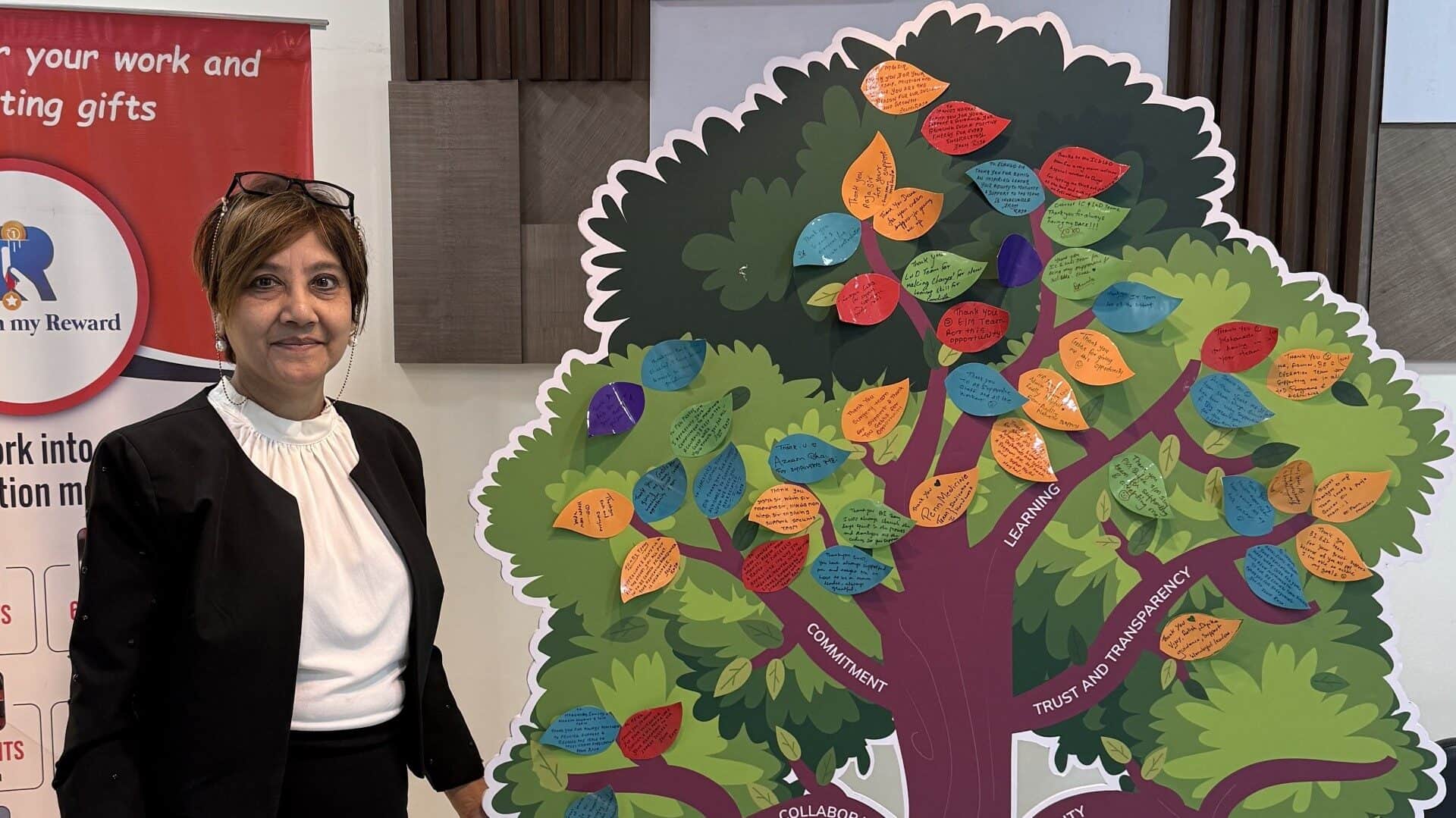
Trust & Transparency
Integrity
Commitment
Collaboration
Learning
The critical design move was to translate each value into behavioural evidence. This is where many organizations fall short. Values such as trust, integrity, and collaboration are easy to endorse, but difficult to operationalize unless people know what they look like in meetings, decisions, feedback conversations, escalation moments, client interactions, and cross-functional work.
How ProventusHR achieved this:
The advisory team helped convert values into behaviour statements, examples, and expectations. This made culture coachable, observable, and discussable. Managers could now ask not only whether employees understood the values, but how those values were showing up in everyday action.
3. Creating the Culture Equation
To connect strategy with execution, the engagement introduced a simple culture equation:
Shared Values × Aligned Behaviours × Reinforced Systems = Enduring Culture Shift
The equation made a powerful point. Culture does not change because values are communicated. Culture changes when values, behaviours, and systems repeatedly point in the same direction.
How ProventusHR achieved this:
ProventusHR used the Culture Equation as a unifying design principle. It helped leadership see that culture required alignment across communication, recognition, leadership practice, employee lifecycle, and governance. This shifted the organization from “launching culture” to “engineering reinforcement.”
4. Designing Rites of Passage
Employees do not experience culture in theory. They experience it through moments.
The engagement therefore identified key employee lifecycle touchpoints and redesigned them as culture-building opportunities. These included joining the organization, probation completion, internal movement, recognition milestones, leadership transitions, and long-service celebrations.
This was an important shift from event-based culture to experience-based culture. Each moment became an opportunity to signal what the organization valued, how people belonged, and what behaviours were celebrated.
How ProventusHR achieved this:
The CHRO Advisory team mapped moments that matter across the employee lifecycle and redesigned them as culture rituals. This ensured that culture was experienced during transitions, milestones, recognition moments, and identity-forming events, not only during formal campaigns.
5. Building the Culture Playbook
A comprehensive culture guidebook was developed to institutionalize the framework. It captured the mission, vision, culture pillars, values, expected behaviours, employee responsibilities, and shared standards for workplace conduct.
The playbook was not designed as a static document. Its purpose was to become a reference architecture for managers, employees, HR, communication, recognition, onboarding, and leadership conversations.
How ProventusHR achieved this:
ProventusHR created the Culture Playbook as an implementation tool, not merely a documentation exercise. It translated the framework into usable language for employees and managers. It became a common reference for onboarding, team conversations, leadership messaging, and culture reinforcement.
6. Establishing the Ambassador Ecosystem
Perhaps the most important design element was the Culture Ambassador framework.
The organization recognized that culture cannot be sustained through leadership messaging alone. It requires distributed stewardship.
A multi-tier network was therefore created:
Culture Champions: Senior leaders responsible for sponsorship, visibility, and advocacy.
Culture Facilitators: Managers and mid-level employees responsible for enabling dialogue and creating safe spaces.
Culture Influencers: Frontline employees who model desired behaviours and drive peer-level adoption.
This architecture moved culture from being an HR-led program to becoming an enterprise-wide movement.
How ProventusHR achieved this:
ProventusHR designed the ambassador ecosystem as a distributed ownership model. The team defined roles, responsibilities, capability requirements, and engagement mechanisms for each layer. This helped the organization avoid the common trap of culture being seen as an HR-owned initiative. Instead, culture became something carried by leaders, managers, and employees together.
Control: Making Culture Sustainable
The Control phase ensured that the work did not end with launch.
Many culture initiatives begin with high energy and fade into symbolic memory. To avoid that, the engagement created a governance and reinforcement model.
This included a Culture Office for annual planning and program management, a Culture Council for strategic review and governance, an Ambassador Network for grassroots adoption, and structured listening mechanisms for continuous employee feedback.
Recognition mechanisms were also strengthened through peer appreciation, spot awards, storytelling campaigns, values-based recognition, and quarterly culture awards.
The goal was not merely to celebrate culture. It was to make culture observable, discussable, measurable, and renewable.
Capability-building journeys were created for ambassadors, facilitators, and leaders so that culture stewardship could mature over time. This mattered because culture cannot be outsourced to a document. It must be held by people who know how to interpret it, model it, and renew it in daily practice.
How ProventusHR achieved this:
ProventusHR helped build the sustainability architecture: governance forums, recognition mechanisms, listening loops, ambassador development, and leadership stewardship. This Control phase was critical because the true test of culture advisory is not the elegance of the design, but whether the organization can keep the culture alive after the consultants leave.
The ProventusHR CHRO Advisory Difference
What made this engagement distinctive was not only the use of DMAIC, but the way ProventusHR integrated consulting discipline with human experience.
The work combined:
Business alignment, ensuring that culture was linked to growth, client centricity, performance, inclusion, and innovation.
Employee listening, ensuring that the design was grounded in lived experience rather than leadership assumption.
Behavioural clarity, translating values into observable actions.
Experience design, using rites of passage and moments that matter to make culture visible.
Governance design, creating a Culture Office, Culture Council, and ambassador network.
Sustainability planning, embedding listening, recognition, capability building, and periodic review.
This is the essence of ProventusHR’s CHRO Advisory work: not merely advising HR leaders on programs, but helping them design people systems that create clarity, alignment, ownership, and cultural advantage.
What This Case Teaches Leaders
The engagement offers five lessons for organizations serious about culture transformation.
First, culture must be treated as an enterprise change agenda, not an HR campaign. HR may steward the process, but leadership and employees must co-own the outcome.
Second, employee voice must precede culture design. Without listening, culture work risks becoming leadership projection.
Third, values must be translated into behaviours. If values cannot be observed, they cannot be coached, recognized, measured, or sustained.
Fourth, systems must reinforce the desired culture. Recognition, onboarding, communication, performance management, leadership transitions, and employee rituals must all carry the same cultural signal.
Fifth, culture requires distributed ownership. Sustainable culture is not cascaded. It is carried.
Conclusion: Culture as Competitive Infrastructure
The most powerful outcome of this engagement was not the creation of a playbook, a workshop, or an ambassador network. Those were important artefacts. The deeper outcome was the creation of shared language, behavioural clarity, and distributed ownership.
The DMAIC methodology brought rigor to a domain often treated too loosely. It enabled the organization to define the problem, listen carefully, analyze root causes, design targeted interventions, and build sustainability mechanisms.
Culture transformation is not about changing people through slogans. It is about creating the conditions in which people can consistently demonstrate the behaviours that make strategy real.
In a world where business models are copied, technologies are adopted quickly, and talent is mobile, culture remains one of the few sources of durable differentiation. But only if it is designed with intent, reinforced through systems, and owned collectively.
The real test of culture is not what appears on the wall. It is what happens in the room when decisions are made, tensions surface, priorities compete, and people decide what kind of organization they are willing to build together.
At ProventusHR, we do not see culture as an HR program to be rolled out. We see it as an organizational system to be diagnosed, designed, reinforced, and sustained. Through our CHRO Advisory practice, we help organizations move from fragmented employee experience to shared cultural clarity, from leadership intent to lived behaviour, and from culture messaging to culture architecture.