

Mike Judge’s Office Space, released in 1999 to modest box office returns and subsequently becoming one of the most persistently quoted workplace films in the American cultural canon, is not primarily a comedy. It is an unusually accurate ethnographic study of the specific social and psychological pathologies produced by a particular kind of corporate culture, one whose central characteristics have proven considerably more durable than the specific technology sector setting of the film would suggest.
The film is set in a generic software company called Initech, whose primary cultural features are hierarchical absurdity, the performance of compliance divorced from genuine engagement, the systematic disconnection between individual effort and visible organisational outcome, and the specific kind of low-grade demoralisation that these features produce in the people who work within them. What makes it useful as a leadership development text is not the comedy, though the comedy is genuinely excellent and works partly because it is so precise about its target. What makes it useful is that the organisational dynamics it depicts are both recognisable and analytically coherent in ways that purely satirical workplace depictions usually are not.
Thirty years after its release, the film serves as a remarkably prescient document about the specific cultural pathologies that purpose-deficit organisations produce, and about the human cost of those pathologies in ways that the management literature of the same period was considerably slower to articulate.
The TPS report problem and what it actually diagnoses
The TPS report is the film’s central running joke and its central organisational metaphor. For those unfamiliar: it is a bureaucratic document that the protagonist Peter is required to produce but that has no discernible purpose, is reviewed by no fewer than eight supervisors, and whose cover sheet format is changed by a memo that is sent by multiple managers independently without any of them apparently knowing that the others are sending it.
The comedy is in the specificity. Judge is not satirising bureaucracy in the abstract. He is depicting the specific mechanism through which bureaucratic accretion produces purpose deficit: each individual component of the process has a rationale that can be articulated, but the aggregate produces something whose relationship to organisational purpose is invisible to the people doing it. The employee who cannot see how their work connects to anything that matters is not simply demotivated. They are performing the rational response to an organisational environment that has genuinely severed the connection between individual effort and discernible outcome.
This is the specific organisational pathology that Daniel Pink’s research on motivation, published a decade after the film, would document as one of the primary drivers of engagement deficit in knowledge work contexts. Pink’s framework identifies autonomy, mastery, and purpose as the three intrinsic motivators whose presence predicts engagement in knowledge work and whose absence predicts the kind of managed compliance, minimal effort sufficient to avoid consequences, that Peter Gibbons and his colleagues are practising throughout the film. The TPS report problem is a purpose problem. And purpose problems do not respond to management pressure, which is what Initech applies in response to them, with predictably counterproductive results.
The Lumbergh problem: management as performance
Bill Lumbergh, the film’s primary antagonist and one of the most enduring managers in the fictional canon, is a character who has been discussed extensively in management commentary and who deserves that attention. What makes Lumbergh useful as an analytical figure is the specific combination of his qualities: he is not malicious, he is not particularly stupid, and he is not entirely wrong about the specifics of the organisational requirements he is enforcing. What he is, with remarkable precision, is a manager whose relationship to management is primarily performative rather than functional.
Lumbergh’s management consists of the performance of oversight: the walk-by comments, the yes-it-would-be-great-if phrasing that is syntactically polite and functionally directive, the strategic use of coffee mug and never-quite-engaged tone that signals authority without engaging with it. He manages the signifiers of management without managing the substance of management, which would require genuine attention to whether the people reporting to him are engaged, effective, and working toward outcomes that matter. His attention is elsewhere: it is on the performance of his own authority in a culture that has made the performance of authority its primary management technology.
The Lumbergh character is most useful in facilitation when it prompts the honest question: in what ways am I performing management rather than doing it? The answer to this question is almost always more extensive than the person asking it is initially comfortable with, because the performance of management is not cynical. It is adaptive. It is what the social environment of most hierarchical organisations has trained its managers to do. The manager who has learned that the appearance of oversight is what gets rewarded does not consciously choose performance over substance. They have been shaped by a reinforcement environment that rewards performance and does not reliably distinguish it from substance.
The consultants and the rationalisation of cruelty
The “two Bobs” scene, in which efficiency consultants interview employees to determine who should be “let go” in a downsizing, is the film’s darkest and most analytically rich sequence. The consultants are not depicted as malicious. They are depicted as applying a process, one that is ostensibly rational, evidence-based, and professionally executed, to a decision that is fundamentally human and whose human dimensions the process is specifically designed to bracket.
The interview questions are precisely calibrated to produce a specific kind of employee self-presentation: the performance of engagement, initiative, and irreplaceability. Employees who are genuinely engaged and genuinely valuable are not necessarily advantaged in this process, because the process is not measuring engagement and value directly. It is measuring the ability to perform engagement and value in a structured interview context under acute stress. The employee who is most anxious about being fired is the one whose presentation is most likely to be distorted by that anxiety, which means the process systematically disadvantages the people who most care about being there.
The Bobs sequence is useful in leadership development conversations about restructuring, performance management, and the specific ways in which organisational processes can be simultaneously procedurally correct and substantively unjust. The procedural correctness is not incidental. It is functional: it provides the organisation with the social and ethical cover to make decisions whose human cost is real and whose justification is primarily financial. The person who can apply a rational process to a decision whose human dimensions are being systematically excluded from that process is not, in the film’s treatment, a villain. They are a person who has learned to be effective within the specific demands of their organisational context. Which is, of course, exactly the point.
Milton and the irreducible cost of being overlooked
Milton Waddams, the mumbling fire-safety-obsessed employee whose stapler is repeatedly taken and who is eventually removed from the payroll through a system error without anyone noticing, is the film’s most achingly observed character and its most direct statement about the human cost of organisational invisibility.
Milton’s situation is an extreme version of a recognisable organisational reality: the employee who has been so effectively rendered invisible by the organisation’s social and structural dynamics that their presence or absence no longer registers with the people who have the authority to affect their situation. This is not cruelty in the active sense. It is the specific cruelty of indifference, which is in some ways harder to address than active cruelty because it has no perpetrator, only a systemic condition of insufficient attention.
The research on belonging uncertainty and its consequences, discussed elsewhere, is directly relevant here. Milton’s behaviour, the quiet seething, the passive resistance, the eventual arson, is the behavioural expression of accumulated belonging deficit. He does not belong to this organisation in any meaningful sense, and his response to that condition is rational within the logic of someone for whom all legitimate channels for addressing it have been either ignored or actively foreclosed.
In leadership development conversations, Milton prompts the question that is almost never asked in talent management discussions: who are the people in this organisation who are slowly being rendered invisible, and what is the organisational cost, not only to those people but to the collective, of their progressive disengagement? The answer to this question is almost never comfortable, and it almost always reveals that the organisation’s attention and care are distributed with a degree of inequity that the organisation’s stated values do not endorse.
What the film gets right that twenty years of management theory missed
What Office Space understands, with a precision that much of the management literature of its era did not, is that the fundamental problem of disengagement in hierarchical organisations is not motivational. It is not primarily that employees do not want to work well. Most employees begin their employment with genuine motivation to contribute and with a desire to be part of something that matters. The question the film is answering is not “why are these people unmotivated?” It is “what does this organisation do to people who were motivated when they arrived?” And the answer, depicted with the fidelity of genuine observation, is that the organisation systematically breaks the connection between individual agency and meaningful outcome, rewards the performance of compliance over genuine engagement, renders individual people invisible through the accumulated weight of bureaucratic indifference, and then responds to the resulting disengagement with the management pressure that caused it.
This is not a satirical exaggeration. It is a description, more or less accurate, of the operating dynamics of a significant proportion of the large, complex organisations that exist in the world. The fact that it is funny is a testimony to the gap between how these dynamics are experienced by the people inside them and how they are officially understood by the people who design and manage the systems that produce them. Closing that gap is the actual work of organisational culture change.
The film is a comedy about being treated as a means rather than an end, and about the specific forms of resistance that people develop when the organisation has exhausted their goodwill without exhausting their presence. It is one of the most accurate documents about corporate culture that the popular media has produced.
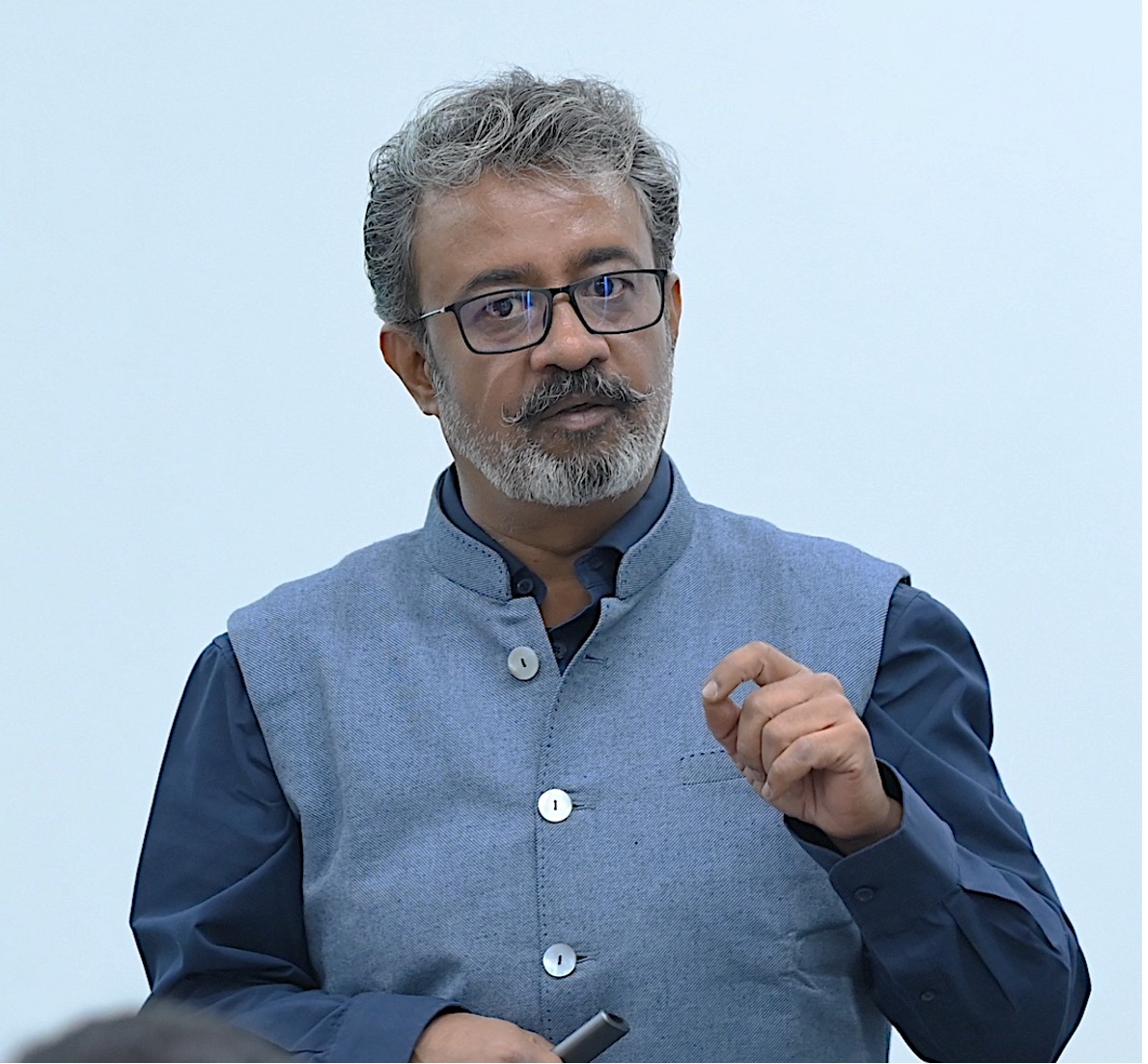
About the Author
Founder Director, ProventusHR · MGSCC Master Coach · NDA Alumnus
Founder of ProventusHR and principal architect of ExperienceLearning and REEL|Life. 25+ years across leadership advisory, executive coaching, and experiential design across 14 industries. 9x Brandon Hall HCM Excellence Award winner (2022 to 2025).
Full Profile ›