

The conversation about culture in most boardrooms has a specific and predictable character. It surfaces in two main contexts. The first is when something goes wrong: a governance failure, a senior departure that takes people by surprise, a talent crisis that the organisation cannot explain through external market factors alone, an execution gap that the strategy cannot account for. In these moments, culture is invoked as explanation or as problem to be solved. The second context is the culture initiative: the periodic, often sizeable investment in defining or refining the organisation’s values, embedding them through communication campaigns, and measuring their presence in the engagement survey. Between these two contexts, culture is largely absent from serious strategic conversation.
This is a consequential gap, and it is largely self-created. The reason culture is not a regular feature of serious strategic conversation in most organisations is not that it is unimportant. It is that it is difficult to manage with the tools that most strategic conversations are built around. Culture resists the precision that financial and operational metrics provide. It cannot be directly changed by executive decision in the way that a capital allocation or a structural reorganisation can be. Its effects are diffuse, lagged, and difficult to attribute causally with the confidence that most organisations require before treating something as a strategic priority. All of these features are real, and all of them contribute to the systematic underinvestment in culture as a strategic asset that characterises most large organisations.
What they do not do is diminish the evidence. The evidence on the relationship between organisational culture and business outcomes is now extensive, longitudinal, and consistent enough that the selective inattention to it in most strategic conversations represents something other than rational evidence-based decision-making. It represents, with some precision, the prioritisation of what is measurable over what is consequential, which is one of the most persistent and most expensive forms of management dysfunction available.
What the evidence actually says
John Kotter and James Heskett’s research in Corporate Culture and Performance, published in 1992 and still among the most rigorous empirical investigations of the culture-performance relationship, followed 207 firms over an eleven-year period and found revenue growth differences of the order of four to one between high-culture and low-culture firms in the same industries. Net income growth differences were even larger. These are not marginal differences attributable to measurement error or confounding variables. They are substantial, consistent, multi-year differences that the culture variable reliably predicted even when other performance drivers were controlled for.
Subsequent research has consistently replicated and extended these findings. The Great Place to Work Institute’s multi-decade body of research has repeatedly documented the relationship between trust-based cultures and shareholder returns that exceed market comparators over sustained periods. Harvard Business School research on the relationship between culture and mergers and acquisitions finds culture incompatibility to be the primary factor in post-merger value destruction, outweighing strategic fit, financial structure, and operational synergy as a predictor of integration failure. McKinsey’s organisational health research, drawing on data from thousands of organisations across dozens of countries, identifies organisational health, largely constituted by cultural factors, as the strongest predictor of sustained organisational performance available.
The evidence is not ambiguous. What is ambiguous is why it does not translate more reliably into the prioritisation of culture as a strategic management topic.
The three dimensions of culture that matter strategically
Strategic culture management requires distinguishing between the dimensions of culture that have direct and measurable strategic consequences and those that are primarily matters of organisational identity and values expression. This distinction does not dismiss the latter as unimportant. It simply focuses the strategic conversation on the dimensions where the evidence of business impact is most direct.
The first strategically consequential dimension is information quality: the degree to which the organisation’s culture supports the honest, timely, and complete flow of information upward, downward, and laterally. Cultures in which bad news is suppressed, in which the bearer of unwelcome truths is at reputational risk, in which the social norms of the organisation reward managed communication over honest communication, systematically degrade the quality of the information that reaches decision-makers. The decisions made on the basis of that degraded information are correspondingly worse. This is not a marginal effect. It is the mechanism through which organisational cultures directly determine the quality of strategic decisions, independent of the analytical capability and intellectual quality of the people making those decisions.
The second strategically consequential dimension is execution fidelity: the degree to which strategies that are decided are actually implemented as intended throughout the organisation, rather than being modified, diluted, or actively resisted by the cultural immune system of the organisation as they travel from the executive suite to the front line. Strategy execution research consistently finds that the most significant source of execution failure is not poor strategy design or inadequate operational capability but the gap between the cultural norms of the organisation and the behaviours that the strategy requires. When the strategy requires collaboration in a culture that rewards individual performance, the strategy loses. When the strategy requires long-term investment in a culture that manages performance on quarterly cycles, the strategy loses. The culture wins by default because culture is the background condition against which all explicit initiatives run, and background conditions beat foreground initiatives over any sufficiently long time horizon.
The third strategically consequential dimension is talent economics: the degree to which the organisation’s culture attracts, retains, and elicits the full capability of the people whose quality determines the quality of the business. The war for talent is a cultural competition as much as a compensation competition. For the people whose options are broadest, those whose performance makes them valuable enough to have genuine external alternatives, the quality of the daily experience of work is a significant factor in where they choose to invest their energy. Culture that is toxic, stagnant, or fundamentally dishonest about the gap between its stated values and its actual operating norms drives these people out preferentially, which means organisations with poor cultures lose their best people at disproportionate rates and attract their replacements from the population with fewer options.
How culture becomes a strategic liability without anyone noticing
The mechanism through which organisational culture shifts from an enabler to a liability is gradual enough that it is almost invisible to the people inside the organisation experiencing it incrementally, and dramatic enough that it is difficult to reverse once it has progressed past a specific threshold.
The trajectory typically begins with success. An organisation develops a cultural identity in the context of a specific competitive and organisational challenge. The culture that is formed in the crucible of that challenge is well-adapted to it. The values, behaviours, and operating norms that define the culture are genuinely functional responses to the actual demands of the environment the organisation is navigating. They produce results. They are celebrated and reinforced. They become part of the organisation’s identity.
The environment then changes, as environments do. The competitive dynamics shift. The customer demands evolve. The technology landscape is disrupted. The regulatory context transforms. And the culture, which was once a well-adapted response to one set of conditions, is now an inertial force operating against the adaptation that the new conditions require. The norms that made the organisation successful in the prior environment are now the primary obstacle to the adaptation that the new environment demands.
What makes this transition so difficult to manage is that the people who benefited most from the prior culture, who built their careers and their professional identities within it, are typically the people with the most organisational power to resist the change. The culture that needs to change is the culture whose defenders are the most powerful people in the organisation. This is why genuine culture change is among the most demanding adaptive challenges available, and why organisations that attempt it through structural and communication interventions alone, without addressing the specific leadership behaviours and incentive structures that sustain the old culture, reliably fail to produce the change they are trying to build.
The specific work of culture as strategic management
Managing culture as a strategic asset requires treating it with the same seriousness of measurement, accountability, and senior attention that the organisation applies to its financial and operational metrics. This means several specific things that most organisations do not currently do.
It means measuring culture with sufficient specificity and frequency to detect degradation before it becomes crisis. Annual engagement surveys are not adequate for this purpose. They are retrospective, coarse, and too infrequent to provide the signal needed for active management. Real-time sensing approaches, combined with qualitative inquiry at the team and function level, provide substantially better data for the specific dimensions of culture that have strategic consequences.
It means holding senior leaders explicitly accountable for the cultural dimensions of their leadership, not only for the business outcomes they produce. This requires performance management systems sophisticated enough to assess and reward the quality of the environment leaders create, not only the results they generate. Organisations that measure leaders only on results inadvertently create incentives for the short-term extraction of performance from culture at the expense of the long-term sustainability of the culture itself.
It means treating the alignment between stated cultural values and actual leadership behaviour as a boardroom-level governance question rather than as an HR programme. Culture failure is governance failure. The board that is satisfied with an annual culture report while the organisation’s senior leadership team is systematically modelling behaviours inconsistent with the stated values is not exercising effective oversight. It is ratifying a form of strategic risk that it does not have adequate visibility into.
Culture is not the soft side of strategy. It is the medium in which strategy either lives or dies. The organisation that manages its financial assets with rigour while leaving its cultural assets to organic development is systematically optimising for the wrong variable.
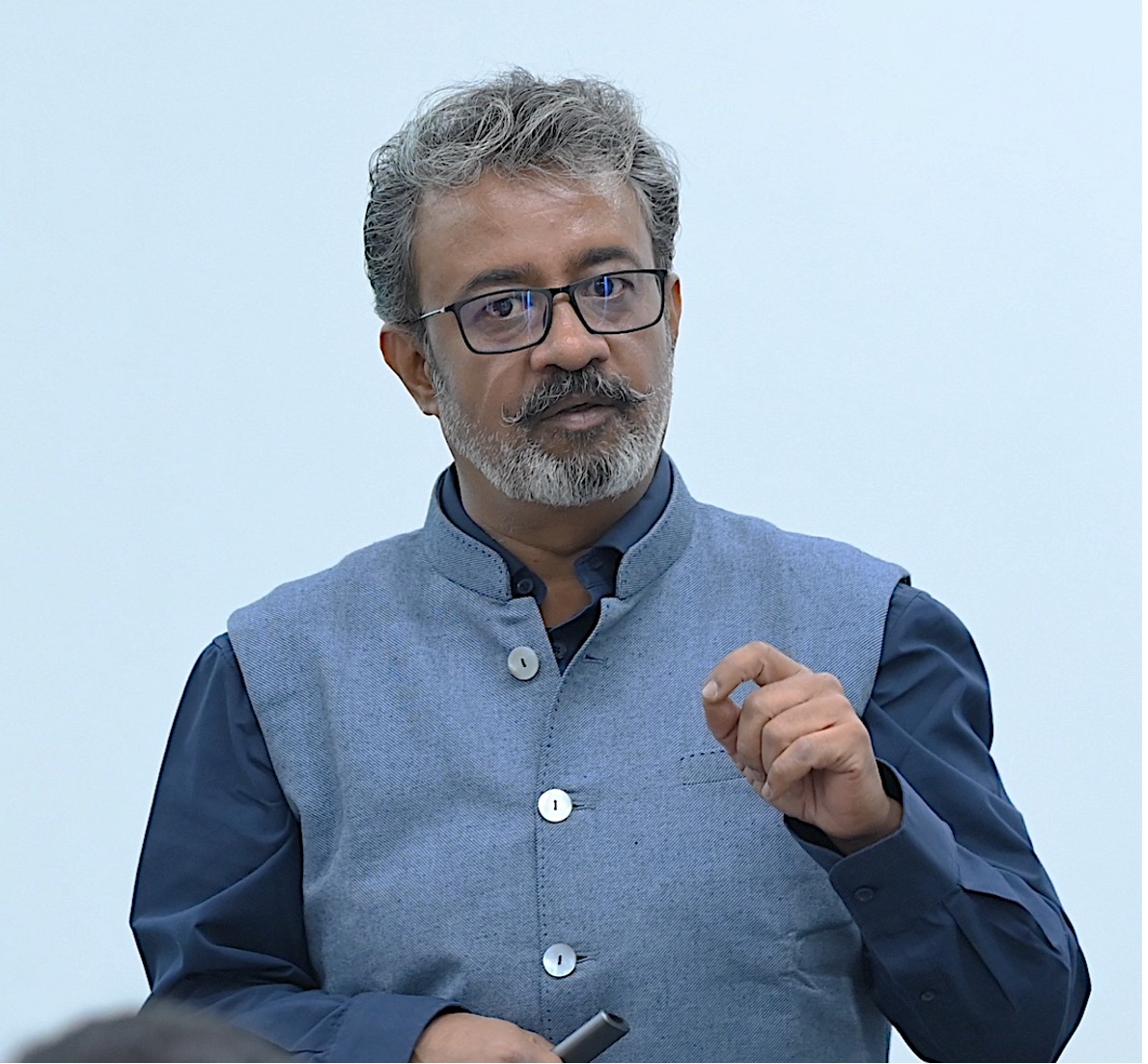
About the Author
Founder Director, ProventusHR · MGSCC Master Coach · NDA Alumnus
Founder of ProventusHR and principal architect of ExperienceLearning and REEL|Life. 25+ years across leadership advisory, executive coaching, and experiential design across 14 industries. 9x Brandon Hall HCM Excellence Award winner (2022 to 2025).
Full Profile ›