

The Chief Human Resources Officer role is undergoing a transformation whose pace and consequence are consistently underestimated, both by the organisations that employ CHROs and by the HR profession itself. The transformation is moving the role from a position that is primarily administrative, managing the processes and policies through which the organisation manages its workforce, to one that is primarily strategic, shaping the human capital conditions that determine the organisation’s capacity to execute its strategy and navigate its competitive environment. This is not a new observation. It has been the subject of HR thought leadership for at least two decades. What is different now is that the gap between the aspiration and the reality has become consequential enough that organisations are beginning to hold CHROs to account for it in ways that the profession has not previously experienced.
The gap between administrative and strategic HR is not primarily a skills gap. Most CHROs of large organisations have the intellectual capability, the business knowledge, and the professional experience needed to operate strategically. The gap is more often a positioning gap: the organisation has not created the conditions for the CHRO to operate strategically, or the CHRO has not yet built the specific relationships and capabilities needed to claim the strategic positioning that the role requires. Sometimes it is both simultaneously.
Understanding the specific features of the journey from administrative to strategic CHRO is more useful than either celebrating the aspiration or lamenting the gap. The journey has specific stages, specific obstacles, and specific developmental investments that distinguish CHROs who have made it from those who have not.
What the administrative CHRO does well and why it is insufficient
The administrative CHRO model is not without genuine value. The CHRO who ensures that the organisation’s HR processes are consistent, legally compliant, and efficiently delivered is providing a service that has real commercial value and that many organisations do not receive adequately. Poorly designed performance management processes, inadequate succession planning, non-compliant employment practices, and inefficient talent acquisition all have real and measurable commercial costs. The administrative CHRO who addresses these problems with rigour and consistency is producing genuine value.
The insufficiency of the administrative model is not about the quality of what it produces within its scope. It is about what falls outside that scope. The organisation’s culture and its alignment with the strategic direction. The leadership capability required to execute the strategy at each level of the organisation and whether it is actually present. The specific human capital conditions that are most significantly constraining business performance and whether those conditions are being actively managed or simply monitored. The board’s understanding of the human capital risks that are most material to the organisation’s strategy. These are not peripheral questions. They are central strategic questions whose answers determine whether the organisation’s strategy succeeds or fails, and they are questions that the administrative CHRO model is not designed to address.
The three transitions that define the journey
The journey from administrative to strategic CHRO involves three specific transitions that are separable but typically sequential, and that each require specific developmental investment and specific organisational conditions to navigate successfully.
The first transition is from process owner to business partner. This is the move from managing HR processes to understanding the business well enough to connect HR strategy directly to business outcomes. The CHRO who has made this transition can tell the CEO not only what the HR function is doing but what the HR function is producing that the business needs: specifically, how the current people strategy is enabling or constraining the delivery of the business strategy, and what specific HR investments would produce the most significant improvement in business performance. This transition requires the CHRO to develop the financial literacy, commercial acumen, and strategic thinking capability that are the common language of the CEO and CFO conversations where the most consequential strategic decisions are made.
The second transition is from business partner to organisational architect. This is the move from understanding and supporting the business strategy to actively shaping the organisational conditions through which the strategy is delivered. The CHRO who has made this transition is not simply responding to what the business needs from HR. They are proactively designing the culture, the talent architecture, and the leadership development system that will produce the business capability the strategy requires. This requires the confidence to bring a strategic human capital perspective to the CEO and board that is genuinely independent rather than simply reflective of what the business leaders have already decided, and the credibility to sustain that perspective under pressure from leaders who may have different views.
The third transition is from organisational architect to enterprise leader. This is the move from leading the HR function to being a genuine member of the enterprise leadership team: a leader whose contribution to the organisation’s direction and performance is not limited to the human capital domain but extends to the full range of strategic questions that the executive team addresses. The CHRO who has made this transition is as likely to be the person who names the strategic risk that others have not seen, who challenges the commercial logic of a proposed acquisition, or who articulates the case for a market entry, as they are to be the person who addresses the talent implications of those decisions. This transition requires both the business capability that the first and second transitions develop and the personal authority and confidence to use it beyond the traditional boundaries of the HR role.
What organisations need to do differently to enable the journey
The CHRO who aspires to make these transitions faces obstacles that are primarily organisational rather than primarily personal. The most significant is the structural positioning of the HR function: most HR functions are positioned as support functions rather than as strategic functions, which means their primary accountability is for the efficiency and compliance of HR processes rather than for the strategic outcomes those processes are designed to enable. This positioning produces a CHRO role that is evaluated primarily on process quality rather than on strategic impact, which creates incentives that work against the transitions described above.
The organisational changes that most powerfully enable the strategic CHRO are the changes in how the CEO relationship with the CHRO is structured and what it is designed to produce. The CEO who engages the CHRO as a genuine strategic thinking partner, who brings the CHRO into strategic decisions before they have been made and expects the CHRO to contribute a human capital perspective that shapes those decisions, is creating the conditions for the CHRO to develop and demonstrate strategic capability. The CEO who engages the CHRO only after strategic decisions have been made and expects them to manage the human implications of those decisions is maintaining the administrative positioning that prevents the strategic transition from occurring.
The CEO relationship as the primary developmental context
The single most important factor in whether a CHRO successfully makes the journey from administrative to strategic is the quality of their relationship with the CEO. The CEO who genuinely believes that human capital is a primary driver of business performance, who engages the CHRO in the full range of strategic conversations rather than only the specifically HR-designated ones, and who creates the conditions for the CHRO to develop the business acumen and the organisational standing that the strategic role requires, is the single most enabling context for the CHRO’s development. The CHRO in a disabling CEO context faces a specific choice: invest in changing the relationship through the quality and relevance of their contributions, or accept that the strategic positioning will not be achieved in this specific context. Neither is an easy choice, and neither produces the strategic CHRO role through any mechanism other than the sustained quality of the contribution the CHRO makes in the specific organisational context they are in. The CHROs who have made the transition successfully describe it consistently as a function of earning the strategic relationship rather than being granted it.
The organisations that have most successfully enabled this transition describe a common pattern: the CHRO who built credibility through the consistent quality of their business-oriented HR input over an extended period, rather than through positional authority or structural change, was ultimately the one whose strategic input was genuinely sought and genuinely influential. The journey is longer than most aspiring strategic CHROs initially expect, and its progress is less linear than most development frameworks suggest. But it is achievable, and its achievement is one of the most consequential improvements available to the organisations whose people strategy most directly determines whether their business strategy succeeds.
The strategic CHRO is not made by title change or by added responsibility. They are made by the combination of genuine business capability, the confidence to use it beyond traditional HR boundaries, and a CEO relationship that creates the conditions for strategic human capital input to genuinely shape the organisation’s direction.
The CHRO who navigates these demands without a confidential external thinking partner is carrying more than the role requires. ProventusHR’s CHRO Advisory practice, led by Sathi Aich-Dharap, exists precisely for the decisions that sit at the intersection of business strategy, people architecture, and organisational politics – the conversations a CHRO cannot have internally.
About the Author
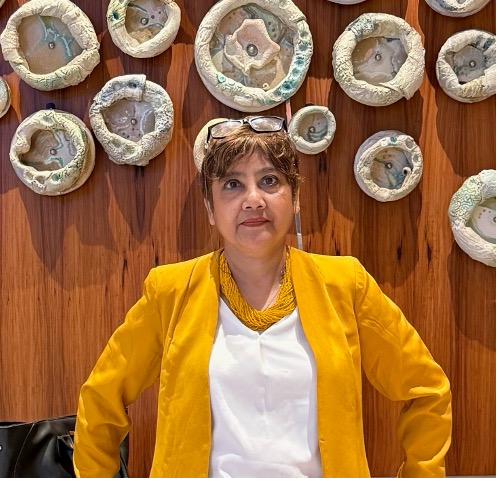
Sathi Aich-Dharap
CHRO Advisory Practice Lead, ProventusHR · PGCHRM, XLRI Jamshedpur · Advisory Board, Masters' Union Delhi
Sathi Aich-Dharap leads the CHRO Advisory practice at ProventusHR. Two decades of senior HR leadership across Consumer Goods, BFSI, and Global Services. Certified LEAF Facilitator and Predictive Index Analyst.
Full Profile ›