

The relationship between the Chief Human Resources Officer and the board of directors is one of the most consequential and most consistently underdeveloped governance relationships in large organisations. Its underdevelopment is not primarily a function of the board’s insufficient attention to human capital matters, though that is a genuine and growing problem. It is primarily a function of how the CHRO role has historically been positioned in relation to the board: as a functional head who reports on people metrics, manages the executive compensation and succession processes, and provides assurance that the organisation’s HR practices are legally compliant and culturally appropriate. This positioning, which is the standard positioning in most large organisations, is both too narrow and too passive for what the board actually needs from the CHRO in the current environment.
The governance risks that are most consequential for most large organisations in the current decade are substantially human capital risks: risks related to talent, to culture, to leadership capability, to the organisation’s ability to attract and retain the people whose quality determines the quality of the business. These risks do not sit neatly within the traditional governance frameworks that boards use to oversee financial and operational risk. They require a different kind of board attention and a different kind of CHRO input than the functional reporting model provides.
Building the CHRO-board relationship that genuine human capital governance requires involves changes on both sides: a more strategically engaged CHRO who brings the board the quality of thinking it needs on human capital matters, and a board that creates the conditions for that input to be genuinely sought and genuinely integrated into the organisation’s governance processes.
What boards actually need from the CHRO that most are not getting
The gap between what boards receive from CHROs and what effective human capital governance requires is specific enough to describe. Most boards receive quantitative reporting on turnover, engagement scores, headcount, and pay equity metrics. They receive succession planning updates that describe the pipeline for specified critical roles. They receive reporting on specific HR risks including litigation exposure, compliance status, and major employee relations issues. This reporting is legitimate and some of it is genuinely important for governance purposes.
What most boards do not receive from their CHROs is the qualitative strategic input that would allow them to assess the organisation’s human capital strategy with the same rigour they apply to its financial and operational strategy. They do not receive honest, forward-looking assessments of whether the culture is aligned with the direction the organisation is trying to move in. They do not receive specific analysis of the leadership capability gaps that most significantly risk the execution of the strategy. They do not receive honest assessment of whether the current talent architecture, the combination of people, capabilities, and organisational structures through which the strategy is to be delivered, is adequate for the demands the strategy places on it. These are not peripheral human capital questions. They are central strategic questions with human capital dimensions, and the CHRO is the only member of the executive team with both the mandate and the expertise to address them at board level.
The reasons most CHROs do not bring this quality of input to the board are a mixture of structural and developmental. Structurally, the CHRO is typically not a permanent member of the board agenda in the way that the CFO and the CEO are: they attend specific agenda items rather than participating in the full range of strategic discussions where their input would be most useful. Developmentally, the CHRO who has built their career primarily in HR functional management has not always developed the financial literacy, the strategic business acumen, or the board-level communication skills that the strategic advisory role requires.
The CHRO as risk officer for human capital
One of the most useful reframings available for the CHRO-board relationship is the explicit positioning of the CHRO as the organisation’s primary risk officer for human capital, with the same governance standing and the same board accountability that the Chief Risk Officer or Chief Financial Officer has for their respective domains. This framing is not merely rhetorical. It has specific implications for how the CHRO prepares for and presents at board meetings, for how the board structures its oversight of human capital matters, and for the specific questions that the governance relationship is designed to answer.
The human capital risks that deserve the same quality of board attention as financial and operational risks include: leadership capability risk, the risk that the organisation lacks the leadership quality at critical levels to execute the strategy; culture risk, the risk that the organisation’s culture is producing outcomes that are inconsistent with its values or that are creating specific commercial, reputational, or regulatory exposure; talent pipeline risk, the risk that the organisation’s succession depth is insufficient to maintain continuity of critical capabilities across leadership transitions; and employee relations risk, the risk that the organisation’s employment practices are creating exposure that the current risk management framework is not adequately capturing.
Presenting these risks with the same analytical rigour, the same quantitative evidence, and the same forward-looking scenario analysis that the CFO brings to financial risk presentation is both achievable and consequential for the quality of the board’s human capital oversight. It requires the CHRO to develop a risk reporting framework for human capital that is as sophisticated as the frameworks that exist for financial and operational risk, and it requires the board to develop the evaluative literacy needed to assess the quality of that reporting. Neither of these is a trivial development challenge, but both are achievable with the right investment and the right developmental partnership between CHRO and board.
Building the relationship that genuine governance requires
The structural and developmental changes needed to build the CHRO-board relationship that genuine human capital governance requires are best approached as a sustained partnership development rather than as a series of procedural changes to the board agenda. The CHRO who wants to build this relationship needs to invest in the specific dimensions of their personal development that the board relationship requires: the ability to translate complex human capital dynamics into the strategic and financial language that boards use, the confidence to bring honest and sometimes unwelcome assessments of human capital risk to a group of peers whose formal authority exceeds their own, and the specific board-level communication skills that are quite different from the communication skills required in the executive team or in the HR function.
The board that wants to improve its human capital oversight needs to invest in its own development as well: developing the literacy to ask better questions of the CHRO, creating the agenda space for genuine human capital strategy discussions rather than only functional reporting, and building the relationship with the CHRO that allows the honest exchange that genuine governance requires. The board chair who invests in the CHRO relationship with the same intentionality that is typically applied to the CEO and CFO relationships is building the human capital governance capability that most boards currently lack.
Building the relationship through specific interactions
The CHRO-board relationship is built through the accumulated quality of specific interactions over time. The specific interactions that most powerfully build it are those in which the CHRO brings genuinely useful, evidence-based, forward-looking input to a question the board is genuinely wrestling with: before a major strategic decision, when the board is grappling with a specific governance risk, when the CEO transition is approaching. Building the habit of this kind of proactive input requires the CHRO to maintain close enough engagement with the board’s actual governance agenda that they can identify the specific moments when human capital input is most consequential. The board member who has received genuinely useful CHRO input in a difficult governance moment is a qualitatively different ally for the CHRO’s broader governance agenda than the board member who has received well-organised but largely administrative talent reporting. Building the former relationship, across multiple board members and across the board’s committee structure, is the specific relational investment that produces the CHRO-board relationship the organisation needs.
The CHRO who tells the board what it wants to hear about the organisation’s people is not doing governance. The CHRO who tells the board what it needs to know, with the courage and the rigour that genuine board-level accountability requires, is providing the most valuable human capital service available to the organisation.
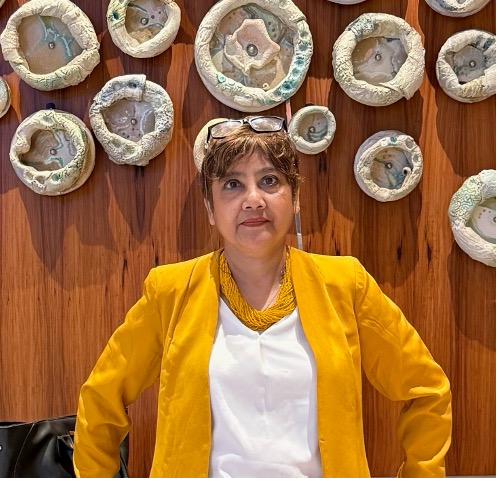
About the Author
Sathi Aich-Dharap
CHRO Advisory Practice Lead, ProventusHR · PGCHRM, XLRI Jamshedpur · Advisory Board, Masters' Union Delhi
Sathi Aich-Dharap leads the CHRO Advisory practice at ProventusHR. Two decades of senior HR leadership across Consumer Goods, BFSI, and Global Services. Certified LEAF Facilitator and Predictive Index Analyst.
Full Profile ›