

There is a specific feeling that people describe when they say they belong somewhere. It is not comfort, exactly, though comfort may be part of it. It is not simply being included in the formal structures of the organisation, though that matters too. The feeling of belonging that people describe when asked to locate it precisely is something more specific: the sense that who they actually are, not the professional version they have learned to present but the more complete person they carry into the building, is known, valued, and genuinely welcome. Not tolerated. Not accommodated. Welcome.
This distinction between toleration and genuine welcome is the one that most diversity programmes are not designed to produce, and not equipped to produce. Which is not a criticism of the intention behind them. Most diversity programmes are designed by people who genuinely want to produce belonging and who have invested real thought in how to do it. The gap is structural rather than motivational. It is a gap between what the programme is built to do and what belonging actually requires.
Diversity programmes, at their most common, are designed to increase representation, reduce bias in hiring and promotion decisions, provide training in inclusive language and behaviour, and create formal channels for the voices of underrepresented groups to reach decision-makers. These are all legitimate and necessary components of an inclusive organisation. None of them, individually or in combination, reliably produces the specific experience of belonging that the research consistently identifies as the most powerful driver of engagement, retention, and performance among the people whose inclusion the organisation says it is trying to build.
What the research on belonging actually says
The formal research on belonging at work is more recent than the research on diversity and inclusion, and it is more specific about the mechanisms through which belonging affects performance. Geoffrey Cohen and Gregory Walton’s work at Stanford, developed primarily in educational settings but with clear organisational analogs, identifies the specific psychological dynamic through which belonging uncertainty, the ambient doubt about whether one is genuinely valued and included, drains cognitive and emotional resources that would otherwise be available for performance.
The mechanism is this. When a person is uncertain about whether they genuinely belong in a context, they devote a continuous and largely unconscious portion of their cognitive resources to monitoring the social environment for signals that their belonging is accepted or threatened. Every ambiguous interaction becomes data to be processed. Every neutral response from a senior person becomes an occasion for interpretation. Every absence of inclusion becomes potential evidence of exclusion. This monitoring is not a choice. It is an automatic response to belonging uncertainty, and it is metabolically expensive. The person who is experiencing belonging uncertainty at work is, in a precise physiological sense, doing more work than the person who is not, even when their formal tasks are identical.
The organisational consequences are extensive and well-documented. People experiencing belonging uncertainty are less likely to ask for help, which means problems compound rather than getting addressed. They are less likely to offer creative input, which means the organisation loses their specific perspective precisely when it is most needed. They are less likely to take the kind of initiative that makes discretionary contribution visible, which means their actual capability is systematically underestimated by the people making decisions about their development and advancement. And they are more likely to leave, not necessarily immediately and not always consciously in response to the belonging question, but in the aggregate they depart at rates that diversity programmes reliably track without consistently understanding.
The representation-belonging gap
Many organisations have significantly improved their representation numbers at the entry level and, with more difficulty, at mid levels, without producing corresponding improvements in the belonging experience of the people those numbers represent. This gap is sometimes described as the difference between diversity and inclusion, with inclusion being the experiential quality that diversity as a demographic outcome does not automatically produce. But the belonging research suggests that even inclusion, in the sense of active participation in the formal structures of the organisation, is insufficient.
The reason the gap persists even in organisations that take inclusion seriously is that belonging cannot be produced by structural interventions alone. It requires something that structural interventions cannot reliably create: the experience of being genuinely known by the people one works with, in the fuller rather than the professional sense. Structural inclusion says: you have a seat at the table. Genuine belonging says: the specific perspective you bring from who you actually are, your identity, your experience, your way of seeing, is something this organisation genuinely wants and would be materially worse without.
That specific quality of valuing is not produced by representation policies or even by inclusion programmes. It is produced by the accumulation of specific interpersonal experiences in which the person discovers, concretely and repeatedly, that their actual contribution is seen and valued rather than their performed compliance with the dominant norms of the environment.
What produces belonging: the five conditions the research identifies
The research on belonging consistently identifies several conditions whose presence predicts belonging experience and whose absence predicts belonging uncertainty. These conditions are relational and cultural rather than structural, which is why they cannot be produced through policy change alone.
The first is psychological safety: the experience that it is safe to speak up, to disagree, to make mistakes, and to be genuine about one’s experience without risk of marginalisation or punishment. Amy Edmondson’s research on psychological safety across industries and contexts consistently finds that it is both rarer than organisations believe and more consequential for performance than most other organisational climate factors. The relationship between psychological safety and belonging is direct: belonging uncertainty is, in significant part, the uncertainty about whether genuine expression of self is safe in this context.
The second is meaningful contribution: the specific experience of having one’s actual input make a visible difference to the outcomes of shared work. Not being included in the room, but having what one brings to the room actually change what happens in it. This distinction matters because the experience of being formally included but substantively marginalised is one of the most corrosive experiences available in organisational life. It combines the social permission to be present with the implicit message that one’s perspective is not actually valued, which produces a more acute belonging uncertainty than simple exclusion would generate.
The third is authentic relationship: connections with colleagues that go beyond professional function to something more genuinely personal, without requiring the person to manage the discomfort of code-switching between their authentic self and a professional presentation calibrated to the dominant norms of the environment. The research on code-switching among employees from underrepresented groups consistently finds that the cognitive and emotional cost of sustained code-switching is significant and that it directly reduces the quality of contribution and the likelihood of sustained commitment to the organisation.
The fourth is what might be called identity safety: the specific experience that one’s identity, the dimensions of who one is that are most salient and most personally meaningful, is not a liability in this environment. The person of colour who is consistently asked to represent their entire community in every relevant conversation, the woman who is regularly complimented on how well she manages in a difficult environment, the person with a disability who receives constant minor accommodations that are well-intentioned and that nonetheless mark them as different from the default, are all experiencing forms of identity-salient treatment that, however benign their intent, undermine identity safety rather than producing it.
The fifth is growth opportunity: the experience that the organisation is investing in the person’s development in ways that reflect genuine belief in their potential rather than compliance with demographic targets. This condition is frequently underweighted in belonging discussions but is consistently identified in the research as among the most powerful predictors of belonging experience over time. The person who is present in the organisation but not visibly growing within it, whose development is adequate rather than genuinely prioritised, has a very specific kind of belonging uncertainty that is entirely compatible with formal inclusion and entirely incompatible with genuine commitment.
Why leader behaviour is the primary determinant
Every one of the five conditions described above is substantially determined by the daily behaviour of the immediate manager and, to a somewhat lesser degree, the senior leadership of the organisation. This is both the most important and the most challenging finding for organisations that are trying to build belonging, because it means that the primary intervention point is not programme design but leadership development and leadership accountability.
The manager who creates psychological safety consistently and specifically, who invites disagreement and protects the people who offer it, who names the contributions of each person specifically and in ways that demonstrate genuine attention to what makes each contribution distinctive, who manages performance honestly without either the warmth that avoids difficulty or the directness that ignores context, who notices belonging uncertainty when it appears and creates the specific conditions that address it, is producing belonging in their team regardless of whether the organisation has a belonging programme. And the manager who does not do these things is systematically undermining belonging regardless of how sophisticated the organisation’s diversity and inclusion infrastructure is.
This is why the most important intervention point for building genuine belonging in organisations is not the diversity programme. It is the development of leaders at every level in the specific capabilities that produce the five conditions identified above. These capabilities are learnable, but they are not learned through awareness training or policy education. They are learned through sustained practice in conditions that create genuine feedback about whether the belonging conditions are present or absent, combined with the kind of honest developmental conversation that helps leaders understand the specific gaps between their intentions and their actual impact.
The measurement problem and why it matters
One of the most significant structural challenges facing organisations that want to build genuine belonging is the difficulty of measuring it. Representation is easy to measure because it is demographic and visible. Belonging is experiential and relational and varies by individual, by team, and by the specific character of each person’s experience within the same formal structure.
The most common measurement approaches, annual engagement surveys with belonging-related items, are both too infrequent and too coarse to provide the signal needed to understand and address belonging at the level where it is produced: the daily micro-experiences of specific people in specific teams with specific managers. The belonging that is reported in an annual survey reflects the accumulated weight of a year’s worth of small experiences, and by the time the data is analysed and acted on, the experiences that produced it are months old and the conditions that generated them may already have changed.
More effective measurement approaches combine more frequent pulse data with qualitative inquiry that can surface the specific dimensions of the belonging experience that are present or absent for specific groups in specific parts of the organisation. The organisations that manage this most effectively treat belonging measurement as an ongoing organisational sensing capability rather than as a periodic audit, and they connect the measurement data directly to the accountability systems that determine whether managers are genuinely responsible for the belonging experience of their teams.
Diversity is a fact about who is in the room. Inclusion is a practice of ensuring they can participate. Belonging is the experience of mattering, of being genuinely wanted rather than formally accommodated. The first two can be structured. The third must be cultivated, and it is cultivated in the daily choices of every leader at every level.
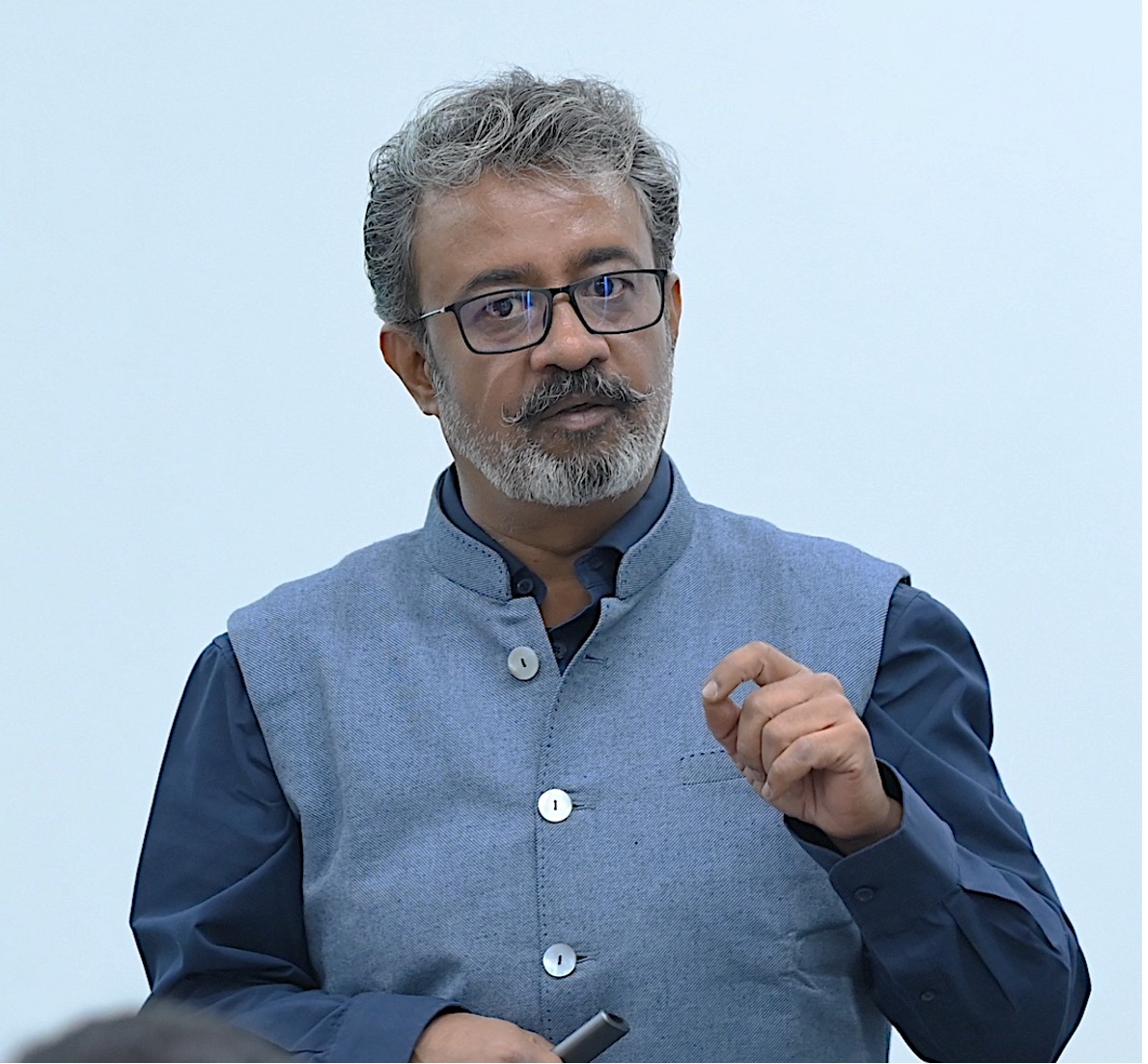
About the Author
Founder Director, ProventusHR · MGSCC Master Coach · NDA Alumnus
Founder of ProventusHR and principal architect of ExperienceLearning and REEL|Life. 25+ years across leadership advisory, executive coaching, and experiential design across 14 industries. 9x Brandon Hall HCM Excellence Award winner (2022 to 2025).
Full Profile ›