

The difficulty with documenting what changes when a senior leader is well coached is that the most significant changes are often the least visible ones. The organisation observes the outputs: improved stakeholder relationships, better team engagement scores, more effective cross-functional collaboration, fewer of the specific interpersonal friction points that had been identified as development areas. What the organisation does not observe is the interior shift that produces these outputs, the change in the leader’s relationship to their own professional identity, their own assumptions, and their own patterns that is the actual mechanism through which behavioural change occurs and is sustained.
This distinction matters because it determines what organisations should look for as evidence that coaching has been effective, and because it explains why the best coaching outcomes are not always the most immediately visible ones. The leader whose coaching has produced a genuine shift in their relationship to their own limitations is more likely to produce sustained behavioural change than the leader whose coaching has produced a set of new communication techniques applied over the old pattern. The former is genuine development. The latter is skill acquisition, which is valuable but more fragile.
What follows is an account, grounded in both the research and in extensive facilitation and coaching experience, of what specifically changes when executive coaching produces its best outcomes.
The shift in relationship to feedback
The most consistent and most foundational change produced by well-designed executive coaching is a fundamental shift in the leader’s relationship to feedback. Before effective coaching, most senior leaders receive feedback through a specific defensive architecture that has been built over decades of professional life in which negative feedback carried career consequences. The feedback is heard, processed, categorised as either accurate or attributable to the limited perspective of the person providing it, and either acted on or explained away. The process is largely automatic and the defensive architecture is largely invisible from inside it.
After effective coaching, the relationship to feedback changes in ways that are specific and observable. The leader who has been through genuinely productive stakeholder-centred coaching has experienced, often for the first time in their professional life, what it is like to receive comprehensive, anonymous, behaviourally specific honest feedback from multiple people who know them well and whose input they cannot dismiss on the grounds of limited context or personal agenda. Having experienced that feedback and having worked through the initial defensive response in the presence of a skilled coach who held them to genuine engagement rather than managed reception, they have developed a new template for what feedback can be and how to relate to it.
This new template tends to transfer beyond the coaching engagement itself. Leaders who have been through genuinely productive coaching consistently report that they solicit feedback more readily, receive it with more genuine openness, and act on it more specifically than they did before. Not because they have been taught that feedback is important, which they knew, but because they have had the experience of genuine engagement with comprehensive honest feedback and discovered that they can survive it and use it productively. The lived experience of this is what changes the relationship to feedback, not the intellectual understanding of its value.
The shift in self-awareness of pattern
The second significant change produced by effective coaching is an increase in the leader’s awareness of their own characteristic patterns, particularly the patterns that operate most automatically and that are most invisible from inside them. Every leader has a set of default responses to specific types of situations: the pattern that activates under pressure, the response that occurs in conflict, the way that anxiety about outcomes expresses itself in how they manage people and information. These patterns are not personality defects. They are learned adaptations that developed for good functional reasons in the specific environmental conditions that shaped them. They become limiting when they operate automatically in conditions where a different response would serve better.
Effective coaching makes these patterns visible in a specific way that other developmental processes rarely achieve. The combination of honest stakeholder feedback that identifies the pattern as it is experienced by others, with the coaching conversation that explores how and when the pattern operates and what it is protecting, creates the specific kind of visibility that is prerequisite for genuine choice. The leader who can see their pattern operating in real time, who can notice the specific conditions that activate it and the specific internal experience that precedes it, has moved from being subject to the pattern to having the pattern as object, in Robert Kegan’s precise formulation. That move is not complete after a coaching engagement. It is begun, and the beginning is the most important developmental move available.
The shift in relationship to uncertainty
A third significant change observable in leaders who have been effectively coached is a different and more productive relationship to genuine uncertainty. Most senior leaders, for the reasons described in the essay on the weight of ambiguity, have learned to manage uncertainty rather than to genuinely engage with it, because the social and professional cost of expressing genuine uncertainty at senior levels has historically been high. The performance of certainty has become a professional default, deployed even when genuine uncertainty is the more honest position.
Effective coaching creates the specific conditions in which the leader can experience genuine uncertainty without the social cost that makes it unsafe in organisational contexts: the coaching relationship is one of the few professional relationships in which not knowing is not only acceptable but structurally necessary for the developmental work to occur. The leader who discovers, in the coaching relationship, that they can tolerate genuine uncertainty and that it often produces better thinking than premature certainty, has made an experience-based discovery that changes their relationship to uncertainty in ways that do transfer to their organisational context.
The observable manifestations of this change include a different quality of decision-making, specifically a more consistent capacity to acknowledge what is genuinely unknown and to hold decisions open until the relevant information has been gathered, rather than resolving uncertainty prematurely to manage the social anxiety it produces. It also includes a different quality of conversation with the team and with stakeholders: a greater willingness to say “I don’t know” and “I need to think about this more” in contexts where the previous default was immediate confident response.
The shift in developmental orientation
The fourth change that effective coaching consistently produces is a shift in how the leader understands their own development: from a periodic remedial activity prompted by identified deficits to an ongoing and intrinsically motivated engagement with their own growth as a professional and as a person. Most senior leaders have a deeply instrumental relationship to development: it is what you do when a gap has been identified, or when the organisation says it is time for a development intervention. Development as an ongoing intrinsic value, something one does for its own sake and for the quality of the leadership it produces rather than in response to external prompting, is rare among the leaders who have not experienced genuinely productive coaching.
The coaching engagement that produces genuine development, by which I mean the kind that changes something real about how the leader relates to themselves and to their role, tends to produce this more intrinsic developmental orientation as a byproduct. The experience of genuine development, of finding that the genuine engagement with one’s own patterns and limitations produces something valuable, creates the motivation to continue the engagement with one’s own development beyond the formal coaching relationship. Leaders who have experienced this describe it as one of the most significant professional shifts the coaching produced: not the specific behavioural changes, which they can name and appreciate, but the changed relationship to development itself.
The compounding of development over time
The changes that effective coaching produces do not operate on a fixed timeline. They develop over months and years following the formal coaching engagement, in proportion to the quality of the conditions that allow the changes to consolidate: the continued investment in self-awareness through honest feedback, the deliberate practice of new behavioural patterns in the real conditions where the prior patterns were most entrenched, and the maintenance of the developmental relationships that make continued honest engagement with one’s own patterns possible. The coaches who see their coachees years after the formal engagement report, with notable consistency, that the most significant effects of the coaching often became visible only after the engagement had ended, as the seeds planted in the coaching conversations germinated in the conditions of the coachee’s actual working life. Development is not a transaction that produces an outcome at its conclusion. It is an ongoing process that an engagement, when it is well designed, accelerates and orients. The best evidence that the coaching produced something real is not what the coachee can articulate about their development at the conclusion of the programme. It is what their stakeholders observe about how they lead two years later.
The measure of good coaching is not whether the coachee can name what they learned. It is whether their stakeholders observe something different, and whether the coachee themselves has a different relationship to the development that produced the difference. The first is the outcome. The second is the mechanism for sustaining it.
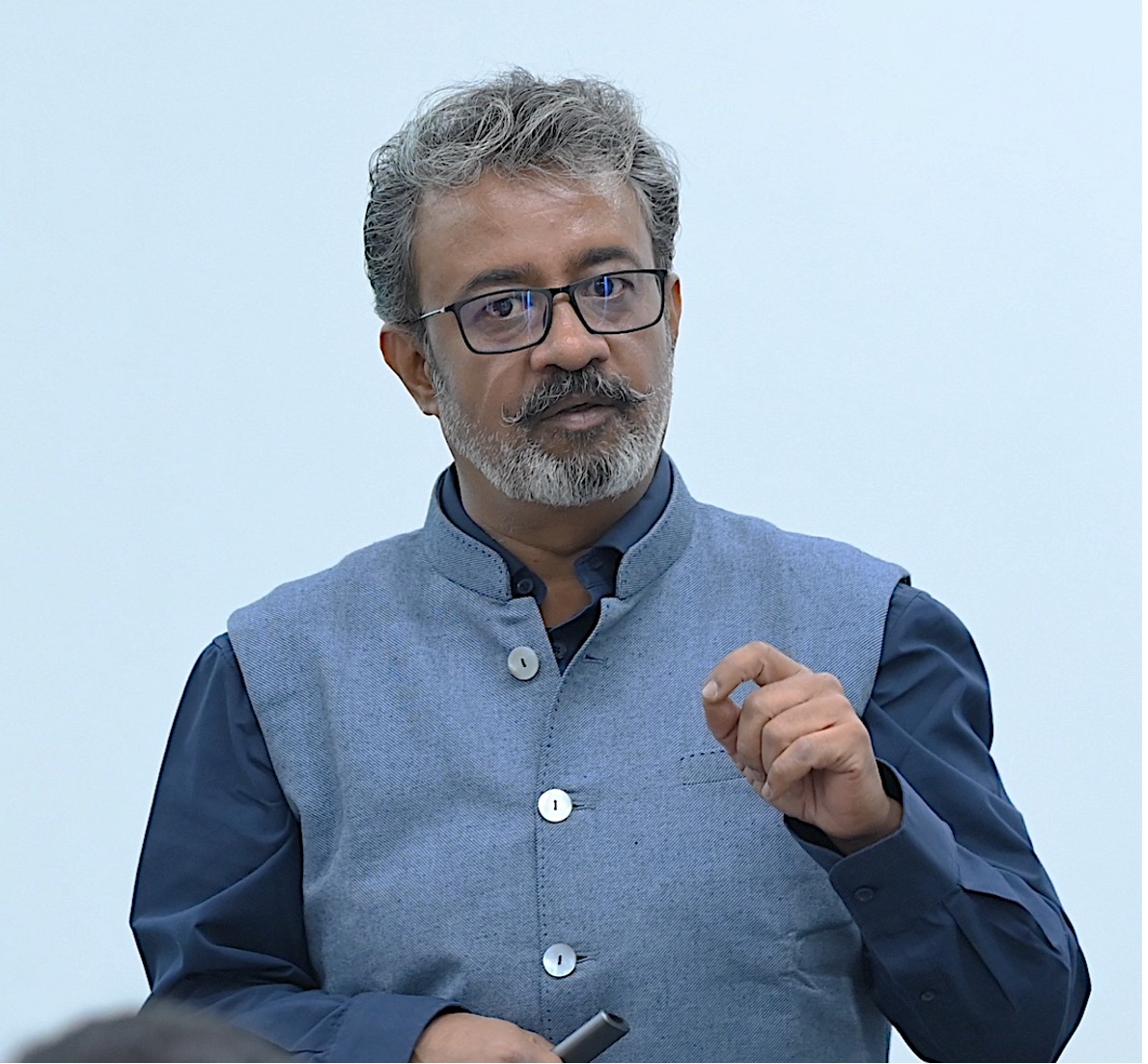
About the Author
Founder Director, ProventusHR · MGSCC Master Coach · NDA Alumnus
Founder of ProventusHR and principal architect of ExperienceLearning and REEL|Life. 25+ years across leadership advisory, executive coaching, and experiential design across 14 industries. 9x Brandon Hall HCM Excellence Award winner (2022 to 2025).
Full Profile ›