

I have a simple question I ask early in many leadership programmes, particularly those working with senior leaders: “When you genuinely do not know the answer to something important, what do you do?” The question is deceptively straightforward. The responses tell you a great deal about the culture of the organisation and the developmental stage of the leader.
The most common response, in senior cohorts across sectors and industries, is some variant of “I work to find out.” Which is reasonable and often appropriate. The second most common is “I consult with people I trust.” Also reasonable. The less common but more revealing responses are “I sit with it” and “I say so.” The rarest response of all, and in my experience the most diagnostic of genuine leadership maturity, is a combination of both: “I tell the people who need to know that I don’t know, and I stay genuinely open while I work to understand it better.”
The admission of genuine uncertainty in organisational life is not neutral. It carries risk, and that risk is not evenly distributed across organisational levels. For junior people, admitting uncertainty is relatively acceptable, often even encouraged as evidence of intellectual honesty and appropriate humility. As leaders move up the hierarchy, the social permission to be genuinely uncertain contracts. The expectation that higher positions bring greater knowledge and certainty is so deeply embedded in most organisations that admitting genuine uncertainty at senior levels is experienced, and sometimes accurately, as a signal of inadequacy. The leader who says “I need more time with this” is perceived as hesitant. The one who announces a direction, even when the direction is premature, is perceived as strong.
The structural costs of the performance of certainty
This dynamic has consequences that extend well beyond any individual decision. When the organisation consistently rewards the performance of certainty over the practice of genuine inquiry, it produces, over time, a specific kind of organisational pathology. The information environment degrades. People who have information that complicates the prevailing certainty learn, correctly, that this information is not welcome. Bad news travels upward slowly and in compressed form, managed to protect the bearer from the consequences of delivering it. Problems that are visible to people close to the work are not visible to people in positions to address them until the problems have grown large enough that they can no longer be filtered.
The leadership culture that produced this pathology is rarely visible to the leaders who inhabit it, because the symptoms of the pathology are constituted by absence rather than presence. What is not said cannot be directly observed. What is not reported does not show up in the data. The leader who has never been told that their initiative is failing may genuinely believe, on the basis of the information they receive, that it is succeeding. The absence of honest challenge produces the appearance of consensus, which is then interpreted as evidence of alignment rather than as evidence of managed compliance. The organisation is systematically surprised by things that many people inside it saw coming, because the conditions for honest early warning did not exist.
This is why the capacity to genuinely tolerate and publicly acknowledge uncertainty is not merely a personal virtue of the individual leader. It is a structural determinant of the organisation’s information quality. The leader who can say “I don’t know and here is what I am doing to find out” is creating, in that specific act, the social permission for others to say the same. They are modelling a relationship to uncertainty that makes honest communication safer throughout the organisation. The aggregate effect of this modelling, if it is sustained and consistent, is an organisation with a genuinely better information environment than it would otherwise have.
What genuine ambiguity requires neurobiologically
The neurobiological underpinning of the difficulty with sustained uncertainty is worth understanding precisely, because it explains why the challenge is not primarily one of willingness but of physiology.
Uncertainty activates the brain’s threat-detection systems through mechanisms that are now relatively well-understood. The anterior cingulate cortex, which is involved in conflict monitoring and error detection, responds to uncertainty by increasing activity, which is experienced as a kind of cognitive discomfort that creates pressure toward resolution. The basal ganglia, which generate habitual and automatic responses, are biased toward action over inaction, toward resolution over sustained openness. And the prefrontal cortex, which is the seat of the deliberate, reflective thinking that navigating genuine uncertainty actually requires, is the first region to be compromised under conditions of elevated stress, precisely the conditions that significant organisational uncertainty tends to create.
The practical implication is that the leader who experiences intense pressure to resolve uncertainty, to make a decision even when the decision cannot yet be made well, is not primarily experiencing a failure of intellectual discipline. They are experiencing a physiological response to a genuine threat signal, one that has been calibrated by millions of years of evolutionary history to produce action rather than reflection. The leader who can maintain genuine openness under conditions of significant uncertainty is doing something that is genuinely difficult physiologically, not merely difficult psychologically. This is worth understanding, both because it should produce some compassion for the prevalence of premature closure, and because it clarifies what kind of development actually builds the relevant capacity.
The three specific capacities that sustained ambiguity tolerance requires
Ronald Heifetz and Marty Linsky identify three specific capacities that effective leadership under genuine ambiguity requires, and their identification is grounded in sufficient practical and research experience to be worth taking seriously.
The first is epistemic humility: the genuine acknowledgment of the limits of one’s own knowledge and perspective. This is different from performed humility, the strategic expression of uncertainty designed to appear appropriately modest while actually maintaining the posture of knowing. Genuine epistemic humility is active rather than passive. It means specifically attending to the dimensions of a situation that one does not understand well, actively seeking information that cuts against one’s current interpretation, and treating one’s own conclusions as hypotheses to be tested rather than as positions to be defended.
The second is what Kegan and Lahey call the self-authoring mind: the capacity to step back from one’s own assumptions and examine them as objects rather than operating from within them as unquestioned subjects. The leader who is operating from a socialised mind will experience the frameworks they have internalised from their professional context as reality rather than as one possible interpretation of reality. The leader with a more developed capacity for self-authorship can hold those frameworks as frameworks: useful organising tools that may or may not be adequate for the specific situation at hand. This capacity is not a matter of intelligence. It is a developmental achievement that is built through specific kinds of experience over extended periods of time.
The third is emotional regulation in the specific sense of the capacity to tolerate the internal experience of not knowing without either prematurely resolving it through action or being paralysed by it into inaction. This regulation is not the suppression of the anxiety that genuine uncertainty produces. It is the capacity to be aware of that anxiety, to feel it without being driven by it, and to remain engaged with the situation with genuine curiosity rather than with the defensive alertness of someone who needs certainty to feel safe.
The relational dimension of leading in uncertainty
One of the most important and most frequently underexamined dimensions of effective leadership in ambiguous conditions is its fundamentally relational character. Uncertainty is not solely an internal experience to be managed privately before presenting a composed face to the organisation. It is a shared condition that, when a leader can name it honestly, creates the possibility of the kind of genuine collective intelligence that most organisations aspire to and few reliably produce.
There is a finding in the research on leader trustworthiness that consistently surprises leaders when they first encounter it: leaders who are transparent about the limits of their own knowledge, when that transparency is paired with clarity about their values and about what they are doing to address the uncertainty, tend to generate more trust from those around them than leaders who project false certainty. This finding runs counter to the intuition that leaders who admit not knowing will be perceived as weak or incompetent. What actually happens is considerably more interesting: the authentic admission of uncertainty is received as evidence that the leader’s confident statements, when they make them, can be trusted. The leader who is never uncertain is unintentionally communicating that their expressed certainty and their actual epistemic state are not reliably connected, which is a more corrosive message than uncertainty would have been.
This insight has significant design implications for how leadership development engages with the capacity to navigate ambiguity. If the goal is not merely to help individual leaders manage their own experience of uncertainty better, but to develop leaders who can use their honest engagement with uncertainty as a resource for mobilising genuine collective intelligence, then the developmental work needs to address the relational dimension explicitly. The leader who can say “I don’t know, and here is why it matters that we figure it out together” is doing something qualitatively different from the leader who manages their uncertainty privately and presents conclusions when the management is complete. The former is creating the conditions for the organisation to think well. The latter is substituting their own thinking for the organisation’s collective thinking, which is both more intellectually limiting and less resilient to the limits of any individual perspective.
The specific challenge for Indian senior leaders
In the specific organisational and cultural context of many Indian enterprises, the capacity to publicly acknowledge genuine uncertainty at senior levels faces a particular kind of cultural headwind that is worth naming directly.
In many Indian organisational cultures, the senior leader is expected to be the source of answers, not the source of questions. The authority associated with seniority is partly constituted by the implicit claim to know, and the admission of genuine uncertainty can be experienced, in some contexts, as a violation of the implicit contract of senior leadership. This is not a uniquely Indian challenge, but it is one that takes specific forms in Indian hierarchical contexts that the generic leadership literature on ambiguity and uncertainty does not always adequately address.
The leaders I have observed navigating this challenge most effectively are those who have found a specific and culturally resonant framing for their engagement with uncertainty: not “I don’t know” as an absence of competence, but “the situation is genuinely complex and requires our collective intelligence to navigate well” as an assertion of sophisticated leadership judgment. This framing preserves the leader’s standing while creating the conditions for genuine collective engagement with the uncertainty. It is not evasion. It is cultural translation of a genuine developmental capacity into a form that can be received and respected in the specific context in which it needs to operate.
Ambiguity is not simply a challenge to be managed. It is the medium in which genuine leadership happens. The situations that do not require a leader are the ones with obvious right answers. What calls for leadership is precisely the situation in which the right course is not apparent, and where the honest acknowledgment of that uncertainty is the beginning rather than the end of the work.
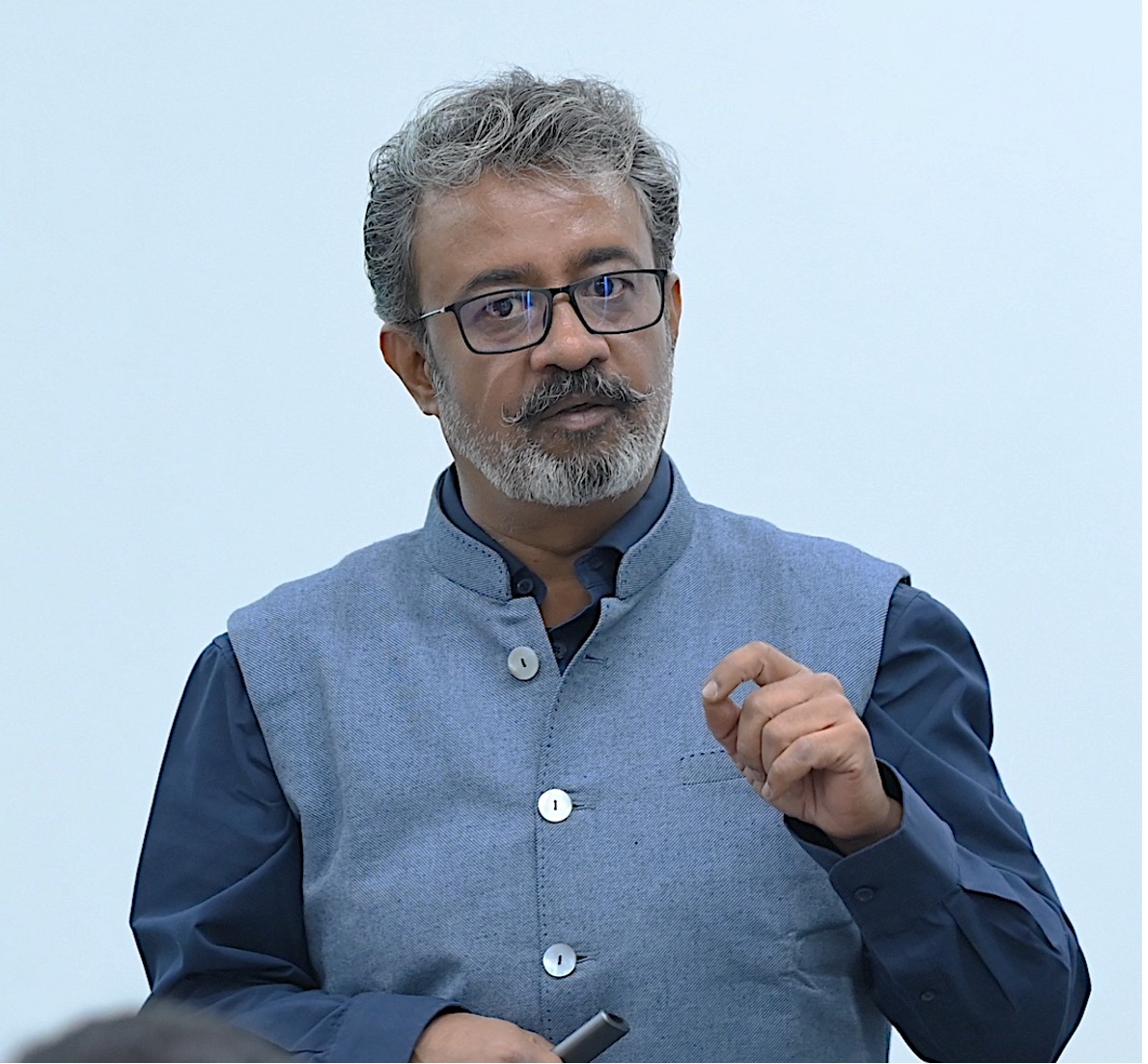
About the Author
Founder Director, ProventusHR · MGSCC Master Coach · NDA Alumnus
Founder of ProventusHR and principal architect of ExperienceLearning and REEL|Life. 25+ years across leadership advisory, executive coaching, and experiential design across 14 industries. 9x Brandon Hall HCM Excellence Award winner (2022 to 2025).
Full Profile ›