

There is a scene in Thirteen Days that I use in almost every leadership development programme where decision-making under pressure is on the agenda. It is not the most dramatic scene in the film. It does not involve nuclear brinkmanship or the weight of civilisational stakes made vivid. It is a quiet scene in which Robert Kennedy is sitting with his brother the President, the morning after the first ExComm meeting, and he says something that cuts to the heart of every high-stakes decision process I have ever been part of: “What happens the day after?”
Not “are we right about the intelligence?” Not “are we ready for the military operation?” The question about the second-order consequence, about the chain of events that the proposed response will set in motion, about the gap between solving the immediate problem and addressing the actual situation. The military recommendation for immediate air strikes was crisp and confident and based on genuine doctrine and genuine experience. It did not have a good answer to what happens the day after.
That question, asked quietly in a specific scene of a 2000 film about a thirteen-day period sixty years ago, contains more practically useful instruction about decision-making under genuine pressure than most of what gets taught in leadership programmes under that heading. The most dangerous thing in a crisis is not uncertainty. It is the premature resolution of uncertainty through confident action before the full implications of that action have been thought through.
What makes this film an extraordinary leadership document
Roger Donaldson’s Thirteen Days is not primarily a political film, though it has considerable political intelligence. It is not primarily a historical film, though its fidelity to the historical record is notable by the standards of the genre. It is, above all, a study in collective decision-making under conditions of genuine existential pressure, and it has the unusual distinction among films on this subject of being both dramatically compelling and, by the standards of serious scholars of crisis management and decision-making, substantially accurate.
The film follows the thirteen days of the Kennedy administration’s management of the discovery that the Soviet Union was installing nuclear missiles in Cuba, from the initial intelligence briefing on October 16, 1962, through to the diplomatic resolution on October 28. The narrative is seen primarily through the perspective of Kenny O’Donnell, a special assistant to the President played by Kevin Costner, which gives it an interesting angle: we see the crisis partly through the eyes of someone who is important enough to be inside the deliberations but not important enough to have a primary decision-making role. This outsider-insider perspective captures something important about how organisations actually function under pressure that a more straightforwardly heroic leadership narrative would miss.
What the film is most interested in is not the external drama of nuclear standoff. It is the internal drama of a group of fallible, frightened, genuinely capable human beings trying to make the best possible decisions under conditions that were specifically designed by the situation to produce poor ones: time pressure, incomplete information, strong institutional interests pushing toward action, powerful military advisors with authoritative expertise and a specific recommended solution, and the specific psychological burden of carrying responsibility for decisions whose consequences would be literally civilisational.
The resistance to premature resolution
The first and most consistent leadership theme that the film develops is the sustained, deliberate, effortful resistance to premature resolution. From the opening ExComm meetings, the pressure to decide quickly and decisively is enormous and comes from multiple directions. The military recommendation for immediate air strikes is presented with the confidence of established doctrine and institutional authority. Advisors from outside the immediate circle push for action. The political environment exerts pressure toward demonstrating resolve. Every day that passes without a clear response feels, to many participants in the process, like a failure of leadership.
What Kennedy and his brother do, consistently and at considerable social cost, is create space for the decision to be made properly rather than quickly. They insist on continuing to gather information when the intelligence picture seems clear enough to act on. They create conditions in which the military’s certainty can be examined rather than simply deferred to. They build a decision-making process that is slow enough to allow genuine deliberation and fast enough not to allow the situation to deteriorate while they deliberate. They are patient with uncertainty in a context that exerts enormous pressure toward certainty. And they are honest about the uncertainty in ways that the most senior leaders in the room are frequently not permitted, by the conventions of leadership authority, to be.
The cognitive science of decision-making under stress is clear on why this kind of sustained openness to uncertainty is both rare and valuable. Time pressure activates System 1 thinking, the fast, automatic, pattern-matching cognitive mode that is highly efficient in familiar situations and systematically prone to error in genuinely novel ones. The Cuban Missile Crisis was a genuinely novel situation. The patterns that institutional memory offered for interpreting it, Cold War brinkmanship, Soviet strategic doctrine, the precedents of confrontation and response that had shaped American foreign policy for fifteen years, were real patterns built from real experience. They were also, in some important dimensions, the wrong patterns for this specific situation, and the confident application of them through System 1 processing would have led to exactly the catastrophic escalation that the deliberate resistance to premature resolution managed to avoid.
The quality of the collective thinking
The second leadership theme that the film develops with considerable depth is the relationship between the quality of the decision-making process and the quality of the decisions it produces. The film shows, in specific and credible detail, how the quality of the collective thinking in the ExComm evolved over the thirteen days as the group developed the specific relational and cognitive norms that allowed it to function effectively under pressure.
In the early ExComm meetings, the dynamics are familiar from any senior team operating under pressure: hierarchical deference shapes what is said and what is left unsaid, institutional interests compete for airtime rather than being examined for their relevance to the actual problem, the most powerful voices set the parameters within which the discussion operates, and the most important questions are the ones that are not quite asked because the social dynamics of the room make them feel too risky to raise directly.
Over the course of the thirteen days, these dynamics gradually shift. The process that Kennedy establishes, in which he is often absent from the early ExComm discussions to allow freer deliberation, in which dissenting views are not only tolerated but actively solicited, in which the pressure toward consensus is repeatedly disrupted by the insistence on revisiting settled questions when new information arrives, produces a qualitative improvement in the collective thinking that the film renders with remarkable fidelity to the documented historical record.
The specific mechanism that the film makes most visible is the permission to be genuinely uncertain. In the early meetings, the pressure to project confidence and authority shapes every contribution. By the middle of the crisis, the room has developed enough trust in the process and in each other that genuine uncertainty can be expressed, that “I don’t know” and “I’m not sure this is right” can be said by people with authority without being interpreted as weakness. This shift, subtle as it is in the film’s treatment, is one of the most consequential things that happens in the crisis, because it is what allows the collective intelligence of the group to be actually deployed rather than managed and presented.
The trusted advisor and the quality of the private conversation
Kenny O’Donnell’s role in the film is partly dramatic convenience and partly a genuine insight about what effective crisis leadership looks like from the inside. O’Donnell is not a strategic expert. He is not a foreign policy specialist. He has no particular expertise in the specific domains where the crisis unfolds. What he has is a quality of personal relationship with the President that allows honest conversation in the private spaces between the formal deliberative processes.
One of the most destructive dynamics in crisis leadership is the isolation of the person most responsible for the decisions. Formal authority creates a specific kind of loneliness. The people around the most senior decision-maker are managing their own anxiety, managing their relationship with that person, managing their institutional and professional interests, managing the impression they are creating. Genuine honesty becomes increasingly rare in these conditions, because the cost of genuine honesty to the person offering it is real, and because the social dynamics of proximity to power consistently select for managed truth over uncomfortable honesty.
The leader who has at least one relationship in which genuine honesty is possible, in which the social and political calculations are genuinely suspended enough for the truth to be said, is significantly better equipped to navigate crises than the one who is surrounded entirely by managed communication. O’Donnell’s relationship with Kennedy in the film functions as this kind of relationship. It allows Kennedy to name doubt, uncertainty, fear, and the specific weight of what he is being asked to carry, in a private space that does not have to be managed for institutional consumption. This naming, small as it may seem, is what allows the decision-maker to remain psychologically present and deliberate rather than being driven by the emotional intensity of the situation into defensive or automatic responses.
The specific moments that make the film most useful in facilitation
When I use Thirteen Days in REEL|Life facilitation sessions, I am less interested in the large, heroic moments of the narrative than in the smaller, more revealing ones. The moment when an advisor changes his position in the room and we can watch the others recalibrate whether it is safe to do the same. The moment when the President says something that is not quite true in a group setting to manage the morale of the room, and the camera catches the cost of that small management in the faces of the people who know the full picture. The moment when the decision about what to communicate to the Soviets is shaped, substantially, by the communication style of the specific diplomat chosen to deliver it, so that the choice of person becomes itself a decision about what can be said.
These small moments are where the most generative facilitation conversations begin, because they are recognisable from participants’ own experience of high-stakes collective decision-making, and they open up territory that is more personally meaningful than the abstract discussion of decision-making principles would allow. The film works in facilitation not because the Cuban Missile Crisis is relevant to the participants’ own challenges, but because the quality of the human dynamics it shows, the social management, the managed truth, the hierarchy response, the specific ways in which collective intelligence is both released and constrained by the conditions of the room, is absolutely relevant to every high-stakes decision-making context, regardless of the specific content of the decisions being made.
The film is not about how Kennedy saved the world. It is about how a group of fallible, frightened, deeply human leaders managed to not destroy it, and the specific quality of their collective thinking that made the difference.
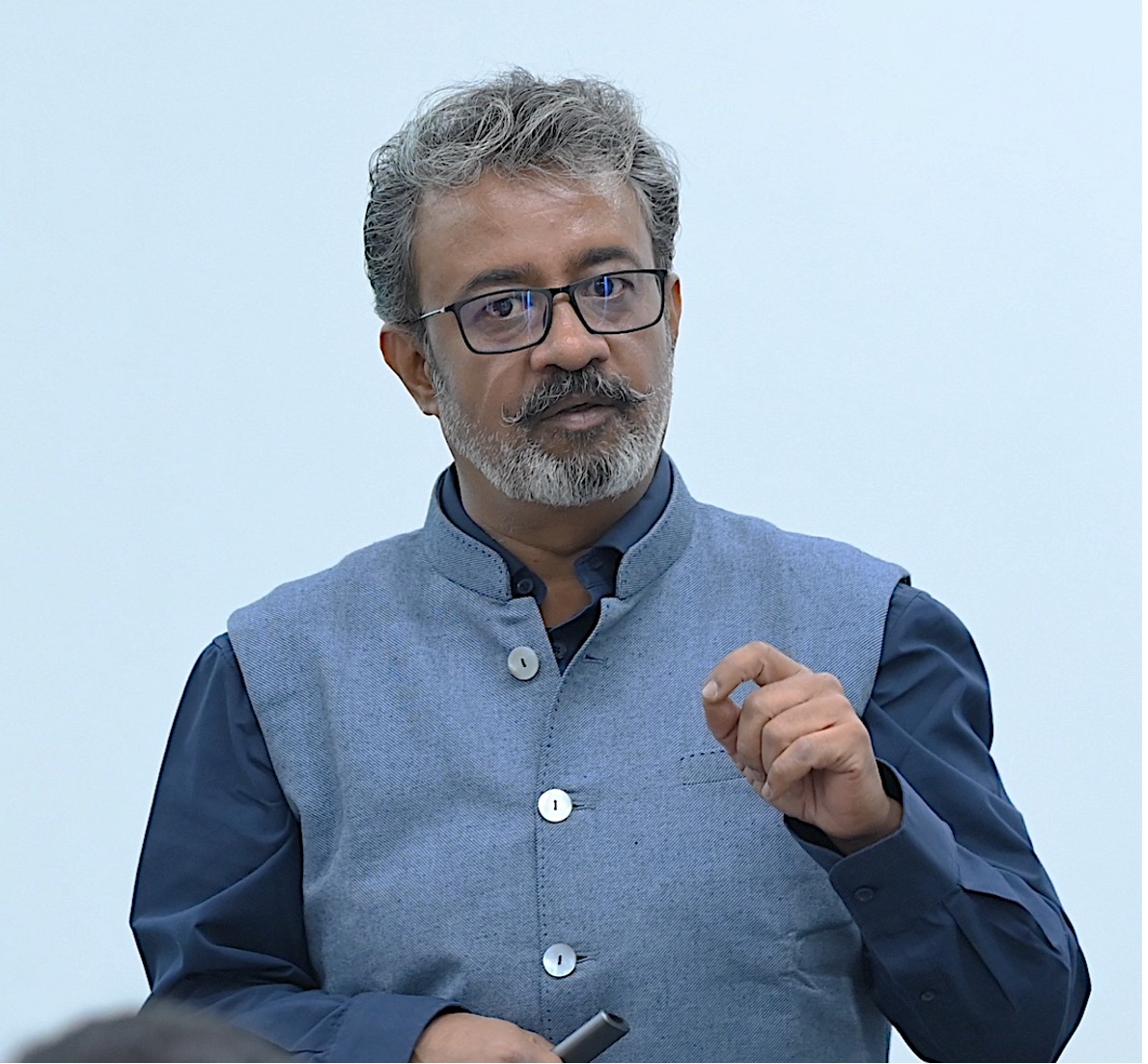
About the Author
Founder Director, ProventusHR · MGSCC Master Coach · NDA Alumnus
Founder of ProventusHR and principal architect of ExperienceLearning and REEL|Life. 25+ years across leadership advisory, executive coaching, and experiential design across 14 industries. 9x Brandon Hall HCM Excellence Award winner (2022 to 2025).
Full Profile ›