

The Balakot surgical strikes of 2019 were a study in what execution excellence looks like when the conditions are most hostile to it: incomplete intelligence, irreversible decisions, absolute time pressure, and consequences that could not be undone. The operation has been studied as a military and geopolitical event. It is also, if examined with the right questions, one of the clearest available cases of what distinguishes organisations that execute under genuine pressure from those that execute only when conditions are favourable.
Execution Excellence Is Not About the Plan. It Is About What Happens When the Plan Is Insufficient.
Every organisation has a plan. Most organisations can execute that plan when conditions are as anticipated. The distinguishing question is what happens when conditions deviate from anticipation, when the intelligence is incomplete, when the timeline compresses, when a critical decision has to be made without the information that would make it comfortable.
What the Balakot operation demonstrates, and what ProventusHR uses it to teach, is that execution excellence under those conditions is not a function of better planning. It is a function of three specific leadership capabilities: the capacity to make decisions with incomplete information without either paralysis or recklessness, the discipline to hold the mission focus when the environment is generating urgency in every direction, and the trust architecture within the team that allows each member to act independently within their role without requiring central coordination for every decision.
These are precisely the capabilities that corporate leaders most frequently lack, and most frequently discover they lack only during a crisis, when the development window has closed.
“Execution excellence is built before the pressure arrives. The organisation that tries to develop it during a crisis has already lost the most important development window available to it.”
What the Strikes Teach About Decision-Making, Discipline, and Trust
Decision-making under incomplete information is not a natural human capacity. The cognitive default under uncertainty is to gather more information, seek more consensus, delay the decision until comfort is possible. In conditions where delay is the most dangerous option available, this default is lethal. The leaders responsible for the Balakot operation made the decision to act with the information available, accepted the residual uncertainty as the cost of action, and committed to the decision fully rather than partially. That quality, the willingness to decide and commit without the luxury of certainty, is what separates leaders who can operate in volatile environments from those who can only operate in stable ones.
Mission discipline, the capacity to hold focus on the primary objective when secondary concerns are creating urgency, is the execution capability that most corporate organisations most frequently lose in complex environments. The environment generates competing priorities with equal force. The leader who cannot distinguish the mission from the noise will be pulled in every direction simultaneously and will execute nothing with excellence. The Balakot operation succeeded in part because the mission remained singular and clear throughout the execution phase, regardless of what the environment was generating.
Trust architecture is what makes distributed execution possible. When every decision requires central approval, the organisation can only execute at the speed of its slowest approval loop. The surgical strikes required multiple simultaneous actions across different theatres, each executed independently but coherently. That coherence did not come from real-time coordination. It came from a pre-established trust architecture: each actor knowing their role, knowing the mission, and trusting that adjacent actors were holding their roles with equal discipline.
What This Means for Organisational Leadership Development
The capabilities the Balakot operation demonstrates are not military capabilities. They are human capabilities that military contexts develop with unusual rigour because the consequences of their absence are immediate and visible. In corporate environments, the consequences of their absence are slower to surface and easier to rationalise away. A missed deadline, a slow response to a competitive threat, a decision that was delayed until it was no longer a decision at all, these are the corporate equivalents of execution failure, and they are produced by exactly the same capability gaps.
ProventusHR’s floor simulations and computer simulations are designed to create the conditions in which these gaps become visible before they become consequential. The simulation is not a military scenario. It is a corporate leadership scenario with the structural features of the military challenge: incomplete information, time pressure, irreversible decisions, and distributed execution. The gaps that surface in the simulation are the same gaps that produce execution failure in the real organisation. The difference is that in the simulation, they can be addressed. In a real crisis, they can only be managed.
“The leader who has never been asked to decide under genuine pressure, with incomplete information and irreversible consequences, has not yet been tested. Most corporate environments do not provide that test until it is too late for development to help.”
ProventusHR uses the Balakot surgical strikes as a leadership case within the REEL|Life™ methodology, examining the decision-making, execution discipline, and trust architecture the operation required. The Mirror-Window-Bridge framework is then applied to surface the participant’s own execution patterns and build commitment to specific behavioural change.
Exploring Execution Excellence Development
If you are exploring how ProventusHR’s simulation-based and REEL|Life™ approach to execution excellence development applies to your organisation, the conversation begins at proventushr.com/contact.
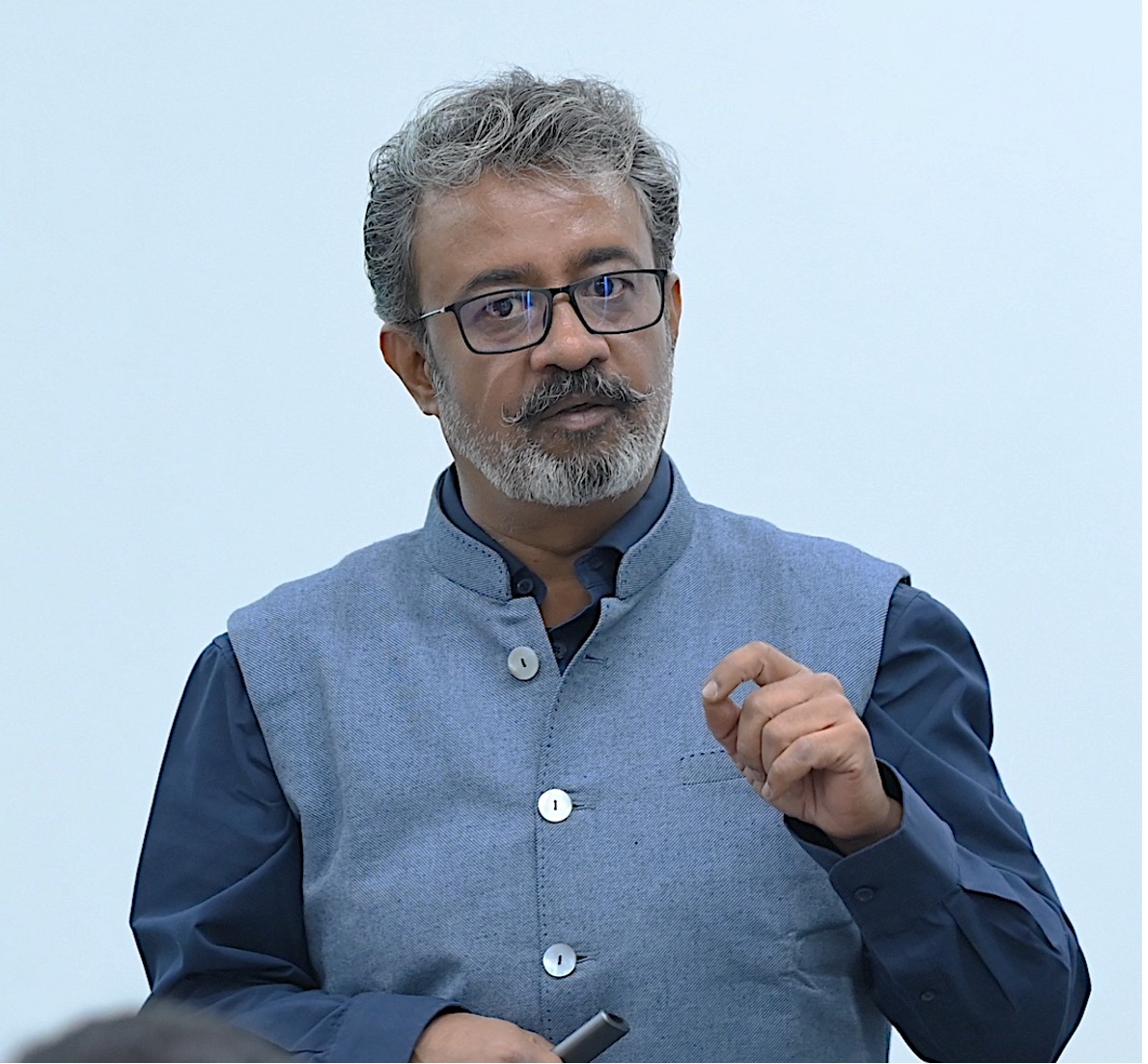
About the Author
Founder Director, ProventusHR · MGSCC Master Coach · NDA Alumnus
Founder of ProventusHR and principal architect of ExperienceLearning and REEL|Life. 25+ years across leadership advisory, executive coaching, and experiential design across 14 industries. 9x Brandon Hall HCM Excellence Award winner (2022 to 2025).
Full Profile ›