

The boardroom conversation about leadership succession has a familiar and comfortable shape. The CHRO presents the talent grid. Coloured squares on a nine-box matrix showing the organisation’s senior population mapped against performance and potential. Several individuals appear in the top-right quadrant, labelled as high-potentials who are ready now or ready in two years for the next level of leadership. The board reviews the picture with a degree of reassurance. The pipeline looks healthy. The succession looks managed. The CHRO is congratulated on the thoroughness of the process.
And then, somewhere between eighteen months and three years later, a significant proportion of the people who were in those top-right boxes are struggling in the roles for which they were designated ready. Not catastrophically failing, usually. More often producing a more subtle and more frustrating pattern: performing adequately but not excellently, struggling with specific dimensions of the new role in ways that were not predicted, generating concern among the stakeholders whose confidence they were supposed to inherit naturally, producing results that are acceptable but that do not match the confidence that the succession process expressed about their potential.
The CEB research that documented the specific rate of this failure was arresting when it first appeared: forty percent of senior executives were assessed as struggling or failing within eighteen months of appointment, despite having been identified as succession-ready and having been through formal succession development processes. McKinsey’s parallel research found that most large organisations significantly overestimate the readiness of their identified successors. These are not small or sector-specific findings. They are consistent patterns across industries and geographies, pointing to something structural in how succession systems work rather than to occasional individual failures.
The measurement problem at the core of succession failure
Succession systems identify successors primarily on the basis of current performance. This is rational in a narrow and immediate sense. Performance is visible, measurable, and available in ways that other relevant successor characteristics are not. The leader who has consistently delivered results in their current role has provided evidence of genuine capability that the succession system can point to, document, and defend to the board. The problem is that current performance in a lower-complexity role is a systematically poor predictor of performance in a qualitatively more complex role, for reasons that are well-understood in the developmental psychology literature but that are rarely built into how succession decisions are actually made.
The specific reason that current performance is a poor predictor is that more senior roles are not simply larger versions of less senior roles. They are qualitatively different in the kinds of challenges they present and, correspondingly, in the kinds of psychological and intellectual capabilities they require. More senior roles present more adaptive challenges, more genuine ambiguity about what the right course of action actually is, more requirement for independent judgment in the absence of clear direction, more demand for the navigation of competing values and interests without the comfort of an unambiguous hierarchy to defer to, more exposure to the specific kinds of political complexity that require both strategic sophistication and genuine ethical judgment.
The leader who has excelled at execution in a well-defined role has demonstrated excellent execution in a well-defined role. This is genuine evidence of genuine capability. It tells you very little about how they will navigate the adaptive challenges, the value conflicts, the political complexity, and the fundamental uncertainty about direction that will characterise a more senior role. The succession system that reads current excellence as the primary evidence for future readiness is making a systematic error that the forty-percent failure rate documents repeatedly.
The development gap that compounds the measurement problem
Even where succession systems manage to identify the right people, the development that those people then receive is frequently inadequate for what the transition to a more senior role actually requires. The standard succession development package, high-potential programmes, rotation assignments, exposure to senior leaders, executive coaching of variable quality and depth, and stretch project assignments, addresses the informational and experiential dimensions of development with reasonable effectiveness. It substantially underaddresses the psychological and dispositional dimensions.
What the most demanding senior roles require, that current high-potential development tends not to build, is the capacity to operate from what Robert Kegan calls the self-authoring mind: the ability to form and hold genuine independent judgment against significant social and institutional pressure, to navigate genuinely competing value frameworks without the comfort of a clear authoritative resolution, to regulate the experience of genuine uncertainty without either collapsing into premature closure or being paralysed by the absence of certainty. These are not skills in the conventional sense. They are developmental capacities that are built through specific kinds of experience held in specific kinds of developmental relationships, over timescales that are considerably longer than most succession development programmes allow for.
The succession development that would actually address these gaps would be sustained, honest, deeply personalised developmental work that combines genuine adaptive challenge with the kind of reflective support that allows the challenge to be developmental rather than simply distressing. It would be measured by changes in the leader’s capacity for genuine independent judgment, genuine tolerance of uncertainty, and genuine engagement with the adaptive dimensions of their role, not by the acquisition of new frameworks or the completion of developmental assignments. And it would be designed with explicit attention to the specific psychological capacities that the next level of leadership will require, rather than simply providing a broader set of experiences and hoping that the relevant capacities emerge from the exposure.
What potential actually means and why most frameworks miss it
The concept of “leadership potential,” which is the central construct that succession systems are built around, is among the most poorly defined and most consequentially misunderstood concepts in talent management. The term is used as if it referred to a single, stable, measurable characteristic of individuals, when the research suggests that what it actually describes is considerably more complex and considerably less tractable to conventional measurement approaches.
Potential, in the sense that matters for succession, is not simply the capacity to perform well at a higher level of the existing organisation. It is the capacity to grow into qualitatively different levels of complexity and to continue growing as those levels themselves change. It is, in the terms of adult development theory, the capacity for continued stage development, the ability to become genuinely more psychologically complex in response to the challenges that more complex roles present.
This capacity is not well-predicted by current performance, because current performance primarily reflects the development that has already occurred rather than the development that is yet to occur. It is not well-predicted by intelligence or by current capability, because both intelligence and current capability describe what the person can do now rather than what their psychological architecture will allow them to become. The characteristics that most reliably predict genuine developmental potential are the ones that describe the person’s relationship to their own development: their genuine curiosity about their own patterns and their willingness to examine them honestly, their capacity to receive honest feedback without collapsing into either defensiveness or self-criticism, their ability to stay genuinely open in the face of genuine uncertainty, and their demonstrated capacity to change in response to experience rather than simply accumulating experience without changing.
These characteristics are assessable, though not through conventional performance management frameworks. They require observational assessment over time, in conditions that genuinely test them, combined with the kind of sustained developmental relationship that creates the safety for the relevant qualities to appear. Most succession systems have neither the methodology nor the patience to assess them properly.
What good succession development looks like in practice
The succession development that produces genuine readiness, rather than the appearance of it, consistently has several features that distinguish it from standard high-potential programme design.
It exposes identified successors to genuine adaptive challenges, not simulated or manufactured ones, before the transition rather than only in the new role. The specific challenges that will surface the gaps in their leadership, rather than the challenges that will confirm the strengths that earned them the succession designation in the first place. A leader who is designated ready for a role that will require them to lead genuine culture change needs to have had genuine experience navigating culture change, with its specific difficulties of managing resistance, holding people to adaptive challenge, and sustaining direction in the face of the systemic immune response, before the transition rather than discovering what those difficulties actually feel like after they have inherited the formal accountability for managing them.
It provides sustained, honest feedback on the specific patterns that are likely to be limiting in the new context, not only on the strengths that have produced success in the current one. This requires a developmental relationship of sufficient quality that the feedback-giver has both the knowledge of the leader needed to name specific patterns accurately and the standing with the leader needed to be heard when they do. Generic 360-degree feedback collected from a broad population and presented in a data report is not a substitute for this kind of specific, personalised, relationship-grounded developmental conversation.
And it is characterised by the kind of humble onboarding support in the new role that the leader’s prior track record might make seem unnecessary but that the psychological demands of the transition actually require. The assumption that a high-performer needs less support in a new and more complex role than a lower-performer would is among the most expensive assumptions in talent management. High-performers in new roles face specific and predictable challenges: the need to establish credibility in a context where their prior track record is less visible, the need to navigate stakeholder relationships that are more complex than those they have managed before, and the need to operate effectively in a context where the rules of success are genuinely different from the rules they have spent years mastering. All of these challenges are addressable with the right kind of developmental support. None of them are made easier by the assumption that the person’s prior success means they do not need it.
The cruel irony of succession is that what is measured, current performance, is among the least reliable predictors of future leadership effectiveness at the next level of complexity. And what would actually predict it, the developmental capacity for continued growth, is rarely measured at all.
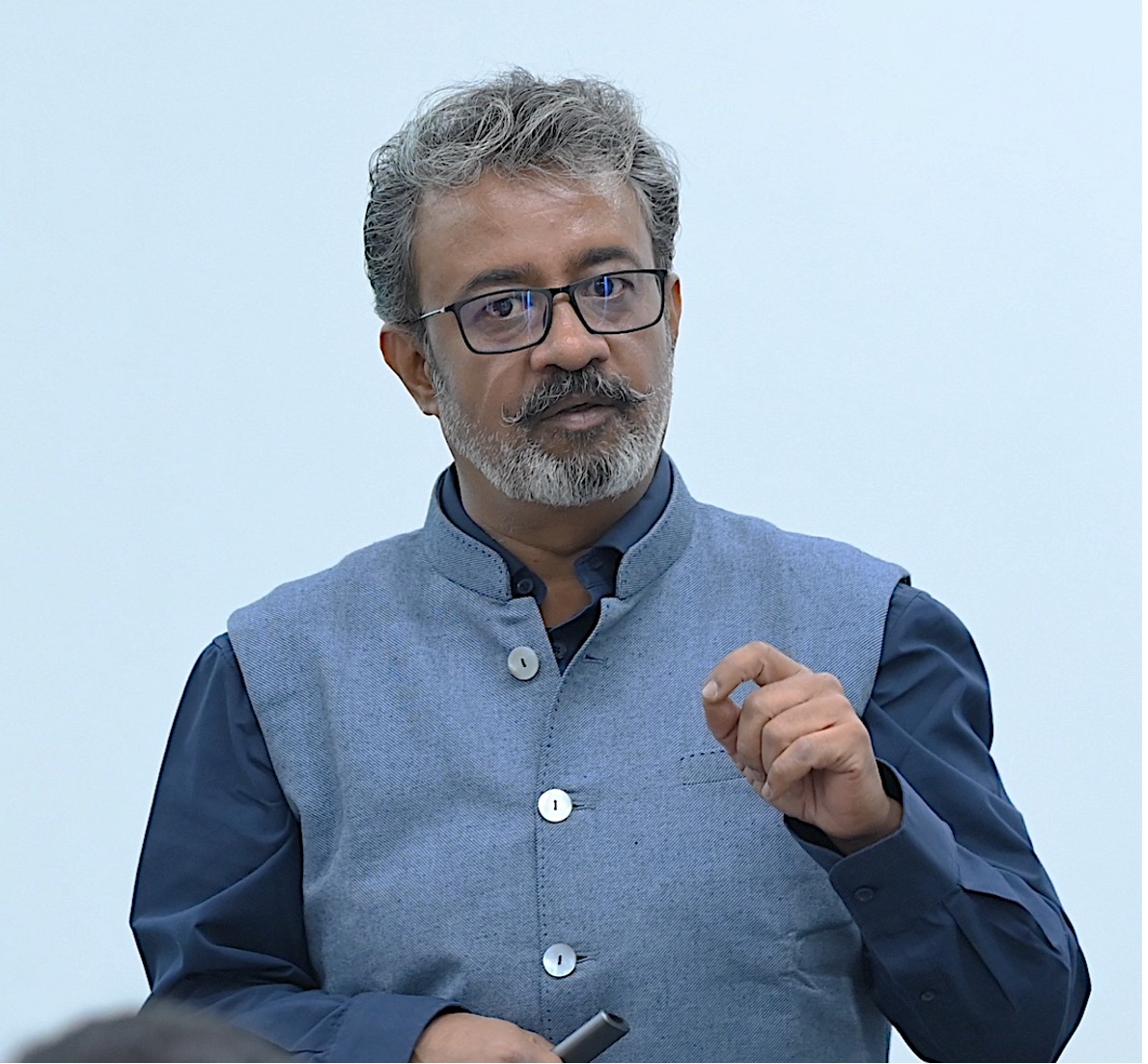
About the Author
Founder Director, ProventusHR · MGSCC Master Coach · NDA Alumnus
Founder of ProventusHR and principal architect of ExperienceLearning and REEL|Life. 25+ years across leadership advisory, executive coaching, and experiential design across 14 industries. 9x Brandon Hall HCM Excellence Award winner (2022 to 2025).
Full Profile ›