

Here is a finding from developmental psychology that deserves considerably more attention in how organisations think about leadership development than it currently receives. Robert Kegan’s decades of empirical research, conducted at Harvard and replicated and extended by numerous subsequent researchers, suggests that only around fifteen to twenty percent of working adults operate from what he calls the self-authoring stage of psychological development. This is the stage at which genuine independent judgment becomes possible, at which the person can hold external expectations and pressures as information to be considered rather than as imperatives to be followed, and at which the fundamental capacity for the kind of strategic, autonomous leadership that senior roles require is actually present in the person’s psychological architecture.
This is not an intelligence finding. Kegan is not describing IQ or professional competence or even accumulated experience. He is describing the structural complexity of how people make meaning, how they understand authority and responsibility, what they take as given and what they can hold as a question, how capable they are of seeing their own assumptions as assumptions rather than as self-evident truths. And he is saying that the majority of people in senior leadership roles are not yet operating from the level of structural complexity that those roles typically require. They are managing the demands of their roles through genuine intelligence and genuine effort, but within a psychological framework that is, in specific and identifiable ways, insufficient for the most demanding dimensions of what those roles require.
Two kinds of development and why the distinction matters
Kegan draws a fundamental distinction between what he calls informational and transformational learning. Informational learning is the acquisition of new knowledge, skills, frameworks, and competencies. It adds to the existing operating system of the mind. More data, more tools, more methods, more sophisticated frameworks for thinking about familiar problems. It is the predominant model of professional development. It is what most training programmes, leadership courses, and even many coaching engagements primarily produce. And it is genuinely valuable as far as it goes.
Transformational learning is different in kind. It does not merely add to the existing operating system. It changes the structure of the operating system itself. It does not simply provide new content for the existing mental framework. It changes the framework, alters the structure of how meaning is made, shifts the boundaries of what the person can hold as a question versus what they experience as self-evident fact. This is the kind of learning that Kegan’s research identifies as the primary driver of genuine increases in psychological complexity, and it is the kind of learning that most professional development systems are not designed to produce.
The practical implication of this distinction is significant. An executive who has completed a rigorous programme on adaptive leadership and can articulate the Heifetz framework fluently and precisely, but who still responds to resistance with authority and pressure because they cannot genuinely tolerate the uncertainty that the alternative requires, has gained information. Their operating system remains unchanged. The development that would actually change their leadership involves something more interior and more difficult: a genuine shift in their relationship to authority, to control, to the discomfort of uncertainty, and to the expectations of others. This is transformational learning, and it is not produced by even the best informational programme.
Kegan’s developmental stages and what they mean in practice
Kegan identifies several stages of adult psychological development, each characterised by a different structure for making meaning. For leadership purposes, the most relevant are the socialised mind and the self-authoring mind, with the self-transforming mind as a further development that is relevant for the most complex leadership contexts.
The socialised mind is the developmental stage at which most adults in most organisational contexts operate. It is not a primitive stage. It is the stage at which genuine interpersonal complexity becomes possible, at which loyalty, commitment, and the capacity for sustained collaborative relationship are available as genuine capacities rather than as strategies. The socialised mind is oriented primarily toward the expectations and judgments of others. It derives its sense of identity, direction, and self-worth primarily from the external: the approval of significant others and authority figures, alignment with the norms of the reference group, the met expectations of the institution.
In stable, clearly structured, and hierarchically well-defined environments, the socialised mind is a highly functional developmental stage for leadership. The leader who is oriented toward institutional expectations and who generates their direction from the norms and frameworks provided by their organisational context can be very effective when the context is clear, stable, and providing genuinely good guidance. The stage becomes limiting when the context requires the leader to form and act on independent judgment that genuinely diverges from the prevailing consensus, to hold a position against significant social and institutional pressure, or to navigate competing value frameworks without the comfort of a clear authoritative structure to defer to.
The self-authoring mind is capable of something qualitatively different. It has developed an internal framework for evaluating the expectations and demands of others. It can hold those expectations as data to be considered rather than as imperatives to be followed. It has a compass of its own that is not primarily contingent on external validation. It can step back from the frameworks it operates within and examine them as objects rather than being embedded in them as subjects. It can hold genuinely competing value systems simultaneously and navigate between them with deliberate awareness rather than automatic deference to whichever is most powerful in the immediate context.
The self-transforming mind, which is the rarest stage and the one most relevant to leadership in genuinely complex adaptive contexts, is capable of examining the self-authored framework itself. It can hold even its own most cherished frameworks and commitments as constructions rather than as truths, which allows for genuine revision and development of the self-authored identity in response to new information and experience.
Why organisations miss this
The dominant model of leadership development is built on the implicit assumption that the operating system is adequate and that what needs to be added is better content, better tools, and more sophisticated frameworks. This assumption is understandable, because the content and tools and frameworks are visibly improved by good development programmes, and because the operating system is invisible to most of the people designing and delivering those programmes.
The result is a persistent and expensive gap between what organisations invest in leadership development and what they actually produce. The leader who has been through every available programme on strategic thinking, emotional intelligence, inclusive leadership, and coaching capability, and who remains fundamentally oriented toward the expectations of others in ways that limit their capacity to provide genuine independent direction, has not failed to learn the frameworks. They have learned them. They simply cannot deploy them in the way that was intended because the deployment would require operating from a developmental stage that the programmes did not develop.
The specific ways in which the gap between the socialised mind and the demands of senior leadership expresses itself are identifiable and consistent. The leader who defers to consensus in situations that require genuine independent direction. The one who manages their own discomfort with conflict by finding ways to avoid it rather than engaging it directly. The one whose positions shift in the presence of powerful others in ways that leave those around them uncertain about what the leader actually believes. The one who frames every piece of developmental feedback as a question of how others have misunderstood their intentions rather than as information about the actual impact of their behaviour. Each of these is a recognisable expression of the socialised mind operating in contexts that require the self-authoring mind.
What development at this level actually requires
Kegan’s research is specific about the conditions that produce genuine stage progression. The conditions that allow genuine transformational development to occur are three: genuine challenge that pushes at the edges of the current meaning-making framework, honest feedback that makes the current framework’s limitations visible rather than simply adding to its contents, and relational support that makes the vulnerability of genuine development survivable rather than simply distressing.
These conditions are structurally different from what most leadership development is designed to provide. The challenge most development programmes offer is cognitive rather than existential: it challenges what you know rather than how you make meaning. The feedback most development contexts provide is evaluative of performance against established criteria rather than reflective of the structural limitations of the current meaning-making framework. And the support most development contexts offer is instrumental rather than genuinely developmental: it helps the leader manage better within their current framework rather than creating the conditions in which the framework itself can evolve.
This is why the most developmentally productive contexts for stage development are those that combine genuine pressure with genuine support in ways that feel almost contradictory in the moment: demanding enough to genuinely challenge the current framework, supportive enough that the challenge does not simply produce defensive protection rather than genuine development. This combination is what well-designed experiential learning, held in the right developmental relationship, can create. And it is what most skills-based training cannot create, regardless of how well it is delivered.
What this means for how we commission development
If Kegan’s research is taken seriously, the most important question to ask about any leadership development investment is not “what will participants know or be able to do at the end of this?” It is “what is the design doing at the level of the meaning-making structure, and is there any genuine reason to believe that it will produce development at that level rather than simply at the level of content and skill?”
This is a harder question to answer, and it points toward development that is more intensive, more personalised, more focused on genuine challenge and honest feedback than most organisations are currently commissioning. It also points toward much longer timescales than most development programmes allow for, because genuine stage development happens over years rather than over programmes. The organisations that are most serious about building genuinely senior leadership capability are the ones that have understood this, and that have invested accordingly in the sustained, honest, deeply personalised developmental relationships that genuine stage development requires.
We cannot resolve the problems of our current mind with our current mind. Leadership development, at its most fundamental, is not about adding better tools to the existing operating system. It is about growing a bigger operating system that can hold better tools and use them wisely.
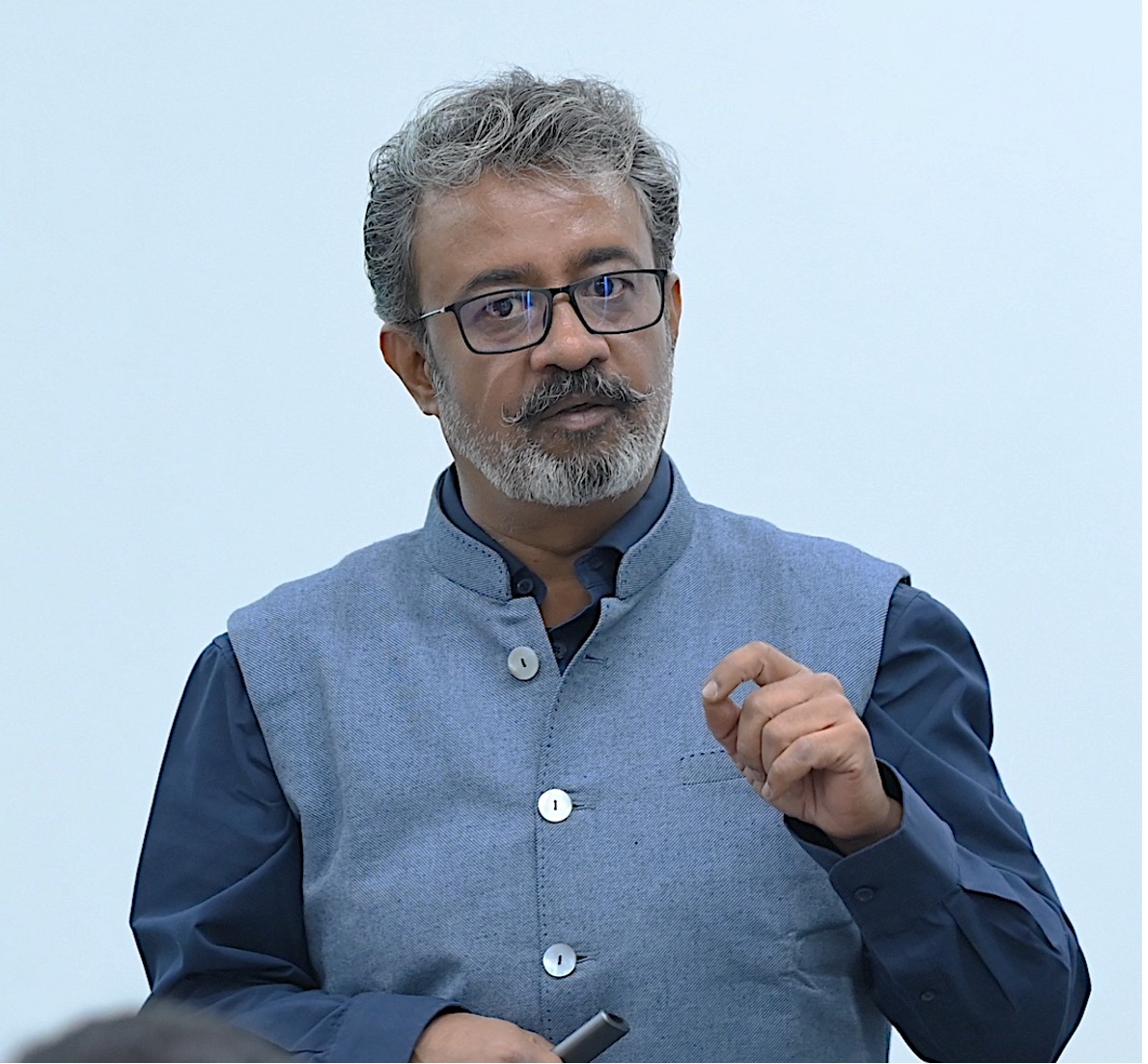
About the Author
Founder Director, ProventusHR · MGSCC Master Coach · NDA Alumnus
Founder of ProventusHR and principal architect of ExperienceLearning and REEL|Life. 25+ years across leadership advisory, executive coaching, and experiential design across 14 industries. 9x Brandon Hall HCM Excellence Award winner (2022 to 2025).
Full Profile ›