

These are field notes from a strategy alignment workshop with the senior leadership team of a mid-sized manufacturing company, shared with appropriate changes to protect the participants. The specific content of their strategic challenges is less important than the specific dynamics of what happened in the room, which are representative of what happens in many strategy alignment conversations when they are facilitated with sufficient honesty.
The team had been through a strategy process eighteen months earlier that had produced a document widely regarded as excellent. The strategy was well-reasoned, clearly articulated, and aligned with the company’s competitive context. It had been communicated to the organisation, presented at town halls, and embedded in the annual planning process. Eighteen months later, the company was running three simultaneous initiatives that were competing for the same resources, pulling in directions that were not fully consistent with each other, and producing a quality of cross-functional friction that was slowing the execution of all of them.
The presenting request for the workshop was to improve cross-functional collaboration. When I asked the CEO what he believed was causing the collaboration problem, his initial account was interpersonal: the heads of two specific functions had a difficult relationship that was producing tension that cascaded into their teams. This was accurate as far as it went and was not the primary problem. The primary problem, which emerged in the individual pre-work conversations I conducted before the workshop, was that each functional head had a different understanding of which of the three initiatives was the company’s top priority, and each was behaving consistently with their own understanding rather than with a shared understanding that did not yet exist.
What the pre-work conversations revealed
The individual pre-work conversations, each thirty minutes and conducted in confidence with each member of the senior team, revealed a specific and instructive pattern. Every team member had a coherent account of the company’s strategy and priorities. No two accounts were identical. Some of the differences were minor nuances. Several were consequential divergences about which of the three initiatives was most important, what the company was willing to trade off to advance its top priority, and what the company’s actual position was on a specific competitive question that the strategy document had addressed ambiguously.
The ambiguity in the strategy document was itself revealing. The strategy had been produced through a process that was oriented toward consensus, which had produced a document that was specific enough to communicate direction but ambiguous enough that different readers could interpret it consistently with their own priorities. This is a common feature of strategy documents produced through consensus processes: the ambiguity is the price of the consensus, and the consensus is valued over the specificity because the specificity would require the difficult conversations that the consensus process is designed to avoid.
The second pattern the pre-work revealed was that several team members were aware of the misalignment problem but had not named it in the team context because they were uncertain whether the naming was their place, uncertain whether the alignment they perceived as absent actually was absent for other team members, and concerned that naming it would be experienced as a criticism of the CEO whose strategy process had produced the current situation. The silence was not passive. It was active: each person was making a continuous decision not to say something they could see would be useful to say, because the social dynamics of the team context made the saying feel professionally risky.
What happened in the room
The workshop design used the pre-work data, anonymised and aggregated, as its opening. Rather than starting with the presented request of improving collaboration, I started with the finding: here is the range of accounts the team has of the company’s top strategic priority, and here are the dimensions on which those accounts diverge most significantly. I asked the team to work with the divergence as diagnostic data rather than as evidence of individual error: the differences in understanding were not the team’s failure. They were the evidence of specific places where the strategy had not been made explicit enough to produce consistent shared understanding.
The response to this opening was initially managed. Several team members offered explanations for why the divergence was less significant than the data suggested: they were all broadly aligned on the direction, the differences were matters of emphasis rather than substance. The CEO, to his considerable credit, did not accept this management. He said, clearly and without embarrassment, that the divergence the data showed was real, that he had contributed to it by allowing ambiguity in the strategy document that he had believed would resolve itself in implementation, and that the purpose of the day was to produce the specific shared agreements that would replace the ambiguity.
That specific moment, when the most senior person in the room named the problem honestly and took explicit ownership of his contribution to it, changed the quality of the conversation for the rest of the day. The team members who had been managing their input began to bring their actual observations. The specific competitive question that the strategy document had addressed ambiguously was put on the table directly, argued about genuinely, and resolved with a specificity that the strategy document had not achieved. The two functional heads whose relationship was the presenting problem discovered, in the genuine conversation about the strategic question, that their conflict was substantially a resource allocation conflict produced by the ambiguity about priorities rather than a personal incompatibility.
What changed and what did not
The workshop produced several specific outcomes that were more valuable than the improved collaboration that had been requested. It produced explicit, named, shared agreements about the priority ordering of the three initiatives, the specific resources that would be committed to each, and the specific trade-offs that the priority ordering implied for each functional head’s agenda. It produced an explicit account of the competitive question that had been ambiguous, and an explicit commitment to resolve the remaining strategic ambiguities in the strategy document rather than managing around them. And it produced a specific commitment from the CEO to conduct a quarterly strategic alignment conversation with the senior team, using a format that would surface divergence in shared understanding before it had compounded into operational misalignment of the kind the workshop had addressed.
What did not change immediately was the relationship between the two functional heads, which had enough history to require more than a single day’s work, and the broader organisational understanding of the priority ordering, which required the senior team to communicate the resolved ambiguities consistently and specifically across the organisation in the weeks following the workshop. Both of these were addressed in the follow-up design, but the workshop did not pretend to resolve what it could not resolve in a single day.
The lessons that generalise from this specific experience
Three lessons from this specific workshop generalise with sufficient reliability across similar contexts to be worth naming explicitly. The first is that the gap between apparent and genuine alignment in senior teams is almost always larger than the team believes it to be, and that the gap is most consequential at precisely the points where the team most believes it has genuine agreement. The strategy that everyone endorsed in the strategy session is the strategy whose specific operational implications are most divergently understood, because the divergence was papered over by the language of endorsement rather than resolved through the harder conversation about specific trade-offs and specific choices.
The second lesson is that the CEO’s willingness to name their own contribution to the problem is the single most powerful alignment intervention available. Not self-blame, but genuine ownership: the senior leader who can say clearly and without defensiveness “I created this situation through specific choices I made in how I ran the strategy process” changes the psychological safety of the entire group conversation in ways that no facilitation technique can produce independently. That willingness is both the condition for genuine alignment work and evidence of the Level 5 leadership quality that Collins identified as the most durable predictor of organisational excellence. The third lesson is that alignment work that begins with genuine diagnostic data about the specific dimensions of misalignment, rather than with aspirational conversation about what alignment should look like, produces more specific and more durable agreements than the alternative.
The most important moment in a strategy alignment workshop is almost never a framework or a tool. It is the moment when the most senior person in the room names something honest that others have been managing around. That moment changes what is possible in the room. What happens after it determines whether the workshop changes anything in the organisation.
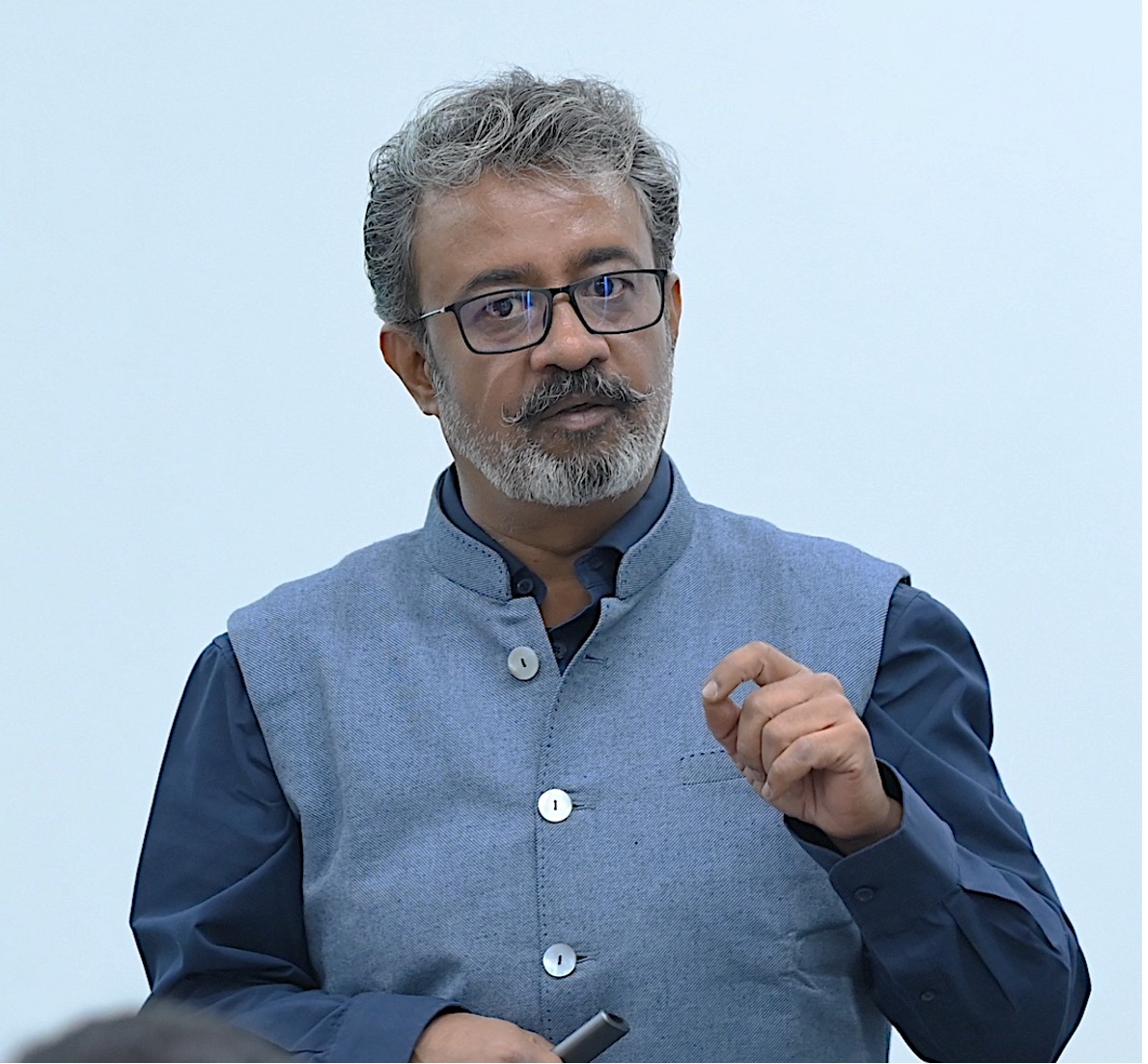
About the Author
Founder Director, ProventusHR · MGSCC Master Coach · NDA Alumnus
Founder of ProventusHR and principal architect of ExperienceLearning and REEL|Life. 25+ years across leadership advisory, executive coaching, and experiential design across 14 industries. 9x Brandon Hall HCM Excellence Award winner (2022 to 2025).
Full Profile ›