

Money Heist is, on its surface, a heist thriller. It is also one of the most precise depictions of team dynamics under pressure available in contemporary cinema. The Professor’s operation does not succeed or fail on the basis of the plan. It succeeds or fails on the basis of how the team holds together, or fractures, when the plan meets reality. That is exactly the leadership question that matters most in organisations, and it is exactly the question most team development programmes fail to address directly.
The Plan Is Never the Problem. The Team Always Is.
In Money Heist, every crisis the team faces is a team crisis, not a logistics crisis. The plan is meticulous. The contingencies are prepared. And yet, repeatedly, it is the human dynamics inside the team that create the moments of greatest danger: the trust that breaks under pressure, the authority that is questioned at the wrong moment, the individual who cannot hold the discipline when personal stakes escalate.
This pattern is not specific to heist operations. It is the pattern of every high-stakes team under real pressure. The strategy meeting produces alignment. The offsite produces commitment. And then, when the pressure is on, the unresolved dynamics, the unspoken hierarchies, the untested trust, all surface with greater force than any strategy document can contain.
The Professor’s central leadership challenge is not executing the heist. It is maintaining the coherence of a team whose members have conflicting motivations, different risk tolerances, and varying capacity to hold discipline when the emotional stakes are highest. That is the same challenge every senior leader faces with every team they build.
“What Money Heist makes visible is what organisations experience but rarely name: that team performance under pressure is a function of the quality of the relationships inside the team, not the quality of the plan.”
Cinema as a Mirror for Team Dynamics
ProventusHR uses selected sequences from Money Heist within the REEL|Life™ methodology to surface the team dynamics questions that conventional team development avoids. A precision-curated scene from the series is used as a leadership case. Participants observe the team dynamics in the scene: who holds authority, who defects, how trust is maintained or broken, what the leader does when the plan fails.
The Mirror-Window-Bridge framework then structures the debrief. The Mirror phase: participants see their own team dynamics reflected in what they have just watched. The recognition is rarely comfortable. Teams that are performing well on metrics frequently see, in the cinema, the dynamics they have collectively agreed not to name. The Window phase: participants observe what different choices, different leadership responses, different team disciplines might look like. The Bridge phase: participants commit to specific behaviour changes in their own team context, grounded in what they have just observed rather than in what a facilitator has prescribed.
The result is a conversation about team culture that bypasses the defensiveness that direct feedback typically activates. Cinema creates a safe distance that makes honesty possible. And the honesty that Money Heist produces, about authority, about trust, about what happens to discipline when personal stakes rise, is precisely the honesty that team development needs to produce to have any lasting effect.
Beyond the Offsite and the Activity
Most team building is designed to produce an experience of cohesion. An outbound activity, a shared challenge, a facilitated conversation about values. These interventions are not without value. But they produce cohesion in conditions that are fundamentally unlike the conditions in which teams actually fracture. Teams do not fracture during trust falls. They fracture when a critical decision has to be made under time pressure, when accountability is required of someone whose cooperation is needed, when the leader has to choose between what the team wants to hear and what it needs to hear.
ProventusHR’s team development work uses ExperienceLearning™ to create encounters with those real conditions, not simulated versions of them. Floor simulations place teams in scenarios that replicate the ambiguity, pressure, and competing demands of actual leadership situations. The Team ReScript™ programme addresses the specific dynamics that prevent teams from performing at their collective capability. The Culture Compass™ programme builds the alignment architecture that teams need to hold their commitments when pressure rises.
Money Heist is useful as a REEL|Life™ case precisely because it does not simplify the team challenge. The Professor’s team is not a team that needs better communication skills. It is a team that needs to understand what it is asking of each of its members, what the real costs of the collective commitment are, and whether it has the trust architecture to hold under genuine pressure. That is the question every team needs to answer before the pressure arrives, not during it.
“The best time to build a team’s capacity to hold under pressure is before the pressure. The second best time is now. The worst time is during a crisis, which is when most organisations discover they needed to do the work earlier.”
REEL|Life™ is ProventusHR’s proprietary cinematic leadership reflection methodology. Film scenes are selected with precision for the specific leadership or team dynamics each client needs to surface. The Mirror-Window-Bridge transfer framework is applied in every deployment. Full methodology details at proventushr.com/methodologies/reel-life.
Using Money Heist in Your Organisation
If you are exploring how REEL|Life™ or ProventusHR’s team development work can address the dynamics in your team, the conversation begins at proventushr.com/contact.
About the Author
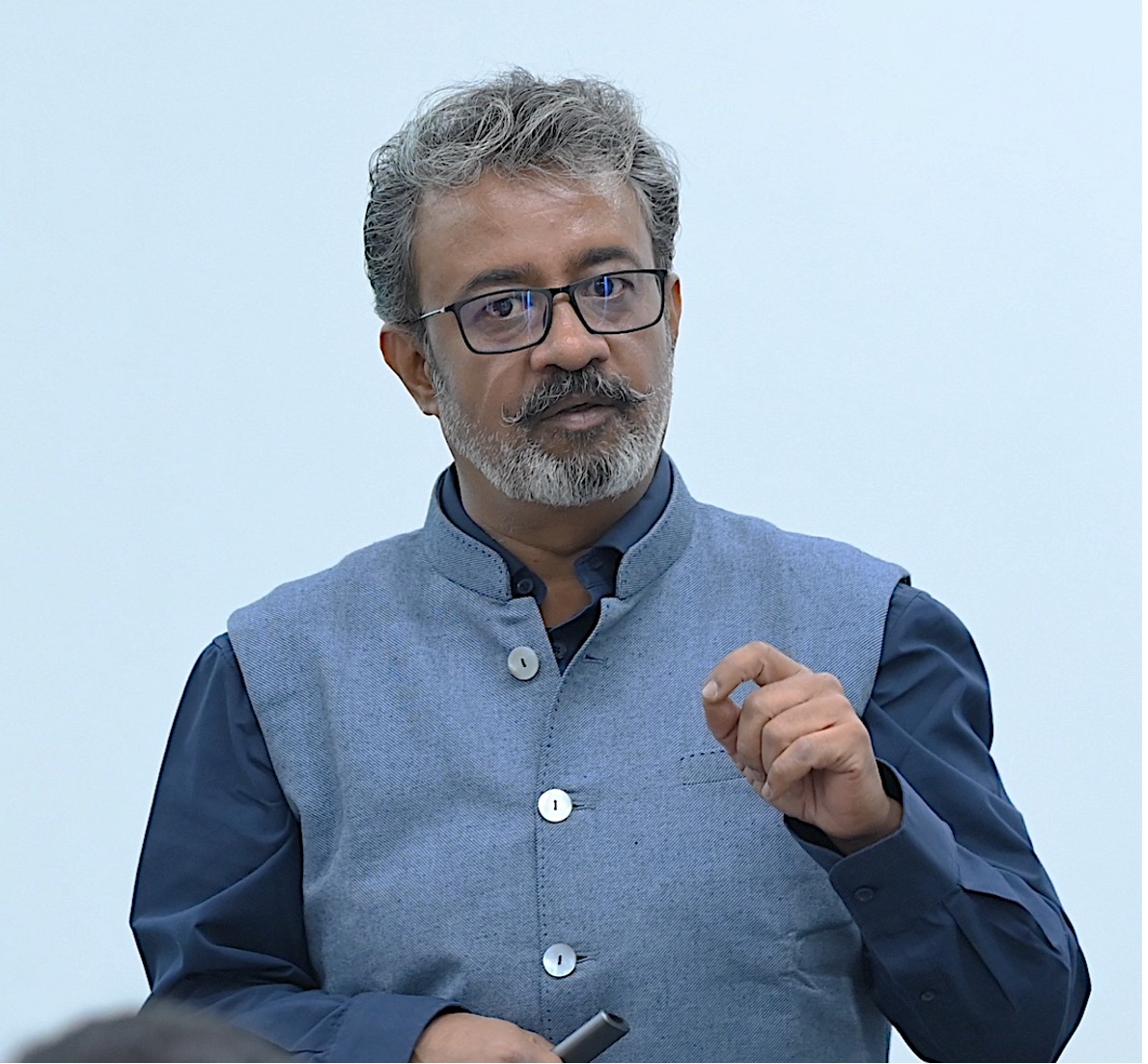
Founder Director, ProventusHR · MGSCC Master Coach · NDA Alumnus
Founder of ProventusHR and principal architect of ExperienceLearning and REEL|Life. 25+ years across leadership advisory, executive coaching, and experiential design across 14 industries. 9x Brandon Hall HCM Excellence Award winner (2022 to 2025).
Full Profile ›