

There is a specific conversation I have had many times over many years with Indian leaders who have taken on global roles, particularly those moving into matrix organisations where significant authority sits with Western headquarters. The conversation usually surfaces around the six-month mark, after the initial orientation period has ended and the real working relationships are being put to daily tests that the orientation did not fully prepare for.
The complaint is consistent in its structure, even when the specifics vary: I am being misread. What I am doing as appropriate deference to a more senior perspective is being read as lacking confidence in my own position. What I am doing as considered and careful reflection before I speak is being read as disengagement or as insufficient preparation. What I am doing as collaborative respect for the hierarchy and for the decision-making authority that the structure has established is being read as indecisiveness or unwillingness to take a stand. I am not making errors. I am operating from a coherent and internally consistent cultural framework that has never needed to be named, because in every prior context it was simply how things worked and how competent leaders behaved. I am discovering, in real time and at professional cost, that the framework I have been operating from is not universal. It is particular. And the people on the other side of this interaction cannot see it either, because they are reading my behaviour through their own particular framework and finding it consistently puzzling or concerning.
This is the specific challenge that cross-cultural leadership presents at its deepest level, and it is not primarily a knowledge problem. It is not solved by learning more about the other culture. It is a visibility problem, specifically the problem of making visible, to oneself and to others, the cultural operating assumptions that have been invisible precisely because they have never been challenged.
The knowledge illusion and why it persists
The dominant organisational response to cross-cultural leadership challenges is cultural briefing: equip leaders with knowledge about the values, communication norms, decision-making styles, and relational expectations of the cultures they are working with or within. Hofstede’s dimensional framework. Erin Meyer’s Culture Map. The Globe Study’s cultural clusters. These are legitimate and well-evidenced frameworks that provide a useful scaffolding for initial cultural navigation. Some cultural knowledge is genuinely helpful. It reduces the frequency of avoidable misunderstandings and demonstrates a minimum level of respect for the context one is entering.
The problem is the gap between what cultural knowledge produces and what effective cross-cultural leadership actually requires. The research on this gap is both extensive and consistently humbling. Leaders who are thoroughly briefed on cultural dimensions, who can articulate power distance and individualism/collectivism differentials with considerable precision, frequently perform poorly across cultural boundaries in practice. The knowledge does not transfer into effective behaviour, because the challenge is not primarily informational. It is dispositional.
The dispositional challenge is this: genuine cross-cultural effectiveness requires the capacity to hold one’s own cultural assumptions as assumptions rather than as self-evident truths, to encounter the unfamiliar without automatically interpreting it through the familiar, and to maintain genuine curiosity about the meaning-making processes of people whose meaning-making processes are genuinely different from one’s own. None of these capacities is produced by knowledge of cultural dimensions, however accurate that knowledge may be. They are produced by a quality of self-awareness and cognitive flexibility that takes sustained developmental work to build and that cultural training programmes are rarely designed to address.
What cultural intelligence actually measures
P. Christopher Earley and Soon Ang’s cultural intelligence framework, developed in the early 2000s, provides a more useful decomposition of cross-cultural effectiveness than either the knowledge-based or the general cultural sensitivity approaches that preceded it. Their framework identifies four components: cognitive CQ (knowledge about cultural systems and practices), metacognitive CQ (the awareness of one’s own cultural processing), motivational CQ (genuine interest in cross-cultural engagement), and behavioural CQ (the capacity to adapt one’s behaviour across cultural contexts).
The most important of these, and the least developed by conventional cultural training, is metacognitive CQ. It describes not what you know about other cultures but how aware you are of your own cultural operating system. Leaders with high metacognitive CQ can catch themselves in the act of applying a cultural frame that may not be appropriate. They notice when they are interpreting a colleague’s silence as disagreement because, in their cultural context, silence in a professional discussion typically signals dissent. They notice when they are reading directness as aggression because, in their cultural context, professional communication is typically more indirect. They notice the interpretation they are making and they hold it as a hypothesis rather than as a fact, remaining open to the possibility that the behaviour they are observing means something different from what it would mean in their own cultural context.
Building metacognitive CQ requires experiences that genuinely challenge the leader’s cultural operating assumptions, combined with structured reflection that makes the assumptions visible rather than simply noting that they exist. This is precisely the kind of developmental experience that most cross-cultural training programmes do not provide. They provide content about other cultures, which is genuinely useful, without providing the sustained encounter with one’s own cultural assumptions that would allow that content to be received and applied with genuine sophistication.
The India-specific complexity
Working with Indian leaders and organisations across sectors for over two decades, I have observed a specific tension that the cultural literature does not always address with sufficient nuance. India is not one culture. It is more accurate to describe it as a vast and complex cultural ecosystem, within which the variation in communication norms, relationship expectations, attitudes toward authority, and leadership styles is substantial and, in some dimensions, greater than the variation between India and the West that the cross-cultural literature typically focuses on.
The Marathi-speaking manufacturing leader in Pune and the Tamil-speaking technology professional in Chennai and the Bengali intellectual in Kolkata and the Punjabi entrepreneur in Delhi are not operating from a single unified “Indian culture” that can be neatly described in terms of power distance and collectivism. They are operating from cultural contexts that share some broad features and differ substantially in others, in ways that the generic India-versus-West cultural frameworks consistently obscure.
This matters for cross-cultural leadership in two directions. For Indian leaders working internationally, it means that the homogenising Western label “Indian” applied to them is often experienced as reductive in ways that their own internal cultural complexity makes particularly salient. For leaders from outside India working within Indian organisations, it means that the cultural reading they have acquired of “Indian” business culture may be significantly inaccurate for the specific organisational and regional context they are actually in.
The Indian organisational contexts I have worked with most extensively do share several patterns that are worth naming carefully. A relationship orientation that genuinely prioritises the long-term quality of personal connection over transactional efficiency, in ways that produce slower initial relationship formation but considerably more durable professional partnerships when the relationship is properly established. A communication style that is often more contextually embedded and relationship-sensitive than the explicit and low-context communication norms that dominate in American and Northern European professional settings, which produces frequent misreading in both directions. A deep and genuinely functional respect for seniority that, in hierarchical contexts, can produce the appearance of agreement in the presence of authority regardless of actual position, which creates specific and consequential risks for upward communication quality. And a capacity for working effectively within genuinely ambiguous structural conditions, for navigating the gap between the formal and the informal with considerable sophistication, that leaders from more linear organisational cultures often find both frustrating and, once they understand it, genuinely impressive.
The developmental path that actually builds cross-cultural effectiveness
The developmental path toward genuine cross-cultural leadership effectiveness has three broad stages, each of which requires specific conditions to navigate well.
The first is cultural self-awareness: the development of a clear, specific, and honest account of one’s own cultural operating assumptions, including the ones that are most invisible precisely because they are most deeply held. This is not a comfortable exercise, because it requires acknowledging that one’s most basic professional instincts and reflexes are particular rather than universal, that what feels like normal and reasonable professional behaviour is culturally specific in ways that are not obvious from the inside. The facilitation of this awareness usually requires sustained encounters with people who experience one’s cultural defaults very differently, combined with structured reflection that goes beyond the surface level of “I learned that I come across differently than I intended.”
The second is genuine curiosity about how others make meaning: not the performed curiosity of cultural training, which asks “how do people in this culture typically interpret situation X?” but the genuine curiosity of sustained cross-cultural relationship, which asks “what is this specific person in this specific moment actually experiencing and what does their response mean from inside their framework rather than from inside mine?” This quality of curiosity is built through sustained cross-cultural relationships of sufficient depth and honesty that the differences in meaning-making become genuinely interesting rather than primarily frustrating.
The third is the capacity to adapt one’s behaviour without losing one’s values. This is the most demanding stage of cross-cultural development, because it requires distinguishing between the cultural forms through which one’s values and commitments are expressed and the values and commitments themselves. A leader who is committed to honesty can express that commitment through the direct, explicit communication norms of one cultural context or through the relationship-sensitive, contextually embedded communication norms of another, without compromising the underlying commitment. Making this distinction requires a clarity about one’s own values that many leaders have not developed, because in monocultural environments the distinction between values and their cultural expression rarely needs to be made.
The hardest thing about cross-cultural leadership is not learning the other culture. It is unlearning the invisibility of your own, and discovering that what you thought was simply how things are done is one particular way of doing things among many.
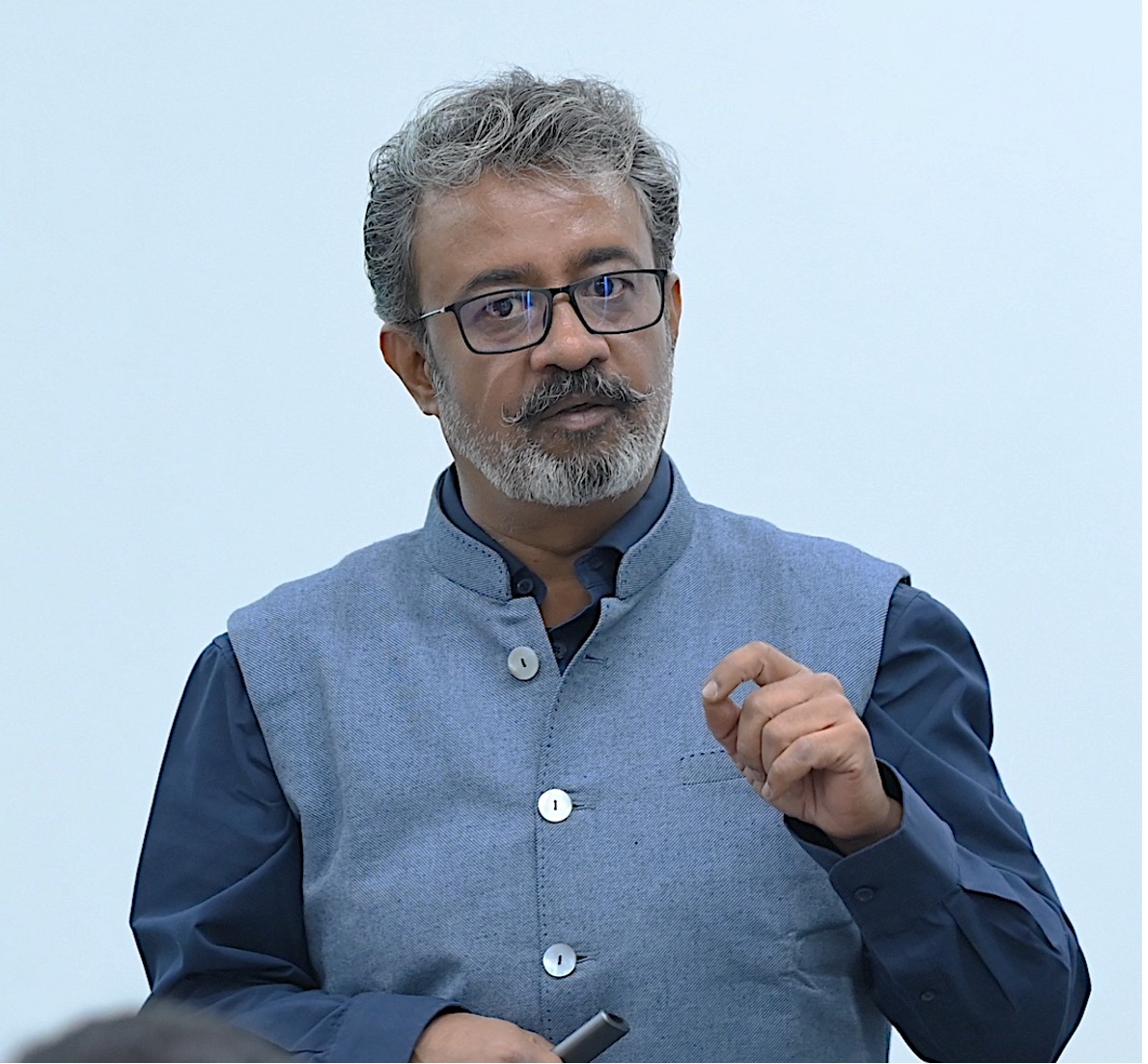
About the Author
Founder Director, ProventusHR · MGSCC Master Coach · NDA Alumnus
Founder of ProventusHR and principal architect of ExperienceLearning and REEL|Life. 25+ years across leadership advisory, executive coaching, and experiential design across 14 industries. 9x Brandon Hall HCM Excellence Award winner (2022 to 2025).
Full Profile ›