

The Founder is one of the most precise explorations of the relationship between vision, mission, and scale that cinema has produced. It is not a film about a villain. It is a film about the trajectory of genuine vision when ambition begins, incrementally and invisibly, to redefine the values it began with.
The same drive that builds the empire is the drive that displaces the values the empire was built on.
John Lee Hancock’s 2016 film “The Founder” tells the story of Ray Kroc and his transformation of a small, family-operated burger restaurant in San Bernardino, California into the McDonald’s Corporation that the world now knows. It is, at its surface level, a story about business ambition, franchising mechanics, and the legal and personal betrayals that accompanied one of the most consequential expansions in commercial history. At a deeper level, it is one of the most precise and unsettling explorations of the relationship between vision, mission, and scale that American cinema has produced, and it earns a place in any serious conversation about what organisations sacrifice, and what they lose the right to call themselves, when growth becomes the organising principle of everything else.
I use this film in REEL|Life facilitation contexts regularly, and it consistently produces conversations that are sharper, more honest, and more personally confronting for the leaders in the room than almost any other film I use. The reason is that it does not make its moral argument through a villain. Ray Kroc, as Michael Keaton plays him, is not a simple antagonist. He is a man of genuine vision, real commercial intelligence, and relentless energy, who makes a series of choices that are individually defensible and collectively catastrophic for the people and the values he has used to build what he is building. The film’s power is in the specificity of that trajectory, and in the way it refuses to resolve the tension it establishes between vision, ambition, and integrity into a comfortable conclusion.
The Vision Question
The film’s central dramatic conflict is not between Ray Kroc and his competitors. It is between Ray Kroc and the McDonald brothers, Dick and Mac, who created the restaurant, the system, the aesthetic, and the values that Kroc will use to build his empire. The brothers had a vision: a fast, clean, consistent, family-oriented dining experience built on operational excellence and genuine hospitality. They had also built, in their original San Bernardino restaurant, a genuine expression of that vision. When Kroc encounters the restaurant for the first time, his reaction is not that of a predator who sees an opportunity. It is that of someone who has genuinely and immediately understood what the brothers have created, and who believes, initially without obvious cynicism, that the world deserves more of it.
The tragedy of the film, and the reason it is so useful in leadership development contexts, is that this moment of genuine vision is also the moment at which the appropriation begins. Kroc does not set out to displace the brothers’ vision with his own. He sets out, initially, to scale it. But scaling a vision without preserving the authority of its originators over its meaning is a form of appropriation that the scaler often does not recognise as such until it is too late to undo. THE FOUNDERS BELIEVE THEY ARE RETAINING OWNERSHIP OF WHAT THEIR CREATION STANDS FOR because they retain ownership of the brand. Kroc is discovering, and the film makes this visible long before Kroc acknowledges it, that the meaning of the brand is already shifting in his hands, and that the shift is not incidental to the scale, it is the condition of it.
For organisations navigating growth, acquisition, or transformation, this dynamic is not metaphorical. The original culture, the founding values, and the authentic connection between what the organisation says it stands for and what its daily operations actually produce, these are the “McDonald brothers” in every growth story. The scaling mechanism, whether it is franchising, acquisition, rapid headcount growth, or digital transformation, is always the vector by which the original meaning is at risk of displacement. The question the film demands that leaders ask is not “are we growing?” but “what is our growth doing to what we said we were?”
The Mission Drift
The film’s sharpest observation about organisational culture is in the sequence where Kroc discovers that the real estate, not the hamburgers, is where the money is. This discovery does not change the rhetoric. McDonald’s continues to be described, marketed, and positioned as a food business built on quality, speed, and value. But the logic of the business, the decisions about what gets resourced and what gets compromised, the incentive structures that shape behaviour at every level of the organisation, all of these reorient around real estate. The mission, which was the production of a consistent and genuinely good food experience, becomes the vehicle for a different mission, which is the accumulation of land and the extraction of rent. The language does not change. The substance does.
This is the mission drift pattern at its most extreme, but it is not categorically different from patterns that are visible in organisations that would describe themselves very differently from a fast food corporation. When a professional services firm describes itself as a client-focused advisory practice but structures its compensation entirely around utilisation rates, the means, billable hours, has become the end, and the mission language is serving a rhetorical function rather than an organisational one. When a technology company describes its mission as connecting people and building community but optimises every product decision for engagement metrics regardless of what the engagement produces, the language and the logic have separated. The Founder is useful in leadership development rooms not because the people in those rooms are Ray Kroc, but because the dynamic the film depicts is structural, available to any organisation, and often invisible to the people inside it until the film puts a mirror to it.
The Keaton Performance
Michael Keaton’s performance is essential to the film’s value as a leadership development tool. He plays Kroc as a man in whom genuine qualities, vision, resilience, the ability to see what others cannot see and to act on that vision with extraordinary persistence, are inseparable from the qualities that produce the film’s harm: an inability to be constrained by prior commitments once a better opportunity presents itself, a talent for persuasion that slides into manipulation without visible transition, and an appetite for the story of himself as the heroic founder that progressively displaces his relationship with the actual founders whose creation he is building on.
In REEL|Life facilitation, the most productive conversations come from this inseparability. Leaders in the room who find themselves drawn to Kroc’s vision and energy in the first third of the film, and troubled by his choices in the second and third thirds, are experiencing what the film is designed to produce: the recognition that the qualities that make leaders capable of significant vision and significant execution are not categorically different from the qualities that make them capable of significant harm. THE SAME DRIVE THAT BUILDS MCDONALDS ALSO DESTROYS THE MCDONALD BROTHERS’ LIFE WORK. That is not a coincidence in the film’s structure. It is the film’s argument, and it is an argument that serious leaders need to sit with rather than resolve too quickly.
“Ray Kroc is not a warning about bad people who do bad things. He is a warning about good people who do not ask, often enough or honestly enough, what their ambition is doing to the values they began with.”
RK, Founder & Principal Consultant, ProventusHRFilm Details
“The Founder,” directed by John Lee Hancock, written by Robert Siegel, 2016. Starring Michael Keaton as Ray Kroc, Nick Offerman as Dick McDonald, and John Carroll Lynch as Mac McDonald. Runtime: 115 minutes. Available on major streaming platforms.
In the REEL|Life Room
“The Founder” is one of the films ProventusHR returns to most consistently in REEL|Life facilitation, and it earns its place in the culture and strategy alignment pillar because it puts the most important questions in that domain into the sharpest possible relief. What is the relationship between the vision an organisation claims and the decisions it actually makes? At what point does scaling a mission become replacing it? And how do leaders who genuinely believe in the values they are building on recognise, in themselves, the moment when ambition has begun to redefine those values rather than express them?
These questions do not have clean answers, and the film does not offer clean answers. What it offers is a precisely constructed scenario in which leaders who are paying attention can observe the trajectory of a man who is not a villain, and find, in that trajectory, something that is worth being honest about in themselves. The REEL|Life facilitation process creates the conditions for that honesty to be productive: the distance of the cinematic frame, the structured reflection, and the guided conversation that connects what leaders have observed in the film to what they recognise in their own organisations and their own leadership practice. “The Founder” works in that process because it refuses to be comfortable. That refusal is its greatest pedagogical virtue.

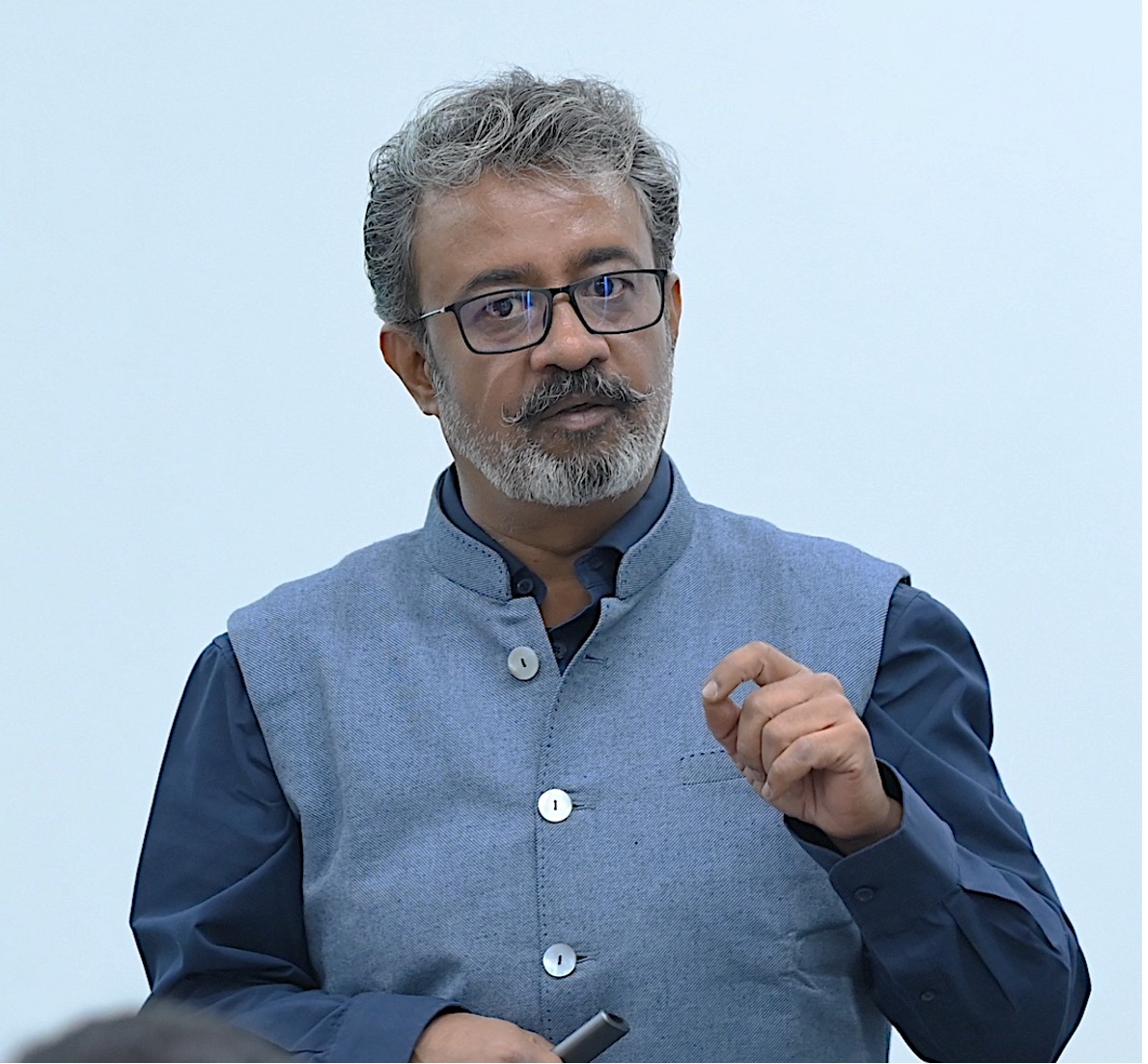
About the Author
Founder Director, ProventusHR · MGSCC Master Coach · NDA Alumnus
Founder of ProventusHR and principal architect of ExperienceLearning and REEL|Life. 25+ years across leadership advisory, executive coaching, and experiential design across 14 industries. 9x Brandon Hall HCM Excellence Award winner (2022 to 2025).
Full Profile ›Every engagement begins with a discovery conversation. No templates, no generic programmes; only work that fits the context, the culture, and the people involved.
Start a Discovery Conversation