

Most organisations have a vision. Far fewer have a strategy. The distance between the two is not semantic; it is the precise location where transformation efforts collapse, where alignment workshops fail to hold, and where the energy of leadership conviction dissipates into contradictory action.
The gap between aspiration and strategic direction is where most transformation efforts lose their way.
The confusion between a vision statement and a strategy is one of the most consistently expensive errors in organisational life. It is not a semantic debate, and it is not a philosophical quibble. It is a structural problem with measurable consequences: initiatives that lose traction without explanation, transformations that stall after the first burst of energy, and leadership teams that find themselves talking past each other because each member is operating from a different understanding of what the organisation is actually trying to achieve. When we ask senior leaders to distinguish between their organisation’s vision and its strategy, a significant proportion of the conversation that follows reveals that the two have been collapsed into one and that the collapse is being treated as clarity.
A vision statement is a declaration of destination. It tells the organisation where it intends to go. A strategy is something categorically different. A strategy is a coherent set of choices about how to reach that destination, which paths to take and, critically, which paths to actively and explicitly reject. Roger Martin has argued with notable rigour that strategy requires the making of choices in the face of genuine uncertainty, and that the refusal to make choices is not caution; it is the abandonment of strategy altogether. When an organisation produces a vision without a corresponding strategy, it has declared a destination without a route. The declaration may inspire for a season. The inspiration will not survive contact with the first serious resource constraint, the first genuine disagreement about priorities, or the first external disruption that demands a coordinated organisational response.
The Anatomy of a Persistent Confusion
The confusion persists because vision and strategy share vocabulary. Both speak of direction, of purpose, of the future the organisation is moving toward. Both are typically produced in the same offsite. Both are validated by the same leadership team. The organisational experience of producing them feels similar: facilitated conversations, synthesised language, a room that endorses the output and feels good about the alignment it believes it has achieved. But the intellectual demands are entirely different. A vision requires aspiration. A strategy requires rigour, and rigour demands that the team confront trade-offs, acknowledge current reality honestly, and agree to reject some attractive options in favour of a coherent set of choices. That level of rigour is uncomfortable, and organisations consistently choose the comfort of the vision over the discipline of the strategy.
This matters because VISION WITHOUT STRATEGY creates what practitioners of strategic planning call a structural vacuum. The vacuum fills itself with whatever is already in motion. Activity continues. Resources continue to be allocated according to historical patterns and the relative political weight of competing functions. People continue to make local decisions based on their personal interpretation of the vision, and those interpretations diverge across teams, levels, and time horizons. The vision language appears in every presentation. The strategy, absent, provides nothing to anchor resource allocation decisions, nothing to adjudicate conflicts between competing priorities, and nothing to make the cultural implications of the direction explicit.
When we work with leadership teams on culture and strategy alignment, a consistent diagnostic signal appears within the first half-day. The team can describe the vision fluently and with genuine conviction. Each member can articulate why the aspiration matters. But when we ask the team to name the three to five choices their strategy requires them to explicitly not make, the conversation fractures. This is not a failure of intelligence or commitment. It is evidence that the organisation has a direction but not a strategy. Direction tells you north. Strategy tells you which roads to take, which roads to avoid, and why this particular route over another.
“The vision tells you where you are going. The strategy tells you why this route and not another one. Most organisations produce the destination and skip the reasoning entirely, then spend years wondering why their transformation loses coherence after the first hundred days.”
RK, Founder & Principal Consultant, ProventusHRThe Test of Strategic Specificity
There is a diagnostic exercise we apply in every culture and strategy alignment engagement. We ask the leadership team to articulate the strategy in a single paragraph, without referencing the vision. The paragraph must answer three questions: what are we choosing to do, what are we explicitly choosing not to do, and why is this particular combination of choices the right one for this organisation at this moment?
The results are consistently instructive. In approximately two-thirds of the leadership teams we have worked with over the past decade, the paragraph produced is a restatement of the vision in slightly more operational language. The strategy, as a document, either does not exist, is not current, or is not understood across the team as a genuine set of choices. In a notable proportion of cases, different members of the same C-suite produce paragraphs that, when read aloud, describe strategies that are materially different from each other. The surprise on the faces of team members when they hear each other’s versions is itself diagnostic. The team believed it was aligned. The exercise revealed that the alignment was semantic, a shared vocabulary without a shared logic.
In the remaining third of engagements, something more productive happens. The team produces the paragraph, disagrees about it, and the disagreement surfaces real strategic choices the organisation is in the process of making but has not yet made explicitly. These disagreements are not a failure of the exercise. They are its purpose. A STRATEGY THAT HAS NOT BEEN TESTED BY HONEST DISAGREEMENT is a hypothesis, not a choice. The test is uncomfortable. It is also irreplaceable, because the disagreements that emerge in the workshop room are the same disagreements that will otherwise emerge in resource allocation battles, in contradictory functional priorities, and in the slow disintegration of organisational energy that characterises transformation programmes that stall.
What the Gap Looks Like in Execution
The gap between vision and strategy is not visible in the boardroom, where vision language is shared and endorsed. It becomes visible in execution, and it manifests in specific, recurring patterns. The first is MISALIGNED INVESTMENT: a senior leader in one function makes a significant investment that directly contradicts an investment made by another function, and neither investment is wrong relative to one plausible reading of the vision. The second is PERVERSE INCENTIVES: the performance management system continues to reward behaviours that the strategy, once articulated, requires the organisation to move away from. The third is CULTURE-STRATEGY MISALIGNMENT: the values and operating norms of the organisation actively resist the changes the strategy requires, and nobody can explain why, because the strategy was never communicated in terms that made its cultural implications explicit.
We have observed this gap across sectors and at significant scale. A consumer goods organisation with a vision of becoming the most innovative brand in its category whose actual resource allocation was still weighted almost entirely toward operational efficiency and margin, with no structural investment in new product development capability. A financial services firm whose vision positioned it as the employer of choice for the next generation of talent, whose talent practices were still structured around the retention and promotion of leaders who had built their credibility in a previous, now-obsolete business model. A manufacturing conglomerate whose vision spoke of agility and customer centricity, whose governance processes were so weighted toward approval hierarchies that no customer-facing initiative had reached implementation within a year of inception.
In each case, the vision was credible, well-articulated, and genuinely held by the senior leadership. The problem was not inspiration. The problem was that without an explicit strategy, there was no mechanism for the vision to make claims on resource allocation, on culture, or on leadership behaviour. The vision inspired. The absence of strategy allowed everything to continue, largely unchanged, in the direction it was already moving.
Closing the Gap with Discipline
The solution to the vision-strategy gap is not to abandon the vision or to replace it with a more operational planning document. It is to take the intellectual discipline of strategy seriously enough to produce a genuine one. This requires three specific commitments from the leadership team that most organisations are reluctant to make, not because the commitments are intellectually complex, but because they are socially and politically costly.
The first commitment is honest diagnosis of current reality. The gap between where the organisation is and where the vision declares it to be going is not a source of organisational shame; it is the raw material of strategy. Leaders who cannot see or will not name the gap cannot design the route. THE MOST COMMON REASON organisations do not produce genuine strategy is that honest assessment of current reality would require the leadership team to acknowledge failures, surface uncomfortable performance data, and have conversations that have been deferred for reasons of political comfort. The vision allows those conversations to be bypassed. The strategy demands them.
The second commitment is the discipline of exclusion. Every genuine strategic choice involves the deliberate rejection of alternatives that are also attractive. THE EXPLICIT AGREEMENT ON WHAT THE ORGANISATION WILL NOT DO is one of the most powerful alignment mechanisms available to a leadership team, and one of the most uncomfortable conversations they will have, because it requires public acknowledgement that some functions, some historical investments, and some inherited priorities are not central to the direction the organisation has chosen. Leaders who have built their careers on those investments resist this acknowledgement. The facilitated process that helps them do it is among the most valuable services a strategy partner can provide.
The third commitment is translation. A strategy that lives only in a ratified document is not a strategy in any operational sense. It is an aspiration with footnotes. STRATEGY ONLY BECOMES REAL when it makes claims on daily decisions, on the design of the performance management system, on the behaviours leadership models visibly, and on the culture the organisation is intentionally building. Without this translation, even a well-crafted strategy will dissolve into the organisation’s existing operating logic within a quarter of its ratification.
“When we ask leadership teams to articulate their strategy in a single paragraph, what we almost always receive is a rephrasing of the vision. The strategy, if it exists as a document, is rarely read after the offsite at which it was produced.”
RK, Founder & Principal Consultant, ProventusHRThe Implications for HR and Culture Strategy
For HR leaders, the vision-strategy gap has direct and underappreciated consequences for the design of every people initiative. A competency framework not anchored in the specific strategic choices the organisation is making will develop capabilities the strategy does not require and may actively not need. A culture intervention not connected to the explicit demands of the strategy will produce participation, not alignment. A talent strategy built against a vision rather than a strategy will recruit and develop people optimised for a direction rather than a route, and the organisation will discover the mismatch when execution demands begin to surface.
The most persistent structural error in HR strategy is to treat culture and leadership development as complementary to the business strategy when the organisation does not yet have a genuine business strategy. The people work then floats, untethered from strategic logic, and produces activity without impact. The CHROs who navigate this most effectively insist on strategic clarity before commissioning culture interventions. They understand that CULTURE IS THE MECHANISM THROUGH WHICH STRATEGY EITHER EXECUTES OR RESISTS, and they treat culture design as a function of strategy design rather than a supplement to it. This is not bureaucratic rigour for its own sake. It is the recognition that the most significant investment an organisation makes in its people needs to be grounded in a clear understanding of what the organisation is actually trying to achieve, not just where it aspires to go.
Research Reference
Roger Martin and A.G. Lafley, “Playing to Win: How Strategy Really Works,” Harvard Business Review Press, 2013. McKinsey Global Survey on Strategy and Performance, 2022. CCL Research on Senior Leadership Team Alignment and Strategic Clarity, 2021. John Kotter, “Leading Change: Why Transformation Efforts Fail,” Harvard Business Review, 2012.
The ProventusHR Perspective
ProventusHR’s Culture and Strategy Alignment practice is built on the recognition that the gap between vision and strategy is not primarily a planning problem; it is a leadership conversation problem. Our ChangeQuest™ simulation places leadership teams in a scenario that demands real strategic choices under competitive pressure, and the debrief consistently surfaces the degree to which the team’s strategic reasoning is integrated or fragmented. The simulation is not a game. It is a diagnostic that reveals, within a single afternoon, the alignment challenges that would otherwise take quarters of execution failure to surface.
Our strategy alignment workshops, designed for leadership teams of eight to twenty, run across two to three days in three distinct phases. The first surfaces the actual level of strategic clarity present in the room, including the divergences that the team has been navigating around rather than through. The second guides the team through the specific choices the strategy requires, with facilitated attention to the exclusions. The third translates the strategic choices into operating implications: the culture the organisation needs to build, the leadership behaviours that must shift, and the talent architecture required to execute the strategy rather than the vision. We do not produce documents. We produce shared understanding, explicit choices, and operating agreements that the team can hold each other accountable to in the months following the workshop.

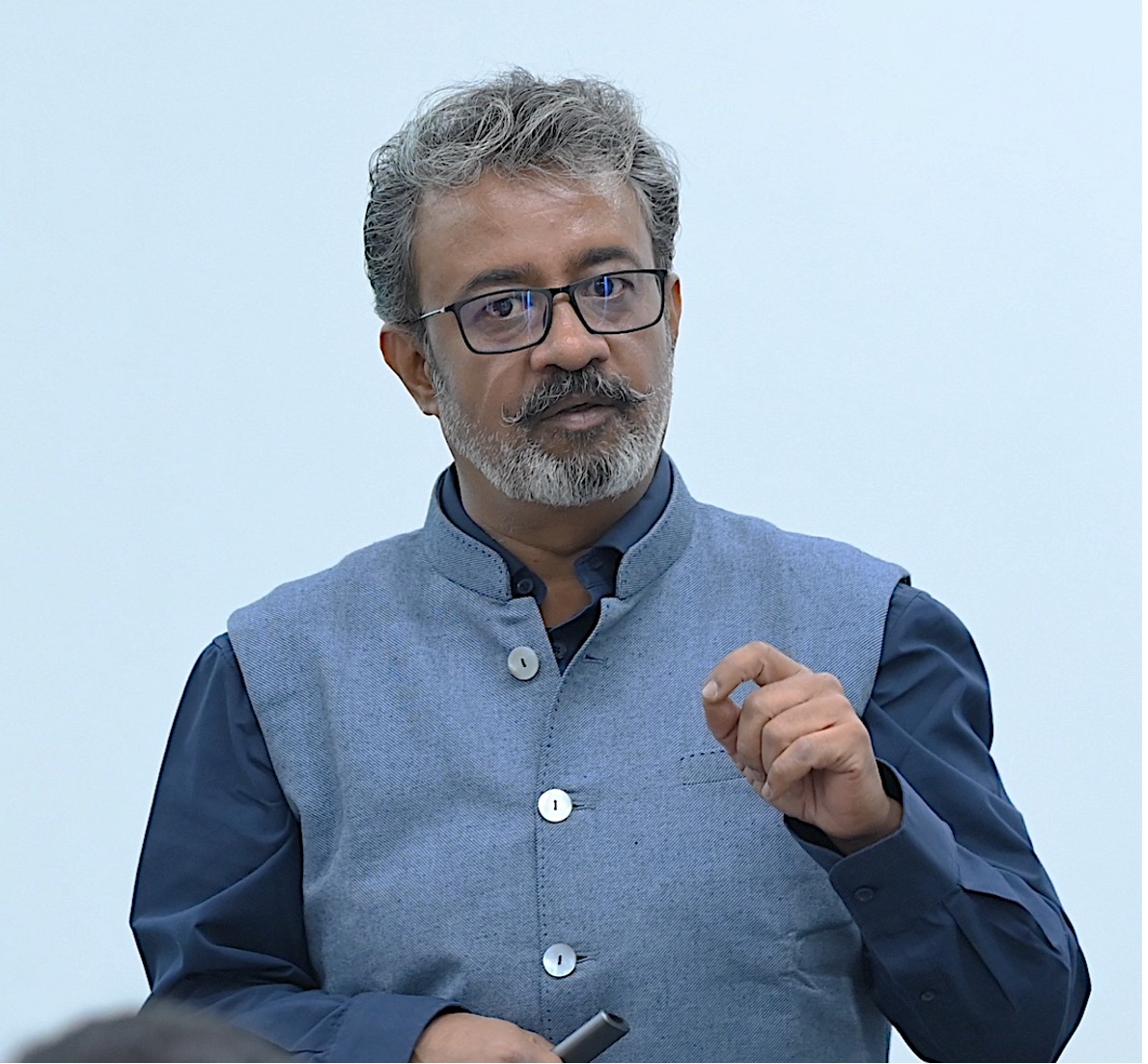
About the Author
Founder Director, ProventusHR · MGSCC Master Coach · NDA Alumnus
Founder of ProventusHR and principal architect of ExperienceLearning and REEL|Life. 25+ years across leadership advisory, executive coaching, and experiential design across 14 industries. 9x Brandon Hall HCM Excellence Award winner (2022 to 2025).
Full Profile ›Every engagement begins with a discovery conversation. No templates, no generic programmes; only work that fits the context, the culture, and the people involved.
Start a Discovery Conversation