

Organisations commission values workshops with genuine intention. The gap between what they believe the workshop produces and what it actually produces is one of the most consequential and least discussed dynamics in organisational development practice.
The workshop names what the organisation wants its values to be. It cannot make them real.
Organisations commission values workshops with a clear and usually genuine intention: to articulate what the organisation stands for, to create shared language around the behaviours and principles that should guide how people work together, and to produce a set of organisational values that will be communicated, embedded, and used to shape culture over time. The intention is coherent. The gap between the intention and the actual output of most values workshops is one of the most consequential and least discussed dynamics in organisational development practice.
This note is an attempt to describe that gap honestly, from the perspective of someone who has designed and facilitated values workshops, observed the outputs of values workshops others have designed, and then worked with organisations in the months and years after their values workshops, when the distance between what the workshop produced and what the organisation believed it had produced has become difficult to ignore.
What Organisations Think a Values Workshop Produces
The implicit model in most organisations that commission values workshops goes something like this: before the workshop, values are unclear, inconsistent, or unarticulated; during the workshop, a representative group of leaders and employees engages in a structured process of reflection and dialogue; after the workshop, the organisation has a set of shared values that reflect genuine collective ownership and will guide behaviour going forward. The workshop is understood as the mechanism by which shared values are created.
This model is not entirely wrong. A well-designed values workshop can produce clarity about what matters to the people in the room, surface meaningful areas of both alignment and tension, and generate language for principles and behaviours that the organisation has been operating by implicitly but has not previously named. These are real and useful outputs. They are not, however, shared values in the sense that the model assumes.
SHARED VALUES ARE NOT PRODUCED IN A WORKSHOP. They are produced in the daily choices that leaders and managers make about what to prioritise when competing demands create genuine tension, in the stories the organisation tells about who gets rewarded and who gets passed over and why, in the behaviours that are tolerated when they are inconvenient to address, and in the patterns of decision-making that become visible across hundreds of small and large moments over months and years. A workshop can name what the organisation wants its values to be. It cannot make them real. That work happens after the workshop, in conditions the workshop cannot create or control.
What a Values Workshop Actually Produces
In my experience, a values workshop typically produces five things, of which organisations are generally aware of two or three, and of which one or two are rarely named or planned for.
The first output is a set of value words or phrases with associated behavioural descriptors. This is the visible, documented output that the workshop is commissioned to produce and that communications and HR teams will use in the months ahead. It is the most consistently present output and the most consistently overestimated in terms of what it achieves.
The second output is a heightened level of employee expectation. Organisations almost universally underestimate this. When a values workshop has been run, and especially when it has been positioned as part of a culture change effort, employees who participated have raised their expectations about what the organisation will do with the outputs. They expect to see the values reflected in decisions. They expect leaders to be held accountable to the behaviours that were described in the workshop. They expect the organisation to mean what it said. When the organisation’s subsequent behaviour is consistent with the values, this expectation serves as a positive feedback loop. When it is not, the expectation becomes the source of a level of cynicism that is significantly more corrosive than the cynicism that existed before the workshop. THE WORKSHOP RAISES THE STAKES, and organisations that do not plan for this dynamic are routinely surprised by it.
The third output is a set of surfaced but unresolved tensions. Most values workshops, if they are well designed, will produce moments where genuine differences emerge: about what the organisation actually prioritises versus what it says it prioritises, about which values are in tension with each other in practice, about what is meant by terms like “accountability” or “collaboration” or “innovation” when they are tested against real scenarios. These tensions are valuable diagnostic information. They are also, in most values workshops, managed rather than resolved, because resolving them would require more time, more depth of engagement, and more willingness to examine the organisation’s actual behaviour than a one or two-day workshop typically allows for. The tensions go back into the organisation named but unresolved, and they tend to reappear, with greater force, in the post-workshop period when the values are being applied to real situations.
The fourth output is a cohort of values champions: the people who were genuinely moved by the workshop, who believe in the values the organisation has articulated, and who will carry that belief forward into their teams and their daily work. This is a real and important output, and it is the foundation of any genuine culture change effort. It is also a fragile output: values champions are sustained by evidence that the organisation is following through, and they are the people most acutely affected when the evidence suggests it is not.
The fifth output, and the one most rarely acknowledged, is a clear read of who in the senior leadership is genuinely committed to living the values versus who participated in the workshop as a communication exercise. This read is available to everyone in the organisation, often more clearly than the senior leadership realises, and it shapes the credibility of the entire values effort more powerfully than any communication or training that follows.
The Post-Workshop Architecture
The most common mistake organisations make after a values workshop is treating the workshop as the primary event and everything that follows as communications and implementation. This framing inverts the actual relationship between the workshop and the culture change work. The workshop is, at best, the beginning of the culture change work. The actual work, the work that determines whether the values become real or remain aspirational, happens in the post-workshop period and requires a fundamentally different set of interventions from the workshop itself.
The post-workshop architecture that I have seen produce genuine culture movement has several consistent features. It includes senior leadership modelling that is specific and publicly visible: not statements about the values but observable changes in how leaders make decisions, run meetings, give feedback, and respond to situations where the values are under pressure. It includes a clear and consistently applied accountability framework that connects performance expectations to the values in a way that has real consequences, not merely nominal ones. It includes mechanisms for employees to observe and name values-behaviour gaps without professional risk, and for those observations to reach the people who can act on them. And it includes explicit recognition and storytelling about moments where the values have been genuinely lived, especially in circumstances where living them was costly.
Most critically, the post-workshop architecture requires sustained attention from the senior leadership, not as a periodic values communication exercise, but as an ongoing orientation to the question of whether the organisation’s daily behaviour is aligned with what the workshop articulated. THIS IS THE WORK THE WORKSHOP CANNOT DO. It is also the work that most organisations, having completed the workshop and produced the documented outputs, do not sustain.
“A values workshop surfaces what the organisation aspires to be. Whether those aspirations become real depends entirely on what happens in the twelve months after the participants leave the room.”
RK, Founder & Principal Consultant, ProventusHRResearch Reference
James Heskett, “The Culture Cycle,” FT Press, 2012. Edgar Schein, “Organisational Culture and Leadership,” 5th ed., Jossey-Bass, 2016. Jennifer Chatman and Charles O’Reilly, “Paradigm Lost: Reinvigorating the Study of Organisational Culture,” Research in Organisational Behaviour, 2016. ProventusHR post-programme observations across culture transformation engagements, 2018 to 2025.
The ProventusHR Perspective
At ProventusHR, we do not design standalone values workshops. We design values interventions, which are structured processes that include a diagnostic phase, a core workshop or series of workshops, and an explicit post-workshop architecture that connects the values articulation work to the leadership behaviour and accountability systems that will determine whether the values become real. The distinction matters because the design logic is fundamentally different: instead of optimising for the quality of the workshop output, we optimise for the conditions that produce genuine culture movement in the six to eighteen months after the workshop.
This means we have direct and sometimes difficult conversations with senior leadership before we begin about what the organisation is genuinely prepared to do after the workshop, and about whether the leadership team itself is willing to be held to the same behavioural expectations it is asking of the broader organisation. We do not design values workshops for organisations where the honest answer to those questions suggests that the workshop will produce the heightened expectation and subsequent cynicism cycle described above. We would rather help the organisation understand what it is and is not yet ready for than add one more set of beautiful laminated values cards to the walls of a culture that has not changed.

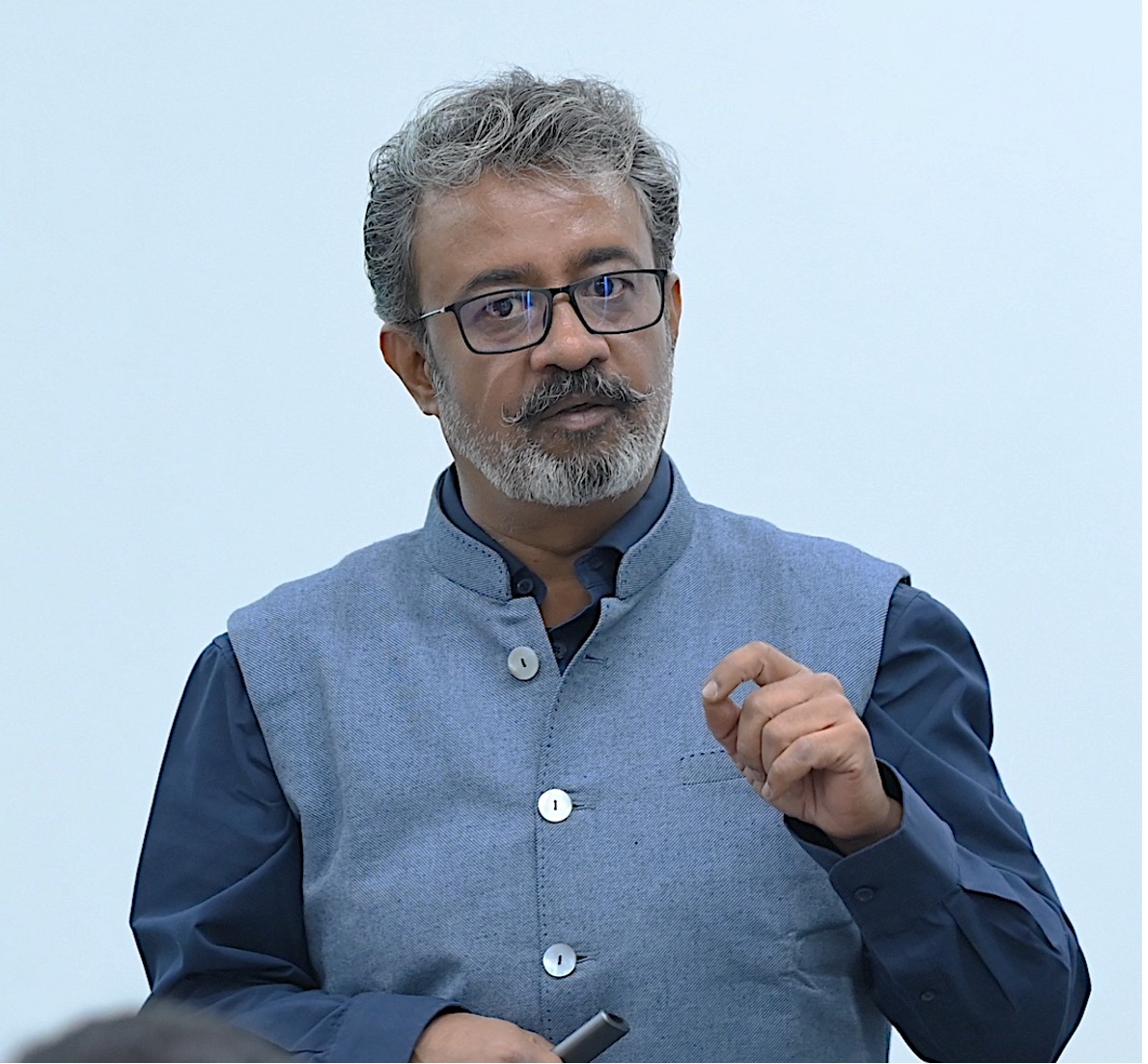
About the Author
Founder Director, ProventusHR · MGSCC Master Coach · NDA Alumnus
Founder of ProventusHR and principal architect of ExperienceLearning and REEL|Life. 25+ years across leadership advisory, executive coaching, and experiential design across 14 industries. 9x Brandon Hall HCM Excellence Award winner (2022 to 2025).
Full Profile ›Every engagement begins with a discovery conversation. No templates, no generic programmes; only work that fits the context, the culture, and the people involved.
Start a Discovery Conversation