

Most executive coaching treats the coachee as the primary source of truth. The Goldsmith Stakeholder Centred Coaching methodology inverts this entirely, and the behavioural outcomes are measurably superior.
The stakeholder is not supplementary to the coaching engagement. In every meaningful sense, the stakeholder is the engagement.
There is a persistent assumption at the heart of most executive coaching practice. The assumption is that the most important data source in the coaching room is the person being coached, that their self-awareness, their capacity for honest reflection, and their willingness to engage with discomfort constitutes the primary engine of behavioural change. This assumption is understandable, given coaching’s roots in humanistic psychology and the therapeutic tradition. It is also, when tested rigorously against outcome data, significantly incomplete.
The executive coaching field has generated an enormous body of practice built on the premise that INSIGHT DRIVES CHANGE. Coach the leader to greater self-awareness, the implicit logic goes, and the behaviour will follow. If the leader understands why they interrupt in meetings, they will stop interrupting. If they can articulate the origin of their defensive reactions under pressure, those reactions will become manageable. The problem is not that this logic is wrong. The problem is that it is insufficient for producing the kind of MEASURABLE, OBSERVABLE, SUSTAINED BEHAVIOURAL CHANGE that organisations commission coaching to produce.
The work of Marshall Goldsmith, and specifically the Stakeholder Centred Coaching (SCC) methodology that ProventusHR is certified to deliver, confronts this insufficiency directly. In the SCC framework, the stakeholder is not supplementary data. The stakeholder is the primary data. The coaching engagement exists not to deepen the leader’s self-concept, though this is a valuable by-product. It exists to produce a specific, observable, measurable shift in how the leader is perceived and experienced by the people who work with, for, and alongside them. The measure of success is not what the leader reports about themselves. It is what the stakeholders report about what they have seen change.
The Architecture of the Methodology
The Marshall Goldsmith Stakeholder Centred Coaching methodology is often described as a 360-based coaching approach, but this description understates the mechanism considerably. Most 360-based coaching uses stakeholder data as input to the coaching conversation. The leader receives the feedback report, the coach helps them interpret and make sense of it, and the conversation proceeds with the leader deciding what, if anything, to do with the information. The stakeholders are consulted once, at the beginning, and then they effectively exit the process. Their role is diagnostic. It is not generative.
In the SCC methodology, the stakeholder relationship is not diagnostic but CONTINUOUS AND CONSTITUTIVE. At the outset of the engagement, the leader selects specific behaviours they commit to developing, informed by the 360 data and early coaching conversations. They then approach their stakeholders directly with a clear and honest request: “I am working on this specific behaviour over the next several months. I will check in with you regularly to ask whether you are observing any change. I am requesting your honest observation, not your encouragement or reassurance.”
This single structural feature changes the entire dynamics of the coaching engagement. The leader is no longer working in the private, protected space of the coaching room. They have made a PUBLIC COMMITMENT to specific individuals whose respect and professional judgment matters to them. Those individuals now have a stake, not merely an opinion, in the outcome. The monthly check-in is not a performance review. It is a feedforward conversation: the stakeholder reflects on what they have observed and offers one or two specific suggestions for what the leader might do differently going forward. The coach’s role is to help the leader receive that observation without defensiveness, and to translate it into adjusted practice in the contexts that matter most.
What this creates, and what traditional coaching rarely creates, is an ACCOUNTABILITY ARCHITECTURE that extends far beyond the coaching relationship itself. The leader is accountable not to the coach, whose opinion they may discount or whose warmth they may take for granted. They are accountable to the stakeholders whose experience of them shapes their professional reputation, their influence, and the quality of the relationships on which their leadership depends. The coach’s leverage in a conventional engagement is limited. The stakeholder’s leverage is not limited at all.
“When the leader is the only source of data in the coaching room, the conversation becomes a private negotiation with a self-image. The stakeholder breaks open that private negotiation and introduces reality.”
RK, Founder & Principal Consultant, ProventusHRWhat the Evidence Shows
The evidence for the SCC approach is unusually robust for the coaching field, which has historically struggled to produce the kind of rigorous outcome data that HR and business leaders increasingly require before committing significant investment. The foundational research, conducted by Goldsmith and Howard Morgan and published in the Journal of Applied Behavioral Science, examined leadership development initiatives across eight major corporations over an extended period. The finding was straightforward and striking: leaders who discussed their own development goals with their direct reports, peers, and colleagues showed significant positive change over twelve to eighteen months. Leaders who did not showed little or no measurable change, regardless of the quality of the coaching programme they had received.
This finding is counterintuitive to many HR professionals who have grown up with a model of development as a private and confidential process. The instinct to protect the leader’s dignity by keeping their developmental journey confidential is understandable, and in many organisational cultures it is deeply embedded. The evidence suggests it is also costly. CONFIDENTIALITY PROTECTS THE LEADER’S SELF-IMAGE. It does not protect the stakeholder relationships that the development programme is actually designed to improve.
The CCL research broadly corroborates this finding. Development programmes that incorporate structured peer and stakeholder feedback at regular intervals produce significantly greater and more sustained improvements in leadership effectiveness than those relying on self-report or coach assessment alone. The mechanism appears to be motivational as well as informational: leaders who know that specific people will be asked about their progress are measurably more motivated to practise the new behaviour consistently, not only in the protected space of the coaching conversation, but in the everyday organisational contexts where the behaviour actually matters to others.
There is also a critical perception management dimension that the research consistently identifies. One of the most reliable findings in leadership development literature is that stakeholders’ perceptions of a leader tend to lag significantly behind the leader’s actual behavioural change. A leader who has genuinely improved their listening behaviour may find that their stakeholders still describe them as a poor listener, because the historical pattern was so well established that the new behaviour has not yet been noticed as meaningful. The SCC monthly check-in addresses this directly: by proactively asking stakeholders whether they are observing change, the leader draws specific attention to the new behaviour, making it far more likely that the improvement will be perceived, acknowledged, and reciprocated in the relationship.
Research Reference
Goldsmith, M. and Morgan, H. (2004). “Leadership Is a Contact Sport: The Follow-up Factor in Management Development.” Strategy+Business, Issue 36. The study examined data from over 86,000 feedback respondents across eight corporations and found that leaders who discussed their development needs and followed up regularly with colleagues showed consistently greater positive change than those who received identical development inputs but did not engage their stakeholders.
What Self-Report Cannot Produce
It is worth being precise about what self-report-based coaching can and cannot produce, because this has significant implications for how organisations commission and evaluate their coaching investments. Self-report-based coaching is well-suited to producing increased self-awareness, improved emotional regulation strategies, greater clarity about values and professional purpose, and a more sophisticated understanding of one’s own patterns and tendencies. These are genuinely valuable outcomes. They are also outcomes that are difficult to measure externally, and they may or may not translate into observable behavioural change in the stakeholder relationship.
What self-report-based coaching is structurally less equipped to produce is the specific, CONSISTENT, CONTEXT-EMBEDDED BEHAVIOURAL CHANGE that organisations typically describe when they commission a coaching engagement. The language of commissioning organisations is telling: they want the leader to “be more strategic in the room,” to “listen more actively in team meetings,” to “stop undermining direct reports in front of clients,” to “engage cross-functional peers with more collaboration and less competition.” These are not outcomes that self-report can verify. They can only be verified by the people who are present in those rooms, those meetings, those conversations.
The stakeholder is therefore not merely a source of supplementary data. The stakeholder is the only source of data that is actually relevant to the outcomes the organisation has commissioned the coaching to produce. When a CHRO asks whether the coaching programme has worked, they are asking whether the stakeholder experience of the leader has changed. Nothing else answers that question with the specificity and credibility that a meaningful investment warrants.
This does not mean that introspection is valueless in the coaching process. The SCC methodology is not behaviourist in any reductive sense, and the coaching conversations themselves are deep, reflective, and anchored in genuine insight. But the insight is always in the service of stakeholder-perceptible change, and the measure of success is always what stakeholders report, not what the leader reports about themselves. This structural discipline is what distinguishes the methodology from coaching as a therapeutic-adjacent practice and makes it genuinely powerful in the organisational context in which it operates.
“The question is never whether the leader feels they have changed. The question is whether the people who matter to them professionally have noticed the change. Those are not the same question, and conflating them is one of the most consistent sources of wasted coaching investment in Indian organisations.”
RK, Founder & Principal Consultant, ProventusHRThe ProventusHR Perspective
ProventusHR is a Certified Practitioner organisation of the Marshall Goldsmith Stakeholder Centred Coaching methodology. Every executive coaching engagement we design and deliver, whether individual or cohort-based, is built around the principle that the stakeholder relationship is both the subject and the measure of the coaching work.
Our approach begins with a structured contracting phase that maps the leader’s key stakeholder relationships and identifies the specific behavioural outcomes that matter most to each of those relationships. This is not a standard competency mapping exercise. It is a genuine diagnostic of the relationship landscape within which the leader operates, and an honest identification of the specific changes that would most meaningfully shift that landscape. Throughout the engagement, we maintain the monthly stakeholder check-in discipline that is the structural foundation of the SCC process, facilitating those conversations to ensure they are feedforward in orientation, anchored in concrete observable behaviour, and generative rather than merely evaluative. The result is coaching that produces outcomes organisations can measure, stakeholders can verify, and leaders can sustain long after the formal engagement has concluded.

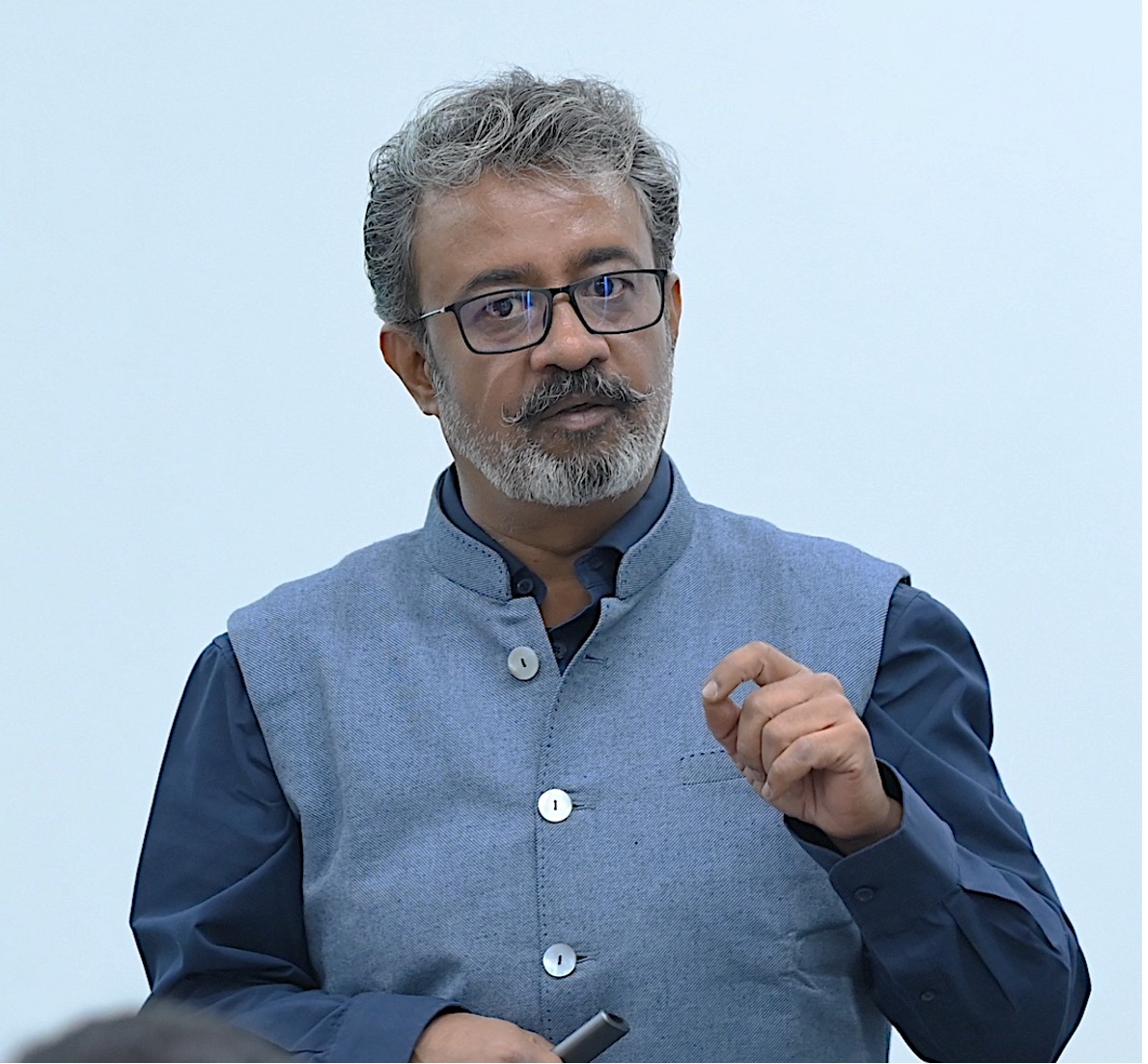
About the Author
Founder Director, ProventusHR · MGSCC Master Coach · NDA Alumnus
Founder of ProventusHR and principal architect of ExperienceLearning and REEL|Life. 25+ years across leadership advisory, executive coaching, and experiential design across 14 industries. 9x Brandon Hall HCM Excellence Award winner (2022 to 2025).
Full Profile ›Every engagement begins with a discovery conversation. No templates, no generic programmes; only work that fits the context, the culture, and the people involved.
Start a Discovery Conversation