

Less than 15 percent of coaching skills training content transfers to the job and produces sustained change. The reason is not inadequate programme design. The reason is that skills training alone cannot produce culture.
Coaching skills training is a competency investment. A coaching culture requires something fundamentally different and considerably more systemic.
There is a common and expensive misunderstanding in how organisations approach the development of a coaching culture. The misunderstanding is this: that training managers in coaching skills will produce a coaching culture. This equation, manager coaching skills = coaching culture, is intuitively appealing. It connects a measurable, deliverable activity (a coaching skills programme) to an ambitious organisational outcome (a culture that supports ongoing development, honest dialogue, and growth-oriented leadership). The problem is that the connection it assumes does not hold in practice, and the evidence for this has been accumulating for long enough that it can no longer be attributed to poor programme design or inadequate follow-through.
Organisations that have invested in manager coaching skills programmes consistently report the same pattern. Managers leave the programme with a more sophisticated understanding of the coaching conversation, a set of practical tools such as the GROW model or Bungay Stanier’s seven questions, and a genuine intention to bring a more coaching-oriented approach to their leadership. Six months later, the self-reported use of coaching behaviours has typically declined significantly from its immediately post-programme peak. Twelve months later, the observed use of coaching behaviours, as rated by direct reports, is often indistinguishable from the pre-programme baseline. The skills were acquired. The culture was not.
A coaching culture is something fundamentally different from the sum of individuals who have coaching skills. A coaching culture is an ORGANISATIONAL ENVIRONMENT in which the use of coaching behaviours is structurally supported, socially normed, and systematically reinforced, one in which asking powerful questions rather than giving immediate answers is not merely a personal preference but a shared expectation. Creating such an environment requires changes that go well beyond the competency development of individual managers, and organisations that believe otherwise will consistently find themselves investing in repeated rounds of the same programme with diminishing returns.
Why Skills Training Alone Cannot Create Culture
The skill transfer problem, the gap between skills learned in a training environment and skills used in a work environment, is well documented in the learning and development literature. Research by Mary Broad and John Newstrom, based on surveys of training professionals across multiple industries, found that less than 15 percent of training content typically transferred to the job and produced sustained improvement. While more recent estimates are somewhat more optimistic, the transfer gap remains one of the most consistent and frustrating findings in the field, and it is particularly acute for complex interpersonal skills like coaching.
The environmental inhibitors to coaching behaviour transfer are numerous and operate at multiple levels. At the immediate work environment level, the time pressure that characterises most management roles in Indian organisations creates a powerful structural disincentive to coaching behaviour. Asking a powerful question and waiting for the coachee to find their own answer takes longer than giving the answer directly. In an environment where managers are measured on the speed and quality of their outputs, the coaching approach is experienced not as a better way of working but as a luxury the work context does not afford. THE COACHING SKILL IS PRESENT. THE PERMISSION TO USE IT IS NOT.
At the social norm level, a manager who adopts a coaching approach in a team where the norm is directive management faces a different kind of barrier. Their direct reports, accustomed to being told what to do, may experience the coaching questions as evasion, as unhelpfully vague, or as evidence that the manager does not know the answer. Their peers, operating from a directive norm, may regard the coaching orientation as a sign of indecisiveness or weakness. Until the social norms around what good leadership looks like have shifted, the individual manager who has acquired coaching skills faces a social cost for using them that their training programme did not prepare them for and their organisation has not mitigated.
At the structural level, performance management systems, talent review processes, and reward structures in most organisations measure and reward the outputs of directive leadership, not the development of coaching orientation. The manager who coaches their direct reports effectively over twelve months may produce a team that is more capable, more engaged, and more likely to stay. The performance management system that rewards this manager will typically be less precise about what produced the outcome than a system that rewards the manager who hit their targets. WHEN COACHING BEHAVIOUR IS NOT MEASURED, RECOGNISED, AND REWARDED, it will not be sustained by most managers regardless of how high their initial post-programme motivation was.
“A coaching culture programme that consists of a training intervention is not a culture programme. It is a competency programme. Culture requires more than competency. It requires permission, modelling, structural reinforcement, and time. Most organisations are willing to invest in competency. Far fewer are willing to invest in the rest.”
RK, Founder & Principal Consultant, ProventusHRThe Three Conditions for a Genuine Coaching Culture
Organisations that successfully build coaching cultures, as distinct from those that invest repeatedly in coaching skills training with diminishing returns, consistently demonstrate three conditions that operate simultaneously. The first is visible senior leadership modelling. The second is structural permission. The third is embedded accountability architecture. Each condition is necessary. None is sufficient on its own.
Visible senior leadership modelling means that the most senior leaders in the organisation are seen to use coaching behaviours in the most visible contexts. They ask questions rather than giving answers in town halls. They reflect rather than direct in leadership team meetings. They solicit input rather than announcing decisions in strategic planning sessions. This modelling is not about performing the coaching posture. It is about genuinely operating from a coaching orientation in the moments when the entire organisation is watching what senior leadership does. When senior leaders model coaching behaviours, they do not merely signal that coaching is valued. They REDEFINE WHAT GOOD LEADERSHIP LOOKS LIKE in the organisation’s social consciousness.
Structural permission means that the organisation’s systems and processes actively create space for coaching behaviour to be used. This includes performance review conversations that are structured around developmental questions rather than rating discussions, team meeting agendas that include reflection and inquiry alongside reporting and decision-making, and manager effectiveness measures that assess the quality of developmental conversations alongside output metrics. Permission is not simply the absence of prohibition. It is the active creation of contexts in which coaching behaviour is not only allowed but expected and enabled.
Embedded accountability architecture means that the use of coaching behaviours is tracked, recognised, and connected to consequences. This does not require a complex measurement system. It requires that the organisation identifies what it would see if a coaching culture were present, measures those observable indicators regularly, and responds to the results with recognitions and adjustments that reinforce the desired direction. An organisation that says it values coaching but has no mechanism for knowing whether coaching behaviours are actually occurring has not created accountability. It has created aspiration, which is a different and considerably less effective thing.
Research Reference
Clutterbuck, D. and Megginson, D. (2005). Making Coaching Work: Creating a Coaching Culture. CIPD. The authors’ research across multiple organisations identified senior leadership role modelling as the single most significant predictor of whether a coaching culture initiative would sustain beyond the initial training phase, followed by the integration of coaching behaviours into formal performance and development processes.
What This Looks Like in Indian Organisations
The India-specific challenges for coaching culture development are worth addressing directly because they are consistently underestimated by organisations importing coaching culture frameworks developed in Western contexts. The most significant challenge is the interaction between hierarchy and the coaching orientation. The coaching approach requires the manager to create psychological safety for honest dialogue, to ask questions rather than assert answers, and to treat the coachee’s perspective as primary. Each of these behaviours sits in tension with the deeply embedded hierarchical norms that characterise most Indian organisational cultures, norms in which the senior person is expected to have and assert the answer, and in which questioning the senior person’s judgment is experienced as disrespectful.
This does not mean that a coaching culture is not achievable in Indian organisations. It means that the path to a coaching culture in an Indian context requires explicit, sustained work on the social contract around hierarchy and developmental dialogue, work that goes well beyond what a coaching skills programme can accomplish. The most effective coaching culture initiatives in India that ProventusHR has observed begin not with a coaching skills training programme for managers, but with a senior leadership conversation about what they want the organisation’s developmental culture to look like and what they personally are willing to do differently to model it.
The timeline for genuine coaching culture development is also worth being honest about. A coaching culture, defined as an environment in which coaching behaviours are the norm rather than the exception at all levels of leadership, takes a minimum of three to five years of sustained investment to develop. Organisations that expect to produce a coaching culture in a twelve-month programme, however well designed, will be disappointed. The design question is not how to build a coaching culture quickly. The design question is how to build a coaching culture that will sustain, which requires a different and more patient kind of systemic investment than most organisations are accustomed to making.
“The organisation that asks how to build a coaching culture in one year is asking the wrong question. The right question is what it is willing to do consistently, visibly, and structurally for the next three to five years. That question produces a very different programme architecture and a very different set of commitments from leadership.”
RK, Founder & Principal Consultant, ProventusHRThe ProventusHR Perspective
ProventusHR designs coaching culture initiatives as systemic interventions rather than training programmes. Our approach begins with a diagnostic of the three conditions for a coaching culture: the degree of visible senior leadership modelling, the structural permission that exists for coaching behaviour, and the accountability architecture that tracks and reinforces the desired direction. This diagnostic informs a design that addresses the specific gaps the organisation is facing rather than delivering a generic coaching skills curriculum.
Our coaching culture programmes typically operate across three to four years, with distinct phases addressing senior leadership modelling in the first phase, structural integration in the second, and capability development for managers and coaches in the third. We work at all three levels simultaneously in our most comprehensive engagements, because the evidence consistently shows that a coaching culture initiative that addresses only one level will be outpaced by the resistance it encounters at the other two. The design is always bespoke, always anchored in what the organisation is actually willing to do, and always oriented toward the outcome that matters: a demonstrably different quality of developmental conversation at every level of leadership.

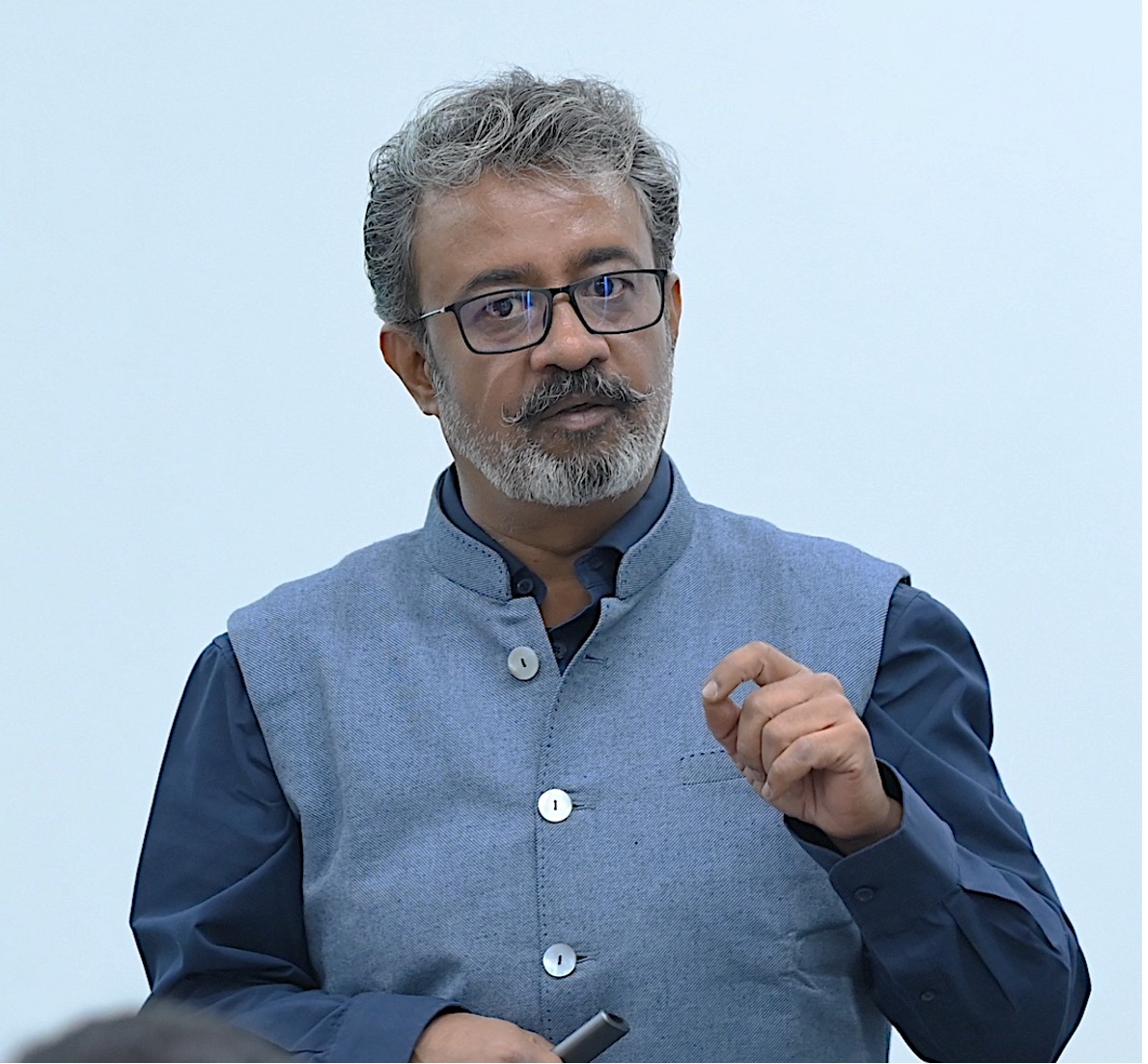
About the Author
Founder Director, ProventusHR · MGSCC Master Coach · NDA Alumnus
Founder of ProventusHR and principal architect of ExperienceLearning and REEL|Life. 25+ years across leadership advisory, executive coaching, and experiential design across 14 industries. 9x Brandon Hall HCM Excellence Award winner (2022 to 2025).
Full Profile ›Every engagement begins with a discovery conversation. No templates, no generic programmes; only work that fits the context, the culture, and the people involved.
Start a Discovery Conversation