

Every year, organisations invest in leadership training and receive a predictable outcome: participants who report enjoying the experience, managers satisfied that development has occurred, and behaviour that returns to baseline within six weeks. The investment is real. The content is often sound. The people are willing. And yet nothing changes in any durable way. The question worth asking, and the one most organisations avoid, is whether the problem lies in the quality of the training or in the fundamental assumption about how adults learn.
Instruction Does Not Produce Behaviour Change in Adults
Adult learners arrive in any development context with decades of existing patterns. Their responses under pressure, their default communication style, their relationship with authority, their tolerance for ambiguity, these are not beliefs waiting to be updated. They are neural pathways reinforced by thousands of repetitions over a working career. Telling an adult what to do differently does not change that architecture. It adds a layer of conscious knowledge that sits above the pattern and rarely reaches the pattern itself.
This is not a motivation problem. Leaders who leave workshops genuinely intending to change their behaviour are not being insincere. They are returning to an environment that activates every established pattern with greater force than any workshop memory. Within weeks, the conscious intention fades and the automatic response reasserts itself. The training produced learning. It did not produce change.
The distinction between learning and change is the starting point for every ProventusHR engagement. Learning means acquiring new information or frameworks. Change means operating differently in real conditions. These are not the same outcome, and they are not produced by the same intervention.
“Behaviour changed by instruction is borrowed. Behaviour changed by experience is owned. The distinction is not semantic. It determines whether the change survives the first difficult week back at work.”
Experience Is the Prerequisite, Not the Follow-Through
The conventional training sequence places experience after instruction. A framework is introduced, a model is taught, case studies are discussed, and then, if time permits, participants practise applying what they have learned. Experience is the confirmation of content, not its source.
ExperienceLearning™ inverts this sequence. The experience comes first. Participants encounter a leadership challenge, a pressure situation, a decision point, before any framework is introduced. The encounter is designed to surface their actual pattern of response, not the response they believe they would have or intend to have. The framework arrives after, naming something they have already discovered in themselves. The result is insight that is owned rather than borrowed, because it did not originate with a facilitator. It originated with the participant’s own encounter with reality.
This sequence is grounded in what we know about adult cognition. Adults do not process new information as additions to an empty frame. They process it through the lens of existing experience. When experience precedes explanation, the framework lands on fertile ground. When explanation precedes experience, the framework lands on abstract terrain and rarely transfers to behaviour.
What Changes When You Design for Behaviour, Not Knowledge
Designing for behaviour change rather than knowledge transfer requires different design choices at every stage. The opening of a module is not an icebreaker or a content introduction. It is an immersive experience that places participants in the territory the module will later map. A floor simulation, a REEL|Life™ cinematic reflection, a structured problem scenario, each of these creates the experiential ground that makes subsequent content land as recognition rather than instruction.
Between modules, the design continues. Group Coaching Connects hold participants accountable to commitments made in the room. One-on-one coaching anchors individual progress. The inter-module period is not dead time. It is the laboratory where behaviour either transfers or fails to transfer.
At programme close, participants complete a Self Impact Showcase: a structured workplace evidence document identifying the specific behaviours they changed, the business context, the outcomes those changes produced, and the co-signature of the reporting manager who observed the shift. The programme does not ask whether participants found the content valuable. It asks whether the content produced observable change in real leadership behaviour.
“The question a well-designed leadership programme should answer is not what did participants learn. It is what did their stakeholders notice had changed three months later.”
The ExperienceLearning™ methodology underlies all nine Brandon Hall HCM Excellence Awards received by ProventusHR between 2022 and 2025. The INR 160 Crore+ in documented business outcomes from LEAP traces to named participants and manager-signed Self Impact Showcases. Every figure is verifiable and co-signed.
What This Means If You Are Commissioning Leadership Development
If you are a CHRO, CLO, or Business Head commissioning leadership development, the most useful question you can ask any provider is not what content they deliver. It is how they know their programmes produce behavioural change rather than learning events. The answer tells you more about design quality than any curriculum document.
Programmes designed around the ExperienceLearning™ principle will be longer, because behaviour change requires application time between modules. They will involve stakeholders, because behaviour change is verified by the people who observe it. They will produce documentation that a CFO can read, because the evidence standard is commercial outcome rather than participant satisfaction score. That is a harder design to commission and a harder design to deliver. It is also the only design that produces the outcome the investment is intended to produce.
Begin a Discovery Conversation
ProventusHR designs all leadership interventions using the ExperienceLearning™ methodology. Discovery conversations begin at proventushr.com/contact.
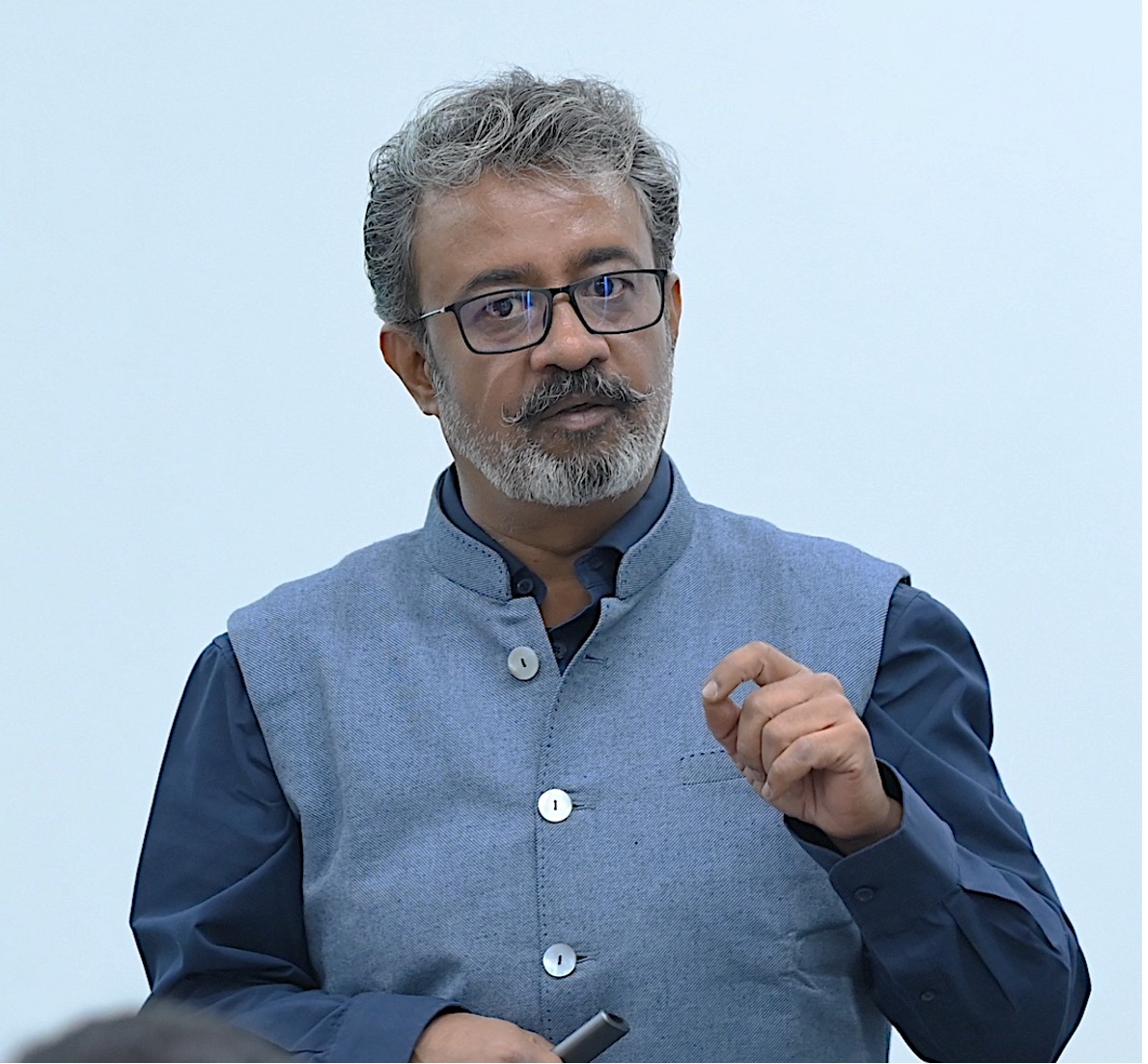
About the Author
Founder Director, ProventusHR · MGSCC Master Coach · NDA Alumnus
Founder of ProventusHR and principal architect of ExperienceLearning and REEL|Life. 25+ years across leadership advisory, executive coaching, and experiential design across 14 industries. 9x Brandon Hall HCM Excellence Award winner (2022 to 2025).
Full Profile ›