

Donald Winnicott, the British paediatrician and psychoanalyst whose work on child development in the 1950s and 1960s remains among the most influential in the field, used the phrase “holding environment” to describe something specific and important about the relational conditions that enable genuine development. It is not, he was careful to say, primarily about being held. It is about the quality of the environment that surrounds the developing person, an environment that provides enough consistency and safety that development can occur without the anxiety it inevitably produces becoming so overwhelming that the person retreats from growth entirely.
The holding environment is not permissive. A permissive environment does not hold anyone through development; it simply allows them to remain where they are, which is comfortable but not developmental. The holding environment is not controlling either. A controlling environment produces the appearance of development without its substance, compliance without genuine change. The holding is in the quality of the relationship between support and challenge: enough safety that the person can afford to take the risks that genuine development requires, enough structure that those risks do not produce chaos, and enough honesty about what the development demands that the person can choose to engage with it rather than being blindsided by it.
Ronald Heifetz imported this concept into leadership theory because it describes something real and important that most organisational language cannot quite name. When an organisation faces genuine adaptive challenge, the kind that requires people to change their values, their assumptions, or their ways of working rather than simply doing better at what they already know, it produces a specific kind of distress that is different in character from the stress of ordinary difficulty. Ordinary difficulty requires effort. Adaptive challenge requires loss. People must give up something they value: a familiar way of working, a professional identity built around specific competencies, a sense of certainty about how things work, a set of relationships organised around a now-obsolete set of roles. This loss produces grief, resistance, and displacement, which is the attempt to relocate the discomfort onto something or someone other than the adaptive challenge itself.
Why organisations consistently fail at holding environments
Most organisations, when they need to implement significant change, approach it primarily as a communication and process challenge. They design the change thoughtfully. They communicate the rationale clearly. They engage the senior team in building commitment. They provide training for new ways of working. They measure progress against implementation milestones. All of these are appropriate responses to the technical dimensions of change. None of them directly addresses the adaptive dimensions, and specifically none of them creates the conditions in which the loss involved in the change can be named, acknowledged, and worked with rather than suppressed.
The failure is structural. Organisations that are primarily oriented toward performance, which is to say most large organisations, have powerful incentives to move through difficulty quickly. Extended engagement with the emotional texture of change is experienced as expensive, self-indulgent, or evidence of insufficient resilience. The message that gets transmitted, usually not explicitly but through the pace of implementation and the quality of attention to people’s experience of it, is that the difficulty should be managed privately rather than processed collectively, that the appropriate response to loss is adjustment rather than acknowledgment, and that the leader’s job is to project confidence and direction rather than to create space for honest engagement with what the change is actually costing.
This approach is both understandable and counterproductive. Understandable because the pressure to deliver results is real and because sustained engagement with the emotional dimensions of change does require time and skill that many organisations lack. Counterproductive because the emotions that are not processed do not simply disappear. They accumulate, express themselves sideways in the form of resistance, cynicism, and disengagement, and eventually surface in ways that are considerably more disruptive to the change process than the initial acknowledgment would have been.
What a holding environment in organisational terms actually requires
The holding environment in organisational terms is built from several things that are individually unremarkable and collectively transformative when they are present consistently.
The first and most fundamental is transparency about what the process actually is. Adaptive work goes badly when people are uncertain about the nature of the container they are inside. Is this a genuine exploration or a managed announcement dressed as an exploration? Is disagreement genuinely welcome, or is the invitation to challenge primarily a performance of consultation whose conclusions have already been determined? What will actually happen to what is said in this room, and by whom, and for what purposes? Leaders who cannot answer these questions clearly, or who give answers that are inconsistent with their actual behaviour in the room, destroy the holding environment before it has had a chance to develop. Trust in a holding environment is accrued slowly and destroyed quickly, and the specific moments that destroy it are almost always moments when the transparency that was promised was not delivered.
The second element is the leader’s own visible engagement with the difficulty. People in organisations are sophisticated readers of their leaders’ actual emotional states. A leader who is projecting calm certainty while the people around them know the situation is genuinely uncertain and difficult is not building trust. They are building the habit of not telling the leader the truth, because the message has been transmitted, usually not through words, that the leader requires certainty to function and that honest expressions of uncertainty will be received as unhelpfulness rather than as contribution. The leader who can say “I find this genuinely difficult, and I am holding to the direction because I believe it is right despite not being certain” is building something more durable: a relationship in which honest engagement with difficulty is modelled from the top rather than merely demanded from below.
The third element is the deliberate management of pace. Heifetz is precise on this in ways that are practically important. The work of adaptive leadership requires keeping the level of distress in the system within a productive range, above the threshold where comfortable complacency is possible but below the threshold where defensive routines or collapse become likely. This is not a fixed calculation. It is a continuous, dynamic calibration that requires the leader to be genuinely attending to the system’s emotional state rather than simply pursuing the implementation agenda at the pace that the strategic timeline demands.
This calibration is one of the most difficult practical challenges in adaptive work, because the pressure to accelerate is almost always present and because the signals that the pace is too fast are often subtle and easy to misread as resistance or insufficient commitment rather than as evidence that the system is being overwhelmed rather than productively challenged. The leader who can reliably distinguish between these two readings, who can tell when the discomfort in the room is generative and when it is simply suffering, has a capacity that is both rare and central to the quality of adaptive work they can support.
What a holding environment is explicitly not
It is not kindness. Kindness is a component of it, but a holding environment that is only kind is not holding anyone through development. It is holding them in comfort, which feels supportive but produces no change. The developmental function of the holding environment requires genuine challenge, which sometimes means bringing people into contact with truths about their own patterns that are uncomfortable and that they would prefer not to encounter. The quality that distinguishes this from simply being difficult is the care with which the challenge is calibrated to what the person can actually work with at this particular moment in their development.
It is not control. Leaders who attempt to manage the adaptive process too tightly, who script the outcomes rather than holding the conditions for genuine engagement with the challenge, typically produce an environment in which people perform engagement without genuinely engaging. The facilitated commitment that is produced in a managed process is not the same as the genuine commitment that emerges from a process in which people have genuinely wrestled with the challenge and chosen a direction. The former is fragile. It does not survive the first significant test. The latter is durable because it is actually held by the people who generated it.
It is not a feature of formal change processes only. The holding environment is the background condition of all genuine development, at every level and in every kind of interaction. It is what makes it safe enough, in any room, to say what is actually true rather than what is socially expected. Creating and maintaining this background condition consistently, across all the contexts in which the leader operates, is the most important thing a leader does for the quality of collective thinking in their organisation. It is also the most invisible, because it is constituted by the presence of conditions rather than by specific interventions that can be pointed to and credited.
The particular demands of holding in Indian organisational contexts
In working with Indian organisations across sectors over many years, I have found that the concept of the holding environment requires specific adaptation to cultural realities that the original Heifetz framework, developed in primarily Western and particularly American institutional contexts, does not fully address.
The specific challenge in many Indian organisational contexts is the intersection of hierarchical norms with the genuine need for honest developmental engagement. The holding environment that Heifetz describes requires a quality of mutual honesty between leader and those being led that is relatively easy to model in flat-hierarchy contexts but considerably more challenging in contexts where the expression of honest disagreement with senior leaders is experienced as a violation of respect norms rather than as a contribution to the collective thinking.
This does not mean that genuine holding environments are impossible in hierarchical Indian organisations. It means they require more intentional design. The specific conditions that make honest engagement culturally safe need to be built more explicitly and maintained more actively. The leader who wants to create genuine holding needs to model not just openness to challenge but active appreciation of challenge, with visible evidence that those who offer honest input are valued rather than managed. This modelling needs to be sustained over a longer period before the cultural norms shift enough to allow genuine engagement to occur reliably rather than only occasionally.
The leader who can hold a difficult truth steadily, without either minimising it or collapsing under its weight, is doing something most valuable and most rare. They are making it possible for others to stay present with what is genuinely true.
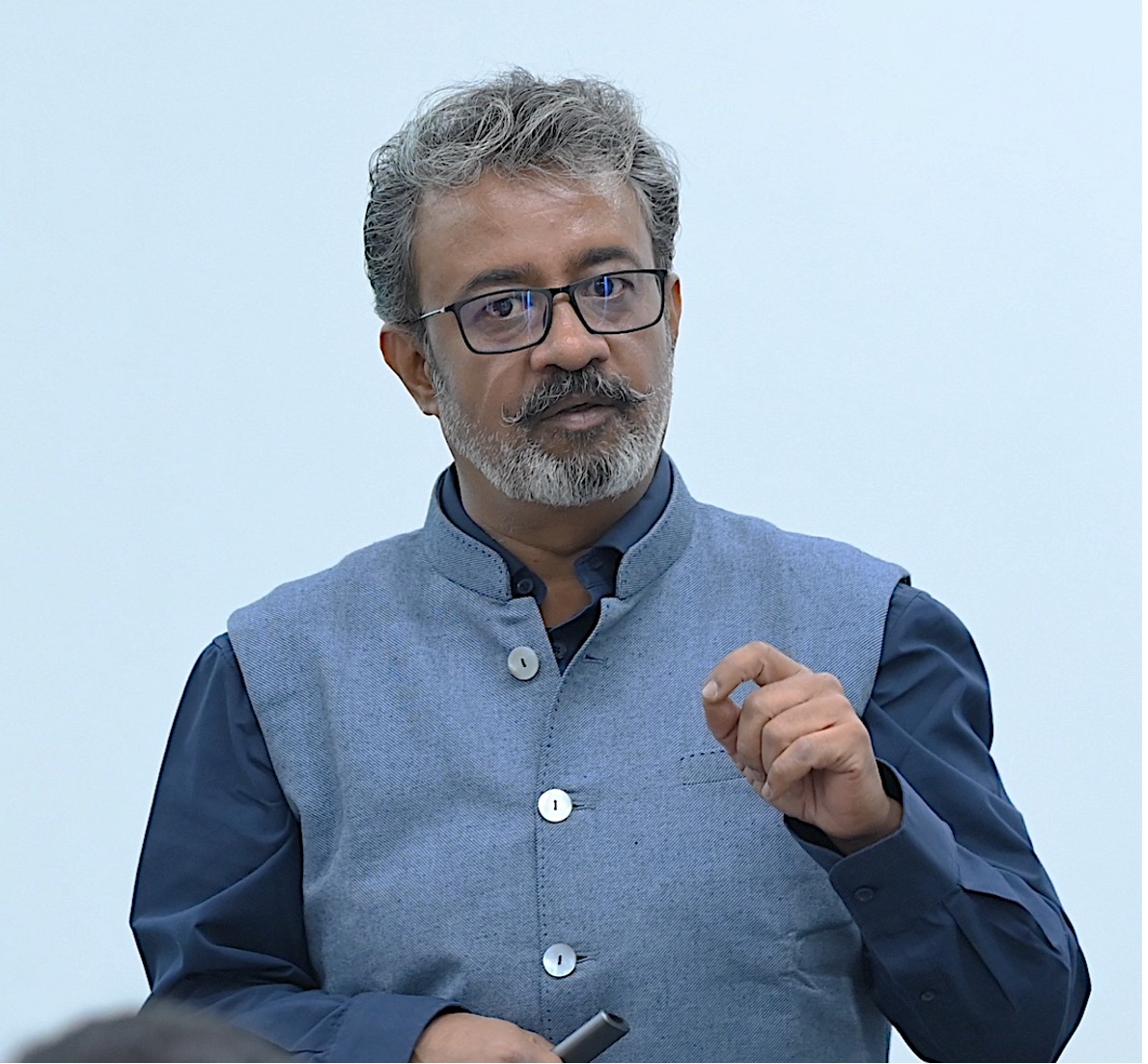
About the Author
Founder Director, ProventusHR · MGSCC Master Coach · NDA Alumnus
Founder of ProventusHR and principal architect of ExperienceLearning and REEL|Life. 25+ years across leadership advisory, executive coaching, and experiential design across 14 industries. 9x Brandon Hall HCM Excellence Award winner (2022 to 2025).
Full Profile ›