

Jim Collins’ Good to Great, published in 2001 and one of the bestselling business books of the following two decades, deserves a more honest retrospective appraisal than it typically receives. It deserves honest appraisal not because it is wrong, though some of its conclusions have not aged well, but because it introduced several concepts that have genuinely improved how organisations think about culture and leadership, and those genuine contributions are worth distinguishing from the parts of the framework that subsequent evidence has complicated or undermined.
The context for an honest appraisal is the subsequent performance history of the companies Collins identified as “great” in his research. Several of the organisations that Good to Great held up as exemplars of sustained excellence have subsequently experienced significant performance difficulties, strategic failures, or corporate governance problems that complicate the picture of sustained excellence the book described. Circuit City, one of the book’s featured great companies, went bankrupt in 2008. Fannie Mae, another, required a government bailout in the same year. Wells Fargo, a third, became the subject of one of the most consequential corporate scandals of the following decade. This is not a fatal critique of Collins’ methodology, which was explicitly backward-looking and described what had produced greatness in a specific historical period rather than predicting future greatness. But it is relevant context for evaluating which of the book’s conclusions are durable generalisations and which are historically contingent observations about a specific period of American business.
What Collins got genuinely right
The concept of Level 5 Leadership is the book’s most durable and most practically valuable contribution, and it has been substantially supported by subsequent research on leadership and performance even where the specific companies that exemplified it have had mixed subsequent histories. Level 5 Leadership describes a specific combination of personal humility and professional will that produces a particular quality of organisational performance: the leader who builds the organisation rather than their own profile, who attributes success to the organisation and accepts accountability for failure, who is more focused on the organisation’s long-term performance than on their own short-term recognition. The research on this leadership quality has been extended and substantially confirmed in subsequent work, and its organisational effects are real and significant.
The concept of “first who, then what” is the book’s second most durable contribution: the finding that the great companies prioritised getting the right people into the organisation before determining the strategic direction, rather than designing the strategy and then finding the people to execute it. This finding runs counter to much of conventional strategic planning practice and has been substantially supported by subsequent research on the relationship between leadership team quality and strategic adaptation. The organisation that has the right people can adjust its strategy as the environment changes. The organisation that has the right strategy but the wrong people cannot execute it regardless of the quality of the strategic design.
The “doom loop versus flywheel” distinction, between the organisational behaviour of companies that pursue periodic transformation through dramatic initiatives and those that build sustainable momentum through consistent execution of a coherent strategy, is also a genuine and durable contribution. The subsequent research on organisational performance consistency has supported the finding that sustainable high performance is more typically the product of disciplined consistency than of dramatic reinvention, and that the pursuit of dramatic transformation often disrupts the consistent execution of existing competitive advantage rather than replacing it with superior capability.
What subsequent evidence has complicated
The “Hedgehog Concept,” the finding that great companies are characterised by a single, focused understanding of what they can be best in the world at, has been complicated by subsequent research on the relationship between strategic focus and performance in environments characterised by rapid change and technological disruption. In stable competitive environments, the Hedgehog Concept describes a genuinely effective strategic orientation. In rapidly changing environments, the single-minded focus it advocates can produce the specific vulnerability of organisations that are excellent at doing something that is becoming less valuable. The subsequent performance of several of Collins’ great companies in the face of digital disruption illustrates this vulnerability with some precision.
The book’s implicit model of organisational culture as a controllable strategic variable that can be deliberately shaped by the right leadership to produce sustained excellence has been complicated by subsequent research on the role of environmental and structural factors in determining organisational performance. The research that Collins produced is a genuine contribution to understanding the leadership and cultural conditions associated with historical excellence. It understates the degree to which competitive, regulatory, and macroeconomic conditions outside the organisation’s control contributed to the performance patterns it observed, and it overstates the degree to which the specific leadership and cultural practices it identified are sufficient conditions for sustained excellence rather than necessary but not sufficient ones.
The lasting implications for culture and strategy practice
The lasting implications of Good to Great for culture and strategy practice are most useful when they are held with appropriate epistemic humility: as a well-researched description of specific cultural and leadership conditions associated with sustained performance in a specific historical context, rather than as a universal prescriptive framework for producing excellence in any context.
The specific cultural implication that has proven most durable is the relationship between the quality of organisational honesty, what Collins calls “confronting the brutal facts,” and the quality of strategic adaptation. Organisations whose cultures support the honest engagement with difficult evidence, the willingness to face unflattering performance data with genuine curiosity rather than defensive management, the capacity to change direction when the evidence warrants it rather than defending existing commitments in the face of contradicting evidence, consistently outperform those whose cultures suppress this honest engagement. This finding is both well-grounded in Collins’ original research and substantially confirmed by subsequent work on organisational learning and adaptation.
The honest assessment of the Hedgehog Concept’s limits
The most practically important update to Collins’ framework for the current strategic environment is the qualification of the Hedgehog Concept in contexts of rapid technological and competitive change. The organisations that have maintained sustained excellence in stable, slowly-evolving competitive environments have generally found the single-focused strategic orientation the Hedgehog Concept describes to be genuinely enabling. The organisations that have tried to maintain the same focus in rapidly changing environments have found it to be a source of strategic vulnerability, producing the specific failure mode of excellence at doing something that is becoming less valuable.
The practical implication is not that the Hedgehog Concept is wrong but that it needs to be supplemented with a parallel capacity for strategic sensing and adaptation that Collins’ framework, which was built primarily from observation of historical performance in stable environments, does not adequately address. The organisation that is both focused, in the Hedgehog sense, and genuinely adaptive, in the sense of being able to revise its strategic focus when the evidence warrants it, has a more complete strategic capability than either quality alone produces. Building both simultaneously is more difficult than building either alone, because the discipline required for genuine strategic focus works against the openness required for genuine strategic adaptation. The tension between them is one of the most consequential and least resolved tensions in strategic management, and honest engagement with Collins’ work is one of the more productive available starting points for thinking about it.
The enduring value of the honest self-assessment principle
The most durable and most broadly applicable insight in Good to Great is neither the Level 5 Leadership construct nor the Hedgehog Concept. It is the principle of confronting the brutal facts honestly, without the defensive management that most organisations apply to unflattering performance data, combined with the unwavering confidence that the organisation can find a way through the challenge it is honestly facing. This combination of radical honesty about current reality and genuine confidence in future capability is both analytically precise and deeply countercultural in most organisations, which tend to either manage the narrative to protect morale or to engage in the kind of catastrophising that is equally paralyzing. The specific leadership discipline required to hold both simultaneously, to face the brutal facts without losing the faith that doing so will lead somewhere better, is the leadership quality that Collins identifies as the primary differentiator of sustained excellent performance. It is also the quality that the subsequent performance history of his “great” companies most consistently revealed as fragile when the environment changed in ways the leadership did not face honestly enough or quickly enough.
Good to Great is a genuinely valuable contribution to the understanding of culture and leadership that is also a snapshot of a specific historical period rather than a universal prescription. The humility to hold the book’s genuine insights alongside honest acknowledgment of their limitations is itself a practice of the kind of analytical honesty that Collins correctly identifies as a condition of sustained excellence.
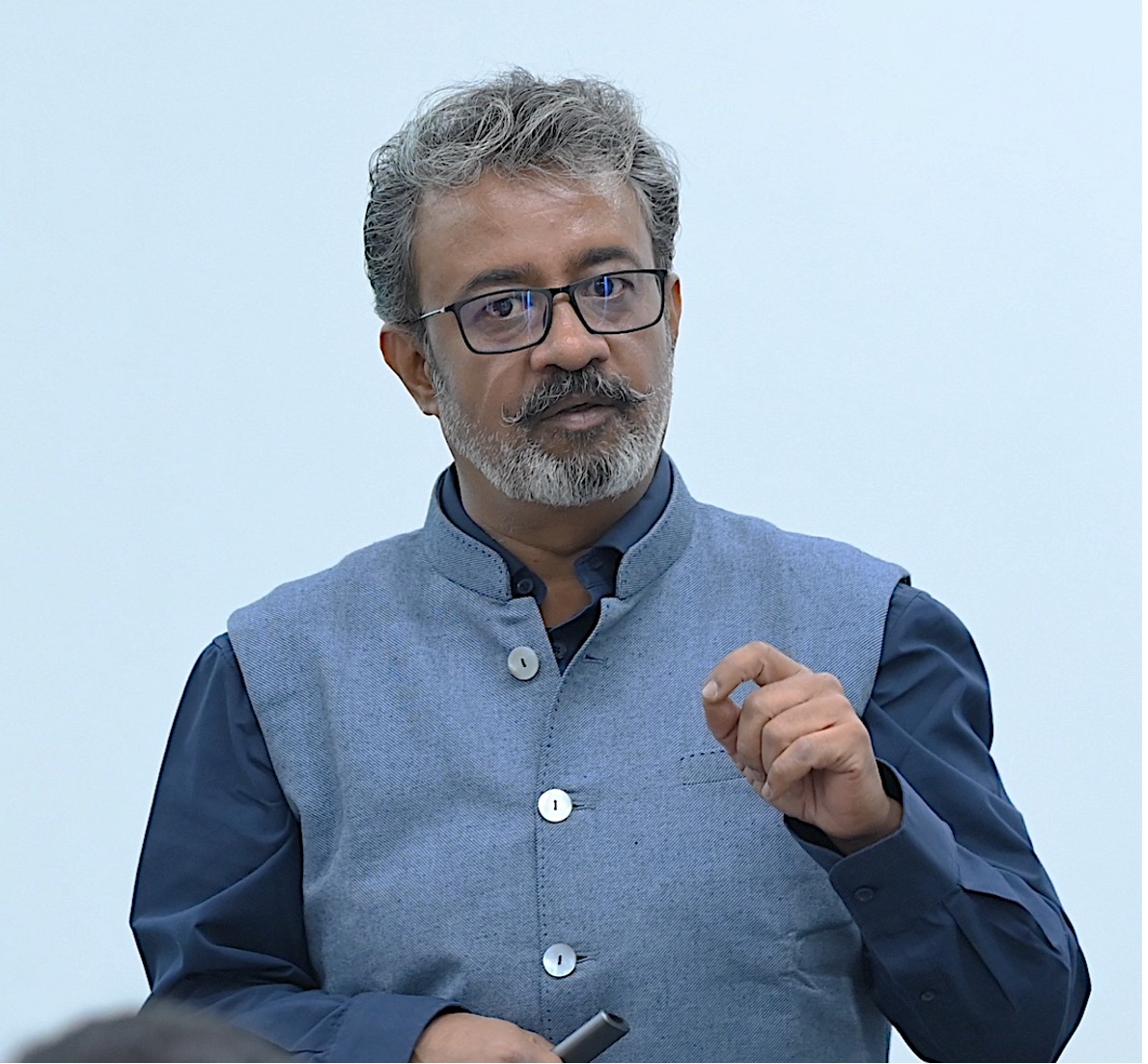
About the Author
Founder Director, ProventusHR · MGSCC Master Coach · NDA Alumnus
Founder of ProventusHR and principal architect of ExperienceLearning and REEL|Life. 25+ years across leadership advisory, executive coaching, and experiential design across 14 industries. 9x Brandon Hall HCM Excellence Award winner (2022 to 2025).
Full Profile ›