

There is a simple question that reveals something important about most feedback conversations in organisational life: what percentage of the conversation is about what happened in the past, and what percentage is about what could be different in the future? In most feedback conversations I observe and facilitate, the ratio is heavily weighted toward the past. The events, the decisions, the specific interactions that constituted the performance being discussed occupy the majority of the time, attention, and emotional energy of the conversation. The discussion of what might be different going forward is often brief, sometimes perfunctory, and frequently overshadowed by the unresolved emotional texture of the retrospective analysis that preceded it.
This is not a criticism of the people having these conversations. It is a description of a structural feature of how feedback conversations are typically understood: as conversations that examine what happened, assess it against some standard, and communicate that assessment to the person whose performance is being discussed. This is a coherent model of feedback. It is also, as Marshall Goldsmith observes with characteristic directness, a model that is oriented toward the one dimension of performance that is entirely immune to intervention: the past. What happened has already happened. No amount of feedback about it can change it. The only dimension of performance that is available for genuine development is the future, and most feedback conversations invest their primary energy in the dimension that is unavailable while treating the one that is available as an afterthought.
Feedforward, the practice Goldsmith developed and has applied across thousands of coaching engagements over more than thirty years, is the deliberate reorientation of developmental conversation away from retrospective analysis and toward prospective contribution. It is not a technique for avoiding honest assessment of past performance. It is a discipline for ensuring that the energy of developmental conversation is invested in the only place where it can produce change.
The specific mechanism that makes feedforward work
The mechanism through which feedforward produces different outcomes from feedback is both psychological and relational, and understanding it precisely is more useful than simply knowing the technique.
Psychologically, feedback about past performance activates a specific and well-documented set of defensive responses that reduce the likelihood that the feedback will be genuinely absorbed and acted on. The performance being discussed is experienced as part of the person’s identity, not only as an event they were involved in. Criticism of the performance is experienced, at some level below conscious choice, as a threat to the self, which activates the same defensive architecture that responds to any threat: denial, rationalisation, counterattack, or withdrawal. Even when the person receiving the feedback is genuinely trying to engage with it constructively, the activation of the threat response is consuming cognitive and emotional resources that would otherwise be available for the genuinely productive work of using the feedback to think differently about how to operate in future.
Feedforward sidesteps this mechanism not by being softer or less honest, but by being grammatically future-oriented in a way that changes what is being asked of the person receiving it. The feedforward question is not “what did you do wrong?” It is “what could you do differently that would produce a better outcome?” The first question asks the person to accept a negative assessment of their identity. The second asks them to think creatively about future possibilities. The first activates defensiveness. The second activates agency. These are fundamentally different psychological states, and they produce fundamentally different qualities of engagement with the development opportunity the conversation contains.
Relationally, feedforward changes the social dynamic of the developmental conversation in ways that are equally significant. Feedback positions one person as the evaluator and another as the evaluated, which is a social dynamic that is inherently hierarchical and that tends to reduce the quality of genuine dialogue. Feedforward positions both parties as collaborators in thinking about future possibilities, which is a social dynamic that invites genuine co-creation rather than the managed reception of assessment. The person giving feedforward is not asserting what was wrong. They are contributing to the thinking about what could be better. This is a different and more generative kind of contribution, and it produces a different and more generative kind of response.
The specific practice in leadership development contexts
Goldsmith’s standard feedforward exercise, which he has used in thousands of leadership development contexts with notable consistency of positive result, is both simple in design and rich in what it produces. Each participant identifies one behaviour they want to develop. They then have brief conversations with multiple other participants, in each of which they describe the behaviour they are trying to develop and ask for two suggestions of things they could do to develop it. The person giving the suggestions is asked to give them without reference to the past: no “well, what you have been doing is…” and no “the problem with your approach has been…”. Only future-oriented possibilities.
The exercise consistently produces several effects that Goldsmith documents and that I have observed in facilitation across many contexts. The quality of the suggestions is typically higher when they are future-oriented than when they are feedback-oriented, because future-oriented thinking accesses a wider range of possibilities than retrospective analysis of what went wrong. The person receiving the suggestions typically engages with them more openly and more generatively than they would with equivalent feedback, because the future orientation removes the identity threat that feedback activates. And the relational quality of the interaction is typically warmer and more collaborative than feedback conversations, because both parties are in the role of contributor rather than in the roles of evaluator and evaluated.
The exercise is also usefully diagnostic of a common development barrier. Some participants, when asked to give future-oriented suggestions, find it genuinely difficult to resist the pull toward the past. They begin future-oriented sentences that slide toward retrospective critique despite their genuine attempt to remain forward-looking. This difficulty is not a personal failing. It is a learned habit, reinforced over years of feedback conversations in which the retrospective orientation was the norm. Naming it, when it appears, is itself a useful development conversation about how deeply the feedback orientation has been internalised and what genuine effort it takes to operate differently.
What feedforward does not do and why that matters
Feedforward is sometimes misunderstood as a technique for avoiding difficult conversations about genuine performance problems. This misunderstanding is worth correcting directly, because it leads to the underuse of feedforward in precisely the contexts where it is most valuable: not as a substitute for honest performance accountability but as the complement to it that makes honest performance conversations more productive.
Performance accountability requires honest assessment of whether a standard was met. This is a legitimate and necessary organisational function that feedforward does not replace. What feedforward addresses is the development conversation that should follow the performance assessment: having established what did not meet the standard, how do we invest the available developmental energy in the most useful way? The retrospective assessment is the input to the conversation. The future-oriented feedforward is the content of the productive conversation that follows it. The mistake is treating the retrospective assessment as the content of the development conversation rather than as its starting point.
The other thing feedforward does not do is substitute for the specific kind of honest self-assessment that genuine development requires. Feedforward assumes that the person receiving it has some genuine understanding of the behaviour they want to develop, which requires a degree of honest self-reflection that feedforward does not itself produce. The coaching relationship that pairs feedforward practice with the kind of deep self-inquiry that produces that honest self-understanding is more effective than either alone: the self-inquiry produces the genuine development goal, and the feedforward practice generates the most useful input about how to pursue it.
The cultural implications of adopting feedforward as an organisational norm
Organisations that have genuinely embedded feedforward as a cultural norm rather than as a specific exercise in a workshop report consistent changes in the quality of their developmental conversations that go beyond the immediate effects of the technique itself. When forward-orientation becomes the default mode for developmental exchange, the entire relational texture of performance and development conversations changes: they become more collaborative, more creative, more oriented toward genuine improvement and less toward assessment and accountability management. This cultural shift has specific and measurable effects on the willingness of people to seek and give developmental input, on the quality of mentoring and sponsoring relationships, and on the degree to which learning from experience is treated as a normal feature of professional life rather than as an occasional activity prompted by formal developmental processes.
The shift is not instantaneous and it is not produced by training alone. It requires the sustained modelling by senior leaders of forward-oriented developmental conversation in their own practice, the redesign of formal processes including performance reviews to incorporate future-oriented elements explicitly, and the building of sufficient psychological safety that the honest engagement with future possibilities that feedforward requires is genuinely available rather than performed. These conditions are achievable. The organisations that have created them describe the cultural shift they produce as among the most significant improvements in their developmental climate available.
You cannot change the past. You can change the future. Feedforward is not a softer version of feedback. It is a more precise investment of developmental energy in the only dimension of performance where investment can produce return.
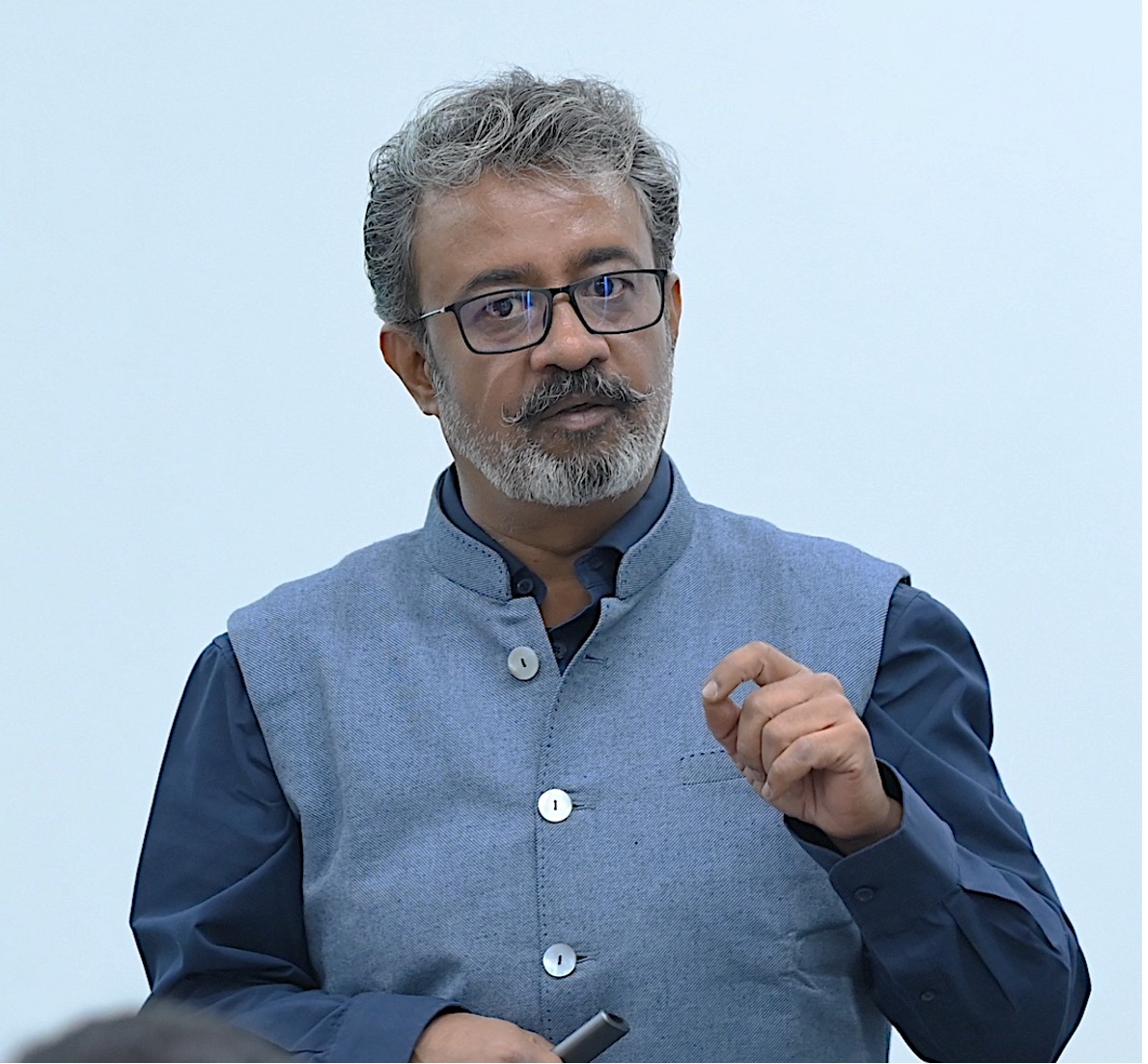
About the Author
Founder Director, ProventusHR · MGSCC Master Coach · NDA Alumnus
Founder of ProventusHR and principal architect of ExperienceLearning and REEL|Life. 25+ years across leadership advisory, executive coaching, and experiential design across 14 industries. 9x Brandon Hall HCM Excellence Award winner (2022 to 2025).
Full Profile ›