

Two leaders face the same crisis. Same sector, same scale of disruption, same level of external pressure over the same eighteen-month period. One emerges essentially unchanged: shaken, perhaps, visibly relieved when the immediate pressure lifts, but restored to something recognisably close to the prior baseline once the dust settles. The organisation performs adequately. The leader continues. Nothing is fundamentally different.
The other emerges with a materially different relationship to their own leadership, to the organisation, and to the specific challenges the crisis surfaced. They have made significant changes to how they operate. Their thinking has shifted on questions they had held fixed for years. The relationships in their leadership team are more honest than they were before. They describe the period, retrospectively, as one of the most important of their career. They are, in some measurable sense, better equipped for what comes next than they were before the difficulty arrived.
Both would be described by their organisations as resilient. Only the second is what Nassim Nicholas Taleb, in his 2012 work Antifragile, would call antifragile. The difference between them is not a matter of degree. It is a matter of what difficult experience actually does to you when you engage with it honestly rather than simply surviving it.
The case against resilience as the primary frame
The language of resilience has dominated leadership development discourse for the better part of two decades, and not without reason. The capacity to maintain psychological functioning under stress, to recover from setback without lasting damage, to sustain performance across extended periods of difficulty, these are genuinely important qualities that many leaders need to develop and that conventional development systems address inadequately. The research on resilience in leadership contexts is robust. The practical tools that resilience-based programmes offer, mindfulness, stress-management techniques, recovery practices, cognitive reframing, have real and documented value.
The problem is not with resilience itself but with resilience as the primary frame for what development under difficulty should produce. Resilience, by definition, describes a system’s capacity to return to its prior state after disturbance. The glass that bends under pressure and then returns to its original form. The spring that is compressed and then restored. The person who is knocked down and gets back up to stand where they were before. This is genuinely useful as far as it goes. Not being permanently damaged by difficulty is a worthy developmental goal. But it is not the highest available developmental goal, and treating it as such systematically underestimates what difficulty can produce when it is engaged with honestly and processed with the right kind of developmental support.
Taleb’s distinction cuts more deeply than it might initially appear. Antifragility is not simply resilience with a better marketing term. It describes a genuinely different relationship between a system and the stressors it encounters. The antifragile system does not merely survive stress. It uses stress as the raw material for becoming something qualitatively different and more capable. The bone that becomes denser in response to impact. The immune system that becomes more sophisticated in response to challenge. The leader who emerges from genuine difficulty not restored to a prior baseline but genuinely changed in ways that make the difficulty retrospectively developmental rather than merely survived.
The psychological conditions that make difficulty developmental
The research on post-traumatic growth, the well-documented phenomenon in which individuals report significant positive change following experiences of severe challenge, offers important insights into what conditions make difficult experience developmental rather than merely damaging. This research, developed primarily by Richard Tedeschi and Lawrence Calhoun from the mid-1990s onward, identifies several dimensions of post-traumatic growth: a changed sense of personal strength, new possibilities that emerge from the disruption of prior life assumptions, improved relationships, greater appreciation for life, and shifts in spiritual or existential understanding.
Critically, this research consistently finds that growth does not occur automatically from difficult experience. The experience of significant challenge does not reliably produce growth; it produces a disrupted assumptive world, the collapse of prior frameworks for understanding oneself and one’s situation, which can then be the raw material for either reconstruction at the same level or reconstruction at a higher level of complexity and capability. Which of these occurs depends substantially on whether the person has the reflective capacity, the relational support, and the developmental environment to engage with the disruption honestly rather than simply attempting to restore the prior equilibrium as quickly as possible.
This finding has direct and significant implications for how organisations respond to leadership difficulty. The most common organisational response to a leader’s significant setback, whether a strategic failure, a major relationship breakdown, a period of severe performance underperformance, or a personal crisis that affects professional functioning, is to manage the recovery: provide support, manage the stakeholder consequences, and restore the leader to effective functioning as quickly as possible. These are all legitimate responses to a genuine organisational need. None of them is oriented toward the developmental potential of the difficulty itself.
What organisations do instead of enabling growth
Organisations are, structurally, oriented toward performance restoration rather than developmental transformation. They have legitimate and pressing performance needs. They cannot turn every leadership setback into a sustained developmental seminar. The pressure to restore effective functioning is real and usually appropriate.
But the systemic cost of this orientation is a leadership population that is resilient in the narrow sense, that returns to baseline after difficulty, without being antifragile in the fuller sense: without being genuinely improved by what it has been through. Leaders who have been through significant difficulty but have not been supported to process it developmentally typically develop one of two responses. The first is a form of protective management: they become more careful, more risk-averse, more focused on avoiding the specific conditions that produced the previous difficulty, without having extracted the deeper learning about their own patterns, assumptions, and blind spots that the difficulty was pointing toward. The second is a form of denial: they frame the difficulty as external, attribute the setback to factors outside their control, and restore their prior self-understanding without revising it in the ways the experience warranted.
Neither of these responses produces antifragility. Both are forms of resilience in the narrow sense. Both represent a significant developmental opportunity missed.
Three conditions that consistently produce developmental growth from difficulty
The research on what makes difficult experience produce genuine growth rather than merely producing recovery points consistently to three conditions that need to be present.
The first is honest reflection of sufficient depth and duration. Not the kind of reflection that confirms existing beliefs, not the performance of self-awareness in a coaching session where the goal is to demonstrate insight rather than achieve it, but the kind of reflection that genuinely surfaces what the experience revealed about the leader’s assumptions, patterns, and the distance between how they understand themselves and how they actually behaved under the specific conditions the difficulty created. This kind of reflection is almost never achieved in short-cycle, outcome-focused developmental conversations. It requires time, trust, and an environment in which the leader does not feel the need to manage the perception of others.
The second is what might be called narrative reconstruction: the development of a new story about oneself and one’s situation that honestly integrates both what happened, including the leader’s own contribution to it, and what it produced, including both the costs and the genuine learning. This is not spin or reframing for the purpose of restoring confidence. It is the genuine cognitive and emotional work of making meaning from disrupted experience in ways that are honest about the disruption rather than managing it into something more comfortable. The quality of this narrative reconstruction is one of the strongest predictors of whether the difficulty produces genuine antifragile development or merely the appearance of it.
The third condition is changed behaviour in subsequent analogous situations. Growth that does not change behaviour is insight, not development. The test of whether a difficult experience has produced genuine antifragility is whether the leader does something materially different the next time they encounter a situation that has significant structural similarities to the one that produced the original difficulty, and whether that difference reflects genuine learning from the experience rather than simply the adoption of a defensive strategy designed to avoid the specific outcome rather than to address the underlying pattern.
What this means for how development is designed
Simulation-based leadership development, at its best, is an attempt to create controlled encounters with difficulty that are real enough to produce genuine learning without being consequential enough to produce irreversible organisational harm. The logic is antifragile by design: the difficulty is not an unfortunate side effect of the learning. It is the primary mechanism of the learning. Placing leaders inside experiences that genuinely challenge their existing frameworks and assumptions, that surface the gaps between their self-understanding and their actual behaviour under pressure, that create the disruption from which genuine reconstruction can occur, is the most direct available path to the kind of development that produces antifragile leaders.
The question worth asking of any developmental experience is not “did the participants find this valuable and did they leave with positive feelings?” It is the more demanding question: “did the difficulty this created produce something genuinely new in them?” Those are different questions and they have different answers. The most comfortable developmental experiences are frequently the least developmental in the antifragile sense. The most genuinely challenging ones, held with enough support that they do not simply produce trauma without developmental processing, are often the ones that leaders return to years later as having changed something real about how they lead.
The organisations that build antifragile leaders are not those that protect their leaders from difficulty. They are those that ensure, when difficulty arrives, that their leaders have the developmental infrastructure to extract genuine growth from it: honest relationships in which the experience can be processed without the pressure to manage perception, skilled coaching that holds the space for genuine narrative reconstruction rather than restoration, and enough time and support that the experience can be integrated rather than simply survived. These conditions are achievable. They require investment and intentionality. They produce a quality of leadership capability that resilience-focused development, by itself, cannot.
The leader who emerges from genuine difficulty unchanged has endured. The leader who emerges genuinely changed has grown. The difference is not in the difficulty they encountered. It is in how they held it, and what they were supported to do with it.
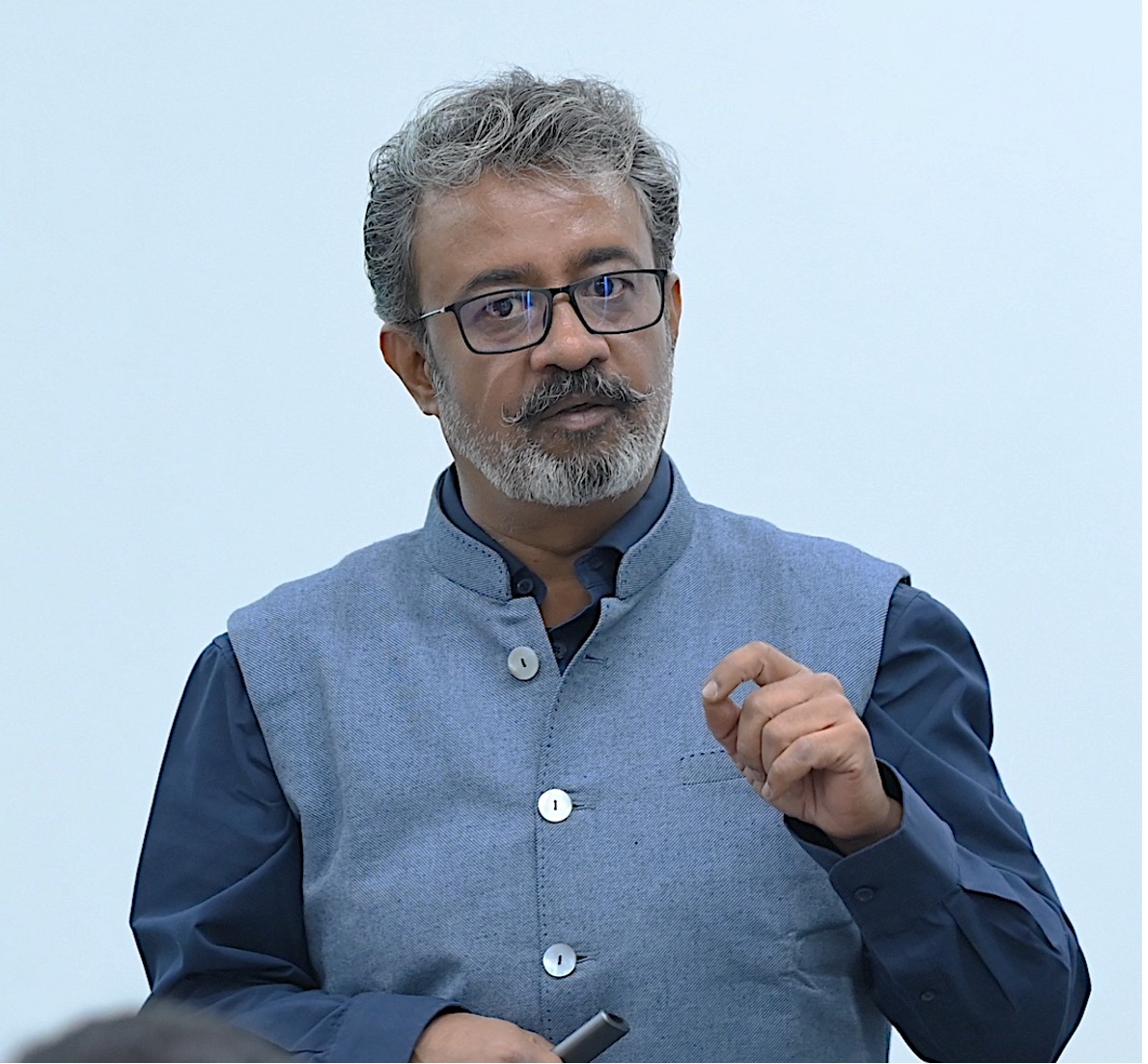
About the Author
Founder Director, ProventusHR · MGSCC Master Coach · NDA Alumnus
Founder of ProventusHR and principal architect of ExperienceLearning and REEL|Life. 25+ years across leadership advisory, executive coaching, and experiential design across 14 industries. 9x Brandon Hall HCM Excellence Award winner (2022 to 2025).
Full Profile ›