

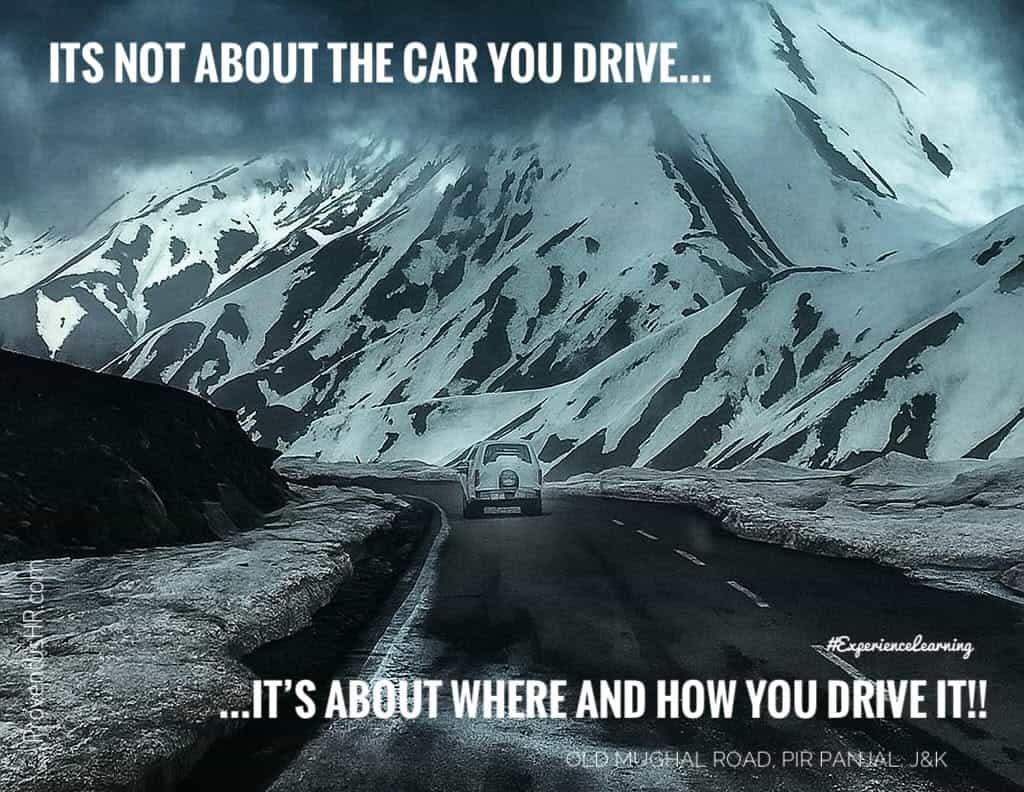
This is a quote that has stayed with me since I first encountered it in a conversation about high-performance driving.
At first reading, it sounds like a technical observation about racing craft. But the more I turned it over, the more it revealed something far more significant about how leaders think, decide, and move through complexity. This is not a metaphor stretched to fit a point. It is a precise mirror held up to one of the most persistent blind spots in organisational leadership today: the confusion of speed with effectiveness, and the stigma we have quietly attached to the act of pausing.
The Misunderstood Tool
When the Brake is the Strategy: What Formula One Teaches Us About Leadership Judgment
In Formula One, braking is not a concession to caution. It is one of the most technically demanding and strategically critical inputs a driver makes. The elite drivers, those who consistently extract the maximum from machine, circuit, and conditions, understand something their less accomplished peers often do not. The brake is not about stopping momentum. It is about managing weight transfer, stabilising the chassis, setting the optimal entry line into a corner, and, crucially, creating the conditions for a faster, cleaner exit.
A poorly timed brake costs time. An absent brake costs everything.
The parallel to leadership is not incidental. When we equate braking with weakness, when we interpret a pause as a loss of ground, we are operating with the same limited mental model as the driver who uses the brake only when something has already gone wrong.
The Cult of Perpetual Motion
Across the organisations we work with at ProventusHR, one pattern appears with remarkable consistency. It is most visible in fast-growing companies, high-pressure environments, and leadership teams navigating back-to-back cycles of change. Leaders and their teams are in constant motion. Calendars are full, decisions are being made, outputs are being produced. And yet, beneath the apparent momentum, there is often a quiet disorientation: a team running fast but not entirely sure it is running in the right direction.
The culprit is rarely incompetence or lack of effort. It is almost always the absence of deliberate pause.
We live and lead in an era that glorifies relentless activity. Being busy has become a proxy for being valuable. Reflection is too easily framed as indulgence, hesitation as weakness, and recalibration as an admission of error. Organisations have, in many cases, built this bias directly into their operating rhythm. Review cycles are compacted. Strategy off-sites are squeezed to a day. Coaching conversations get pushed to accommodate “more urgent” priorities.
The result is leadership that is technically proficient and energetically depleted, moving fast through circumstances it has not fully understood.
What the Best Drivers Know
Return for a moment to the racing circuit. What separates a world champion from a competent professional is rarely raw speed. In terms of outright pace over a single lap, the gap between the field and the frontrunners is often fractions of a second. The defining difference lies in judgment. When to push. When to conserve. When to create a gap. When to simply hold position and wait for the conditions to shift.
This is the leadership quality we are describing when we speak of strategic presence. It is the ability to read the environment with clarity, resist the pull of reactive momentum, and make calibrated choices about when to accelerate and when to deliberately, intentionally brake.
The leaders who demonstrate this quality are rarely the most visibly busy. They are often the ones who seem, to those around them, to have an uncommon stillness at their centre. They ask the question that reframes the conversation. They call the pause when the room is running hot. They choose not to fill every silence. And in doing so, they create the conditions for their teams to think more clearly, align more deeply, and move more purposefully.
Pausing as a Leadership Discipline
There is a common misconception that pause is passive. It is not. A genuine leadership pause, the kind that produces transformation rather than simply delay, requires a specific and disciplined set of capacities.
It requires the self-awareness to recognise when you are in reactive mode rather than responsive mode. It requires the psychological safety to admit, at least to yourself, that your current direction may need examination. It requires the courage to create space in a culture that may actively reward constant motion. And it requires the reflective capacity to use that space productively, not to ruminate, but to reconnect with intent, data, and the perspectives of others.
These capacities do not emerge automatically. They are developed, practised, and in many cases, deliberately designed into leadership journeys. The most impactful leaders we have had the privilege of working alongside are not those who are immune to pressure. They are those who have built, often through experience and sometimes through structured development, a reliable relationship with their own reflective function.
They know, in other words, precisely where to put their foot.
The Right Exit, Not Just the Fastest Lap
Leadership is not a sprint. Nor, in the way that phrase is often used, is it simply a marathon. It is something closer to what great racing drivers describe as “managing the race”: a continuous, dynamic interplay between ambition and judgement, between push and release, between the need to cover ground and the discipline to do it on your own terms.
The organisations that consistently develop and sustain high-performing leadership cultures are not those that run the fastest in any given quarter. They are those that build leaders who understand the full range of their instruments. Who have learned that the brake, used with intention and skill, is not the enemy of velocity. It is, in fact, what makes sustained velocity possible.
In our work at ProventusHR, we have seen this play out in coaching rooms, in workshop debrief conversations, and in the quiet turning points that often precede a leader’s most significant period of growth. The shift rarely begins with a new strategy or a faster cadence. It begins with a single, courageous pause.
A moment of honest reflection. A willingness to ask what is actually happening rather than what should be happening. A decision to braking deliberately, rather than waiting for the circuit wall to bring you to a stop.
That is where transformation begins.
A Note on Our Work in This Space
For leaders and leadership teams looking to build this capacity with rigour and structure, ProventusHR’s The Resilience Protocol is designed to help leaders in high-pressure environments develop the inner stability, reflective discipline, and adaptive capacity that sustained high performance demands. Leadership Reset is a focused recalibration intervention for senior leaders at inflection points, creating the conditions for honest self-examination, strategic realignment, and renewed purposeful forward motion. Both programmes are built on the ExperienceLearning™ methodology and can be designed as standalone engagements or as part of a longer leadership journey.
To explore how ProventusHR can support your leadership team, write to us or visit our Programmes page.
About the Author
Founder Director, ProventusHR · MGSCC Master Coach · NDA Alumnus
Founder of ProventusHR and principal architect of ExperienceLearning and REEL|Life. 25+ years across leadership advisory, executive coaching, and experiential design across 14 industries. 9x Brandon Hall HCM Excellence Award winner (2022 to 2025).
Full Profile ›